
For most buyers, API Tap Water Conditioner is the best water conditioner for fish because it neutralizes both chlorine and chloramines with a simple dose. Its concentrated formula also treats large volumes of tap water, so one bottle can last through many water changes.
This guide is for new aquarium owners, community-tank keepers, and anyone replacing an older treatment product. The key factors are the conditioner’s treatment capacity and its ability to handle chlorine, chloramines, or both. Clear dosing instructions matter, too, especially for smaller tanks where a small measuring error can affect water quality. The six picks below are ranked by practical value, with reasons and honest drawbacks for each. You will find options for freshwater tanks, larger aquariums, and shoppers who want a budget-friendly bottle.
Quick Comparison
| # | Product | Best For | Price | |
|---|---|---|---|---|
| 1 | API Tap Water Conditioner | First-time aquarium owners | ~$8 | View → |
| 2 | Seachem Prime Water Conditioner | Budget-conscious freshwater keepers | ~$17 | View → |
| 3 | API Stress Coat Water Conditioner | Fish transport and recovery | ~$11 | View → |
| 4 | API Tap Water Conditioner 4 oz | Small tank owners | ~$5 | View → |
| 5 | API Fishcare 52Q TAP Aquarium Water Conditioner | Frequent water change users | ~$17 | View → |
| 6 | Tetra AquaSafe Plus Water Conditioner | Community aquarium keepers | ~$22 | View → |
6 Top Aquarium Water Conditioners
These six aquarium water conditioners are ranked by ease of use, treatment coverage, and fish safety, counting down to the top pick.
6. Tetra AquaSafe Plus Water Conditioner
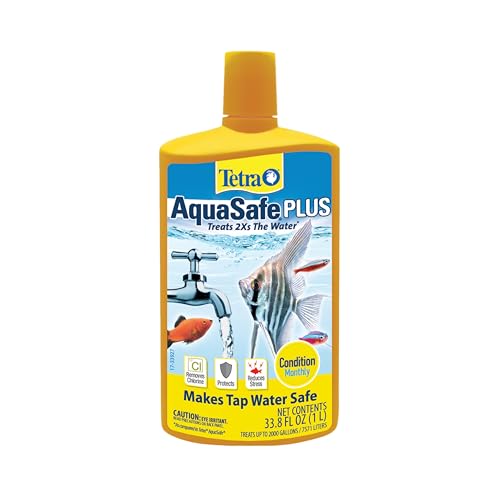
Best for: Regular freshwater or marine water changes
Tetra AquaSafe Plus is a liquid water conditioner for freshwater and marine aquariums. This 33.8-ounce bottle treats tap water by neutralizing chlorine and chloramines, while also removing or binding harmful heavy metals. It works instantly, making it useful when setting up a new tank, completing monthly partial water changes, or replacing water lost through evaporation. Around $22, it offers a practical supply for routine aquarium care.
What sets it apart is the added fish-protection focus. Natural biopolymers help support the protective slime coat, which may aid recovery from minor wounds and handling stress. The formula also includes vitamins and minerals intended to support healthier-looking water conditions. That does not replace proper cycling, filtration, or water testing. It only addresses certain tap-water concerns. The broad freshwater and marine compatibility makes it flexible for households with more than one aquarium, but buyers should still follow the bottle’s dosing directions for their tank volume.
Pros
- Treats chlorine and chloramines in tap water.
- Helps address heavy metals during water changes.
- Supports the fish’s protective slime coat with biopolymers, vitamins, and minerals.
Cons
- The 33.8-ounce bottle may be excessive for a single small aquarium.
- It does not replace aquarium cycling, filtration, or regular water testing.
5. API Fishcare 52Q TAP Aquarium Water Conditioner

Best for: Regular freshwater and saltwater water changes
API TAP Water Conditioner comes in one 32-ounce bottle and treats tap water before it enters an aquarium. Its concentrated formula neutralizes chlorine, chloramines, and other chemicals that can damage fish gills, irritate tissue, or cause death. Use it during routine water changes, when filling a new tank, or when introducing fish to freshwater or saltwater setups.
The large bottle suits aquarium keepers who condition water often. Around $17, it costs less upfront than many specialty water treatments, though the value depends on tank size and dosing frequency. Its main strength is broad, routine use. You do not need a separate conditioner for freshwater and saltwater aquariums. However, this product only addresses harmful tap-water chemicals. It does not replace regular water testing, filtration, or proper tank cycling. Follow the bottle directions carefully, since the provided listing does not state the exact dose per gallon.
Pros
- Neutralizes chlorine and chloramines before they reach fish.
- Helps protect gills and tissue from treated tap water.
- Works for both freshwater and saltwater aquariums.
Cons
- A 32-ounce bottle may be more than needed for small tanks or infrequent water changes.
- It does not solve broader water-quality problems, such as poor filtration or an uncycled aquarium.
4. API Tap Water Conditioner 4 oz

Best for: Routine freshwater and saltwater changes
This API water conditioner comes in one 4-ounce bottle and treats tap water before it enters an aquarium. Its purpose is to neutralize chlorine, chloramines, and other tap-water chemicals that can damage fish gills, irritate tissue, or cause death. It is intended for both freshwater and saltwater setups.
The concentrated formula is the main reason to consider it. A small bottle can fit easily beside aquarium supplies, and the price is usually around $5. Use it during regular water changes, when adding replacement water, and when introducing new fish. The product focuses on treating municipal water, so it fits tanks that rely on tap water rather than premixed or purified water. Buyers should follow the bottle directions for the correct amount, since the available listing does not state tank coverage.
Pros
- Neutralizes chlorine and chloramines found in tap water.
- Works for both freshwater and saltwater aquariums.
- Can be used during water changes and when adding fish.
Cons
- The 4-ounce bottle may run out quickly for large tanks or frequent water changes.
- It only addresses tap-water chemicals, so it does not replace filtration, cycling, or regular aquarium maintenance.
3. API Stress Coat Water Conditioner

Best for: Fishkeepers doing routine water changes
API Stress Coat is a tap-water conditioner sold in one 16-ounce bottle. It treats aquarium water by removing harmful chemicals from the tap supply, including substances that can damage fish. The formula also contains Aloe Vera extract, which helps replace the protective slime coat fish can lose during handling or fights. Around $11, this bottle offers a practical option for regular tank care.
Use 5 ml for every 10 gallons of aquarium water. That makes the dose easy to calculate for common tank sizes, though smaller aquariums require careful measuring. API recommends using it during water changes, when adding new fish, and when fish are sick or injured. For damaged skin, fins, or a depleted slime coat, double the standard dose. The added protection is useful during stressful events, but this conditioner is not a substitute for diagnosing or treating disease. Its main value is combining dechlorination with slime-coat support in one step.
Pros
- Treats tap water before it reaches fish.
- Aloe Vera extract supports the fish’s protective slime coat.
- One 16-ounce bottle covers repeated treatments over time.
Cons
- Measuring 5 ml per 10 gallons can be awkward for small tanks.
- It does not replace medication or treatment for aquarium diseases.
2. Seachem Prime Water Conditioner

Best for: Routine aquarium water changes
Seachem Prime is a concentrated water conditioner for freshwater and saltwater aquariums. The 500 mL bottle contains about 17 fl oz and costs around $17. One 5 mL capful treats 200 L, or 50 US gallons, of new water. That works out to roughly 100 standard doses, making the bottle practical for regular maintenance.
Its main strength is broad water treatment in one step. Prime permanently removes chlorine and chloramine, then detoxifies ammonia, nitrite, and typical tap-water heavy metals. The ammonia and nitrite protection lasts up to 48 hours, giving the biological filter time to process those compounds. For smaller tanks, the label calls for two drops per gallon. A double dose can handle unusually high chloramine levels, while a five-times dose is allowed during ammonia or nitrite emergencies. Water above 30°C, or 86°F, calls for half the normal dose when chlorine and ammonia levels are low.
Pros
- Treats both chlorine and chloramine in tap water.
- One 5 mL dose handles 200 L of water.
- Detoxifies ammonia and nitrite for up to 48 hours.
Cons
- Two-drop dosing can be difficult to measure accurately in small tanks.
- It does not replace water changes, testing, or proper biological filtration.
1. API Tap Water Conditioner

Best for: Regular freshwater and saltwater water changes
API Tap Water Conditioner comes in one 16-ounce bottle and treats tap water before it enters an aquarium. Its concentrated formula neutralizes chlorine, chloramines, and other treatment chemicals that can damage fish gills, irritate tissue, or cause death. Use it during water changes, when filling a new tank, or after adding fish.
The dosage is 1 milliliter for every 20 gallons of aquarium water. That makes the bottle useful for routine maintenance, especially in larger tanks where smaller containers may run out quickly. It works in both freshwater and saltwater aquariums. At around $8, it is also a low-cost part of basic aquarium care. The main advantage is simple dosing and broad use. Still, you need to measure the amount accurately, since the bottle does not include a built-in dosing pump.
Pros
- Neutralizes chlorine and chloramines before they reach fish.
- Works with both freshwater and saltwater aquariums.
- The 16-ounce size supports repeated water changes.
Cons
- Measuring 1 milliliter per 20 gallons takes a separate syringe or measuring tool.
- It treats tap-water chemicals but does not replace filtration, water testing, or regular tank maintenance.
Buying Guide
Choose a conditioner that treats both chlorine and chloramine in your tap water. The dose must also match the amount of new water, since inaccurate dosing can leave harmful chemicals behind.
- Water treatment range: Select a formula that names chlorine and chloramine on the label. If your home uses chloramine, choose one that also addresses the released ammonia.
- Dose accuracy: Look for clear directions, such as 5 milliliters per 10 gallons. A marked cap or dosing syringe helps with tanks under 20 gallons.
- Bottle size and value: Compare the total treated volume, not just the price. A 16-ounce bottle at 5 milliliters per 10 gallons treats about 946 gallons.
- Tank compatibility: Confirm the product suits freshwater, saltwater, reef, or shrimp aquariums. Shrimp and sensitive invertebrates need formulas without copper-based additives.
- Storage and shelf life: Check for an expiration date and storage instructions. Keep the bottle sealed at room temperature, roughly 60 to 80°F, and never let it freeze.
If you cannot get every feature, prioritize complete chlorine and chloramine treatment matched to your aquarium’s dosing needs.
Frequently Asked Questions
How do water conditioners help aquarium fish?
Water conditioners make tap water safer for aquarium fish by neutralizing chlorine and chloramine, and some also bind heavy metals. Check the label before dosing, since formulas differ. A common treatment rate is 5 milliliters per 10 gallons, but the bottle instructions should always control.
What should you look for in a fish tank water conditioner?
Look for a conditioner that treats both chlorine and chloramine, lists a clear dose, and matches your aquarium size. Extra features, such as ammonia binding, can help during setup but do not replace cycling. For example, a 20-gallon tank may need 10 milliliters, depending on the formula.
Can you add water conditioner directly to a fish tank?
Yes, you can add aquarium conditioner directly to a fish tank, especially during an emergency water change, as long as you dose the new water correctly. Many products also allow tank dosing. For a 10-gallon replacement, measure the amount for 10 gallons, not the entire aquarium, unless the label says otherwise.
Are all water conditioners safe for every fish?
No, all water conditioners are not automatically safe for every fish, shrimp, or planted aquarium. Read warnings about sensitive species, medications, and additives before use. Some formulas contain aloe or slime-coat ingredients, while others focus only on chlorine and chloramine. Follow the smallest labeled dose for your setup.
Conclusion
API Tap Water Conditioner is the top pick for aquarium owners who want a straightforward, widely available treatment for routine tap-water changes. If your priority is treating a larger volume with a smaller dose, choose Seachem Prime instead, since its concentrated formula may suit frequent water changes and bigger aquariums better. Before buying, double-check the bottle size, compatibility with your freshwater or saltwater setup, treatment quantity, and current price, since package sizes and dosing directions can vary. Match the conditioner to your tank volume, then follow the label rather than guessing the amount. A simple dosing routine protects fish during maintenance and helps prevent rushed, unnecessary product changes.