
Sukh Ceramic Rings Aquarium Filter Media is the top pick for most buyers, thanks to its porous ceramic design, which gives beneficial bacteria plenty of surface area for biological filtration. Among the best freshwater filter media, it offers a simple way to support cleaner, more stable aquarium water without adding chemicals. The rings fit many standard filter chambers and can be rinsed and reused.
This guide is for aquarium owners choosing media for freshwater tanks, from small desktop setups to larger community systems. The key factors are ring size, so the pieces fit your filter basket, and ceramic quality, which affects usable surface area for bacterial growth. The seven picks below are ranked with clear reasons and honest drawbacks for each, so you can compare capacity, cleaning needs, and fit before buying.
Quick Comparison
| # | Product | Best For | Price | |
|---|---|---|---|---|
| 1 | Sukh Ceramic Rings Aquarium Filter Media | Large tanks needing biofiltration | ~$7 | View → |
| 2 | Fluval Carbon Nylon Filter Bags | Carbon filtration on a budget | ~$15 | View → |
| 3 | Aquarium Filter Media Mix | First-time tank setup bundles | ~$14 | View → |
| 4 | Sukh Ceramic Bio Balls | Aquascapers wanting reusable biomedia | ~$7 | View → |
| 5 | Marineland Diamond Zeolite | Ammonia control in new tanks | ~$3 | View → |
| 6 | Fluval BioMax Biological Material Remover | Replacing worn Fluval biomedia | ~$20 | View → |
| 7 | Fluval AC50 Power Filter Media Maintenance Kit | AC50 owners stocking maintenance supplies | ~$11 | View → |
7 Top Freshwater Filter Media Picks
These seven media options are ranked by filtration value, durability, and tank compatibility, counting down to the top pick.
7. Fluval AC50 Power Filter Media Maintenance Kit

Best for: Owners replacing all three AC50 media
The Fluval Media Maintenance Kit combines three filtration types in one replacement set for the AC50 Power Filter. It includes Bio-Foam for mechanical filtration, BIOMAX for biological filtration, and activated carbon for chemical filtration. Together, these media help trap debris, support beneficial bacteria, and reduce odors, discoloration, and dissolved impurities. The kit works with both freshwater and saltwater aquariums.
Its main advantage is convenience. You can refresh the filter’s core media without buying each component separately. BIOMAX provides a porous home for bacteria that process ammonia and nitrite, while Bio-Foam catches waste particles before they move through the system. Activated carbon can make cloudy or yellow-tinted water look clearer. At around $11, it offers a low-cost maintenance option for AC50 owners, but the value depends on replacing the media as needed and following the filter’s care instructions.
Pros
- Includes mechanical, biological, and chemical media in one kit.
- BIOMAX supports bacteria that help process ammonia and nitrite.
- Activated carbon helps reduce odors, discoloration, and impurities.
Cons
- Designed specifically for the Fluval AC50, so it may not fit other filter models.
- Activated carbon has a limited service life and requires periodic replacement.
6. Fluval BioMax Biological Material Remover
Best for: Fluval canister filter owners
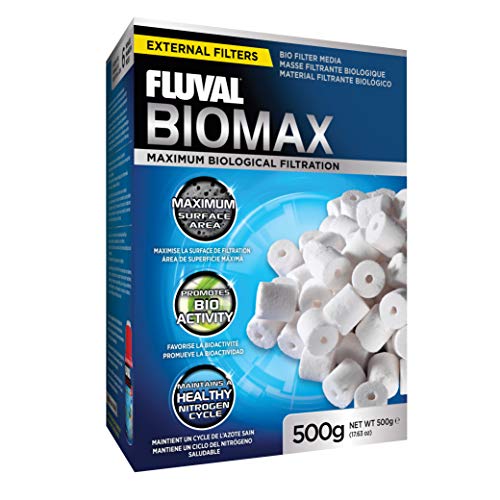
Fluval BioMax is a 500 g pack of porous biological filter media for aquarium canister filters. Its open structure gives water more contact with the media as it moves through the filter, supporting bacteria that help reduce and control ammonia and nitrate. It fits many Fluval models, including the 104, 105, 106, 204, 205, 206, 304, 305, 306, 404, 405, 406, FX5, and FX6. That broad model coverage makes it a practical refill for several older and newer Fluval systems.
The media works in both freshwater and saltwater tanks, and it should not change the water’s basic characteristics. It can help create clearer water and support healthier conditions for fish and plants. Fluval recommends replacing it monthly, but only half the media should be replaced at one time. Keeping some older media in place helps preserve the established biological colony. At around $20, the price is reasonable for routine filter maintenance, though ongoing replacement adds to the long-term cost.
Pros
- The 500 g quantity provides a substantial refill for compatible canister filters.
- Porous media supports biological filtration and helps manage ammonia and nitrate.
- Suitable for both freshwater and saltwater aquariums.
Cons
- Monthly replacement can become an ongoing expense for larger or heavily stocked tanks.
- Compatibility centers on listed Fluval models, so other brands require careful size and basket-fit checks.
5. Marineland Diamond Zeolite

Best for: Freshwater tanks with ammonia spikes
Marineland White Diamond Zeolite is a 50-ounce container of clinoptilolite zeolite media for freshwater aquariums and ponds. The crystals help remove toxic ammonia from the water, which can be useful in a new aquarium while its biological filter develops. At around $3, it offers a low-cost way to add ammonia control to a suitable filtration setup.
Its U.S.-sourced mineral media is the main point of difference. The product focuses on one specific water-quality problem rather than combining several types of filtration in one package. That narrow purpose can help fishkeepers respond to an ammonia spike without buying a larger, more complex treatment. Still, it should support routine water testing, cycling, and water changes, not replace them. The package size also makes it practical for keeping spare media on hand, though the right amount depends on the aquarium and filter design.
Pros
- Removes toxic ammonia in freshwater aquariums and ponds.
- The 50-ounce size provides a substantial supply of filter media.
- U.S.-sourced clinoptilolite zeolite offers a clearly identified material.
Cons
- It is intended for freshwater use, so saltwater aquarium owners need another option.
- It controls ammonia but does not replace aquarium cycling, testing, or regular water changes.
4. Sukh Ceramic Bio Balls

Best for: Flexible aquarium filter setups
Sukh’s 15-ounce pack contains loose ceramic-style balls made from inert quartz. The porous media is designed for canister filters, sumps, top filters, hang-on-back units, and pond systems. At around $7, it offers an inexpensive way to add more filter material without buying a complete replacement cartridge.
What sets these balls apart is their open surface. Water can move around the media while trapped debris is removed during filtration, which may help reduce cloudy water and unwanted odors. The quartz composition should not change pH or other water parameters, making it suitable for both freshwater and saltwater tanks. Still, these balls are not a substitute for water changes or regular filter cleaning. Rinse them before use, and make sure your filter has enough room for loose media to circulate without blocking flow.
Pros
- Inert quartz should not alter pH or water chemistry.
- Porous surfaces provide room for water movement and debris capture.
- Loose 15-ounce format fits several filter types and pond systems.
Cons
- The package gives an approximate weight, not a fixed piece count.
- Loose balls can shift inside some filters unless contained in a media bag.
3. Aquarium Filter Media Mix

Best for: mixed freshwater or marine filtration setups
This 12-type aquarium filter media mix combines ceramic rings, activated carbon, bio balls, and other media in one reusable package. The different textures and pore structures support mechanical and biological filtration, while the carbon helps manage some unwanted compounds in tank water. It suits freshwater and marine aquariums, plus sump, pond, koi, top-box, bottom, pump, and external canister systems. At around $14, it offers a low-cost way to refresh several filtration stages at once.
The media arrives inside a reusable mesh bag with a zipper. Rinse the contents before placing the bag in your filter, then remove it easily for cleaning. The bag format keeps loose pieces together and simplifies routine maintenance. Its broad compatibility is useful for owners who move media between different filter types. Still, the listing does not provide the bag’s dimensions or the amount of each media type. That makes fit and value harder to judge before purchase. The set is reusable multiple times, but no replacement schedule is provided.
Pros
- Includes 12 media types, including ceramic rings, activated carbon, and bio balls.
- Zippered mesh bag keeps the media contained during installation and rinsing.
- Works with many freshwater, marine, sump, pond, and canister filtration systems.
Cons
- The listing does not state the bag size or quantity of each media type.
- One mixed bag offers less control than buying and placing media separately.
2. Fluval Carbon Nylon Filter Bags

Best for: Fluval canister owners needing clearer water
Fluval Carbon comes as three nylon bags, each filled with 100 grams of low-ash, research-grade carbon. The porous material absorbs dissolved impurities that can make aquarium water look cloudy or tinted. It can also reduce unwanted odors. At around $15, this pack gives you 300 grams of ready-to-use media for freshwater or saltwater setups.
The bags fit several Fluval canister filters, including the 106, 206, 306, 406, FX5, 105, 205, 305, 405, 104, 204, 304, and 404. They also work with most canister filters that accept loose carbon media. Replace each bag about every four weeks, since carbon loses effectiveness over time. Remove the bags before adding medication to the aquarium. Use them carefully in planted tanks, since carbon may absorb some compounds that live plants need.
Pros
- Three prefilled 100-gram nylon bags reduce measuring and setup work.
- Porous, low-ash carbon helps improve water clarity and color.
- Compatible with freshwater and saltwater aquariums.
Cons
- The media needs replacement about every four weeks, adding an ongoing cost.
- Carbon must be removed during medication use and may not suit every planted aquarium.
1. Sukh Ceramic Rings Aquarium Filter Media
Best for: aquarium owners upgrading standard filters
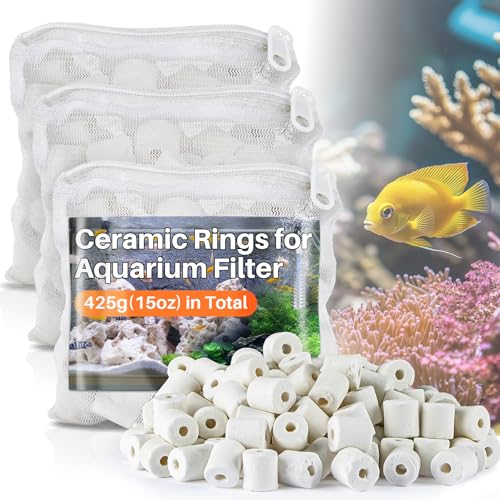
Sukh Ceramic Rings provide 15 ounces of porous ceramic filter media split across three bags. The hollow shape lets water pass through the rings while trapping some debris and floating particles. This setup can support clearer water in freshwater or saltwater aquariums, ponds, and fish tanks. At around $7, the pack offers a low-cost way to add media to an existing filter.
The rings fit standard filtration chambers and are listed as compatible with systems such as the 106, 206, 306, 406, FX5, FX6, 105, 205, 305, 405, 104, 204, 304, and 404. Rinse them with clean water before adding them to a media basket, cartridge, or filter chamber. They can work alongside other media types, which makes placement flexible. The care instructions recommend replacing part of the media every six months to one year. That schedule depends on water flow, tank waste, and cleaning habits. These rings help with physical filtration and water circulation, but they should not replace dedicated mechanical or chemical media when a tank needs those functions.
Pros
- Three bags make the 15-ounce pack easier to divide between filters or chambers.
- Hollow, porous rings allow water flow while catching some suspended debris.
- Suitable for freshwater, saltwater, ponds, and many listed filter models.
Cons
- The listing does not provide individual ring dimensions, so fit may vary between chambers.
- Ceramic rings do not handle every filtration task, so extra mechanical or chemical media may still be needed.
Buying Guide
The key choice is matching the media to the water problem and filter stage. Mechanical pads catch debris, biological media supports beneficial bacteria, and chemical products target substances such as chlorine, tannins, or phosphate.
-
Target contaminant: Choose media for a specific need. Use activated carbon for odors and many medications, phosphate remover when phosphate exceeds about 0.5 parts per million, and biological media for ammonia and nitrite control.
-
Tank size and flow: Match the media capacity to the aquarium and filter. A 20-gallon tank generally benefits from roughly 80–120 gallons per hour of turnover, but slower flow may suit bettas, fry, and heavily planted tanks.
-
Filter fit: Measure the chamber, basket, or cartridge space in inches before buying. A 4-by-6-inch mesh bag may fit one hang-on-back filter but not a compact internal unit.
-
Replacement schedule: Plan for recurring maintenance. Replace activated carbon about every 3–4 weeks, rinse biological media in removed tank water, and replace mechanical foam when it no longer regains flow after cleaning.
-
Long-term cost: Compare price per month, not just the package price. A $10 carbon pack lasting 30 days costs about $3.33 per 10 days, while reusable ceramic media may cost more upfront but last for years.
If you cannot optimize everything, prioritize media that addresses the measured water problem and fits the filter correctly.
Frequently Asked Questions
How often should I replace freshwater filter media?
Replace mechanical media when it becomes clogged, rinse biological media in removed tank water, and replace chemical media according to its label. Sponge pads may last 6 to 12 months, while activated carbon commonly needs replacement every 2 to 4 weeks. Never wash beneficial bacterial media under untreated tap water.
What filter media do freshwater aquariums need?
Most freshwater aquariums need mechanical, biological, and sometimes chemical filtration media. Use filter floss or a sponge for debris, ceramic rings or sintered glass for bacterial colonization, and activated carbon for specific odors or medication removal. A small tank often needs two media stages, while heavily stocked tanks may need all three.
Can I use activated carbon in a freshwater tank?
Yes, activated carbon can be used in a freshwater tank, but it is optional and should not run continuously in every setup. Replace it about every 2 to 4 weeks, because exhausted carbon stops adsorbing many contaminants. Remove carbon during medication unless the product instructions say otherwise, since it can reduce treatment effectiveness.
Are ceramic rings better than sponge media for fish tanks?
Neither option is always better: sponge media provides mechanical filtration and broad bacterial surface area, while ceramic rings offer more biological surface in a smaller space. A coarse sponge can often be rinsed and reused for years, whereas ceramic media should stay submerged to protect its bacterial colony during maintenance.
Conclusion
Sukh Ceramic Rings Aquarium Filter Media is the top recommendation for aquarium owners who want reusable biological media without overspending. If your priority is stronger mechanical filtration or a precise fit for a compact canister, choose an alternative made for that filter’s chamber and media basket. Before buying, double-check the media size, filter compatibility, package quantity, and current price. Ceramic pieces work best when water flows around them, so do not pack a basket too tightly. Rinse new media with treated aquarium water, not tap water, to protect helpful bacteria. Replace damaged pieces, but avoid discarding all established media at once, since that can upset the tank’s biological balance.