
Legigo Coconut Fiber Reptile Bedding is the best substrate for box turtle for most buyers because its loose coconut fiber holds moisture well and creates a soft digging layer. It also comes in an easy-to-spread form for building a suitable habitat base, though the bedding may need regular misting and spot cleaning to stay fresh.
This guide is for box turtle keepers choosing bedding for a new enclosure or replacing a dusty, compacted layer. The main factors are material safety, moisture retention, particle texture, and how much area each package can cover. Good bedding should support natural burrowing without staying soaked or producing sharp pieces. The 7 picks below are ranked with clear reasons and honest drawbacks for each, so you can match the material to your turtle’s enclosure size and care routine.
Quick Comparison
| # | Product | Best For | Price | |
|---|---|---|---|---|
| 1 | Legigo Coconut Fiber Reptile Bedding | Humid Tropical Reptile Enclosures | ~$20 | View → |
| 2 | Sphagnum Moss Reptile Terrarium Bedding | Moisture-Loving Amphibian Habitats | ~$5 | View → |
| 3 | Exo Terra Turtle Pebbles | Aquatic Turtle Tank Owners | ~$20 | View → |
| 4 | MAQIHAN Vermiculite for Reptiles | Reptile Egg Incubation | ~$7 | View → |
| 5 | Zilla Reptile Terrarium Bedding | Natural Terrarium Substrate Setup | ~$15 | View → |
| 6 | Zoo Med Labs Natural Box Turtle Food | Box Turtle Feeding | ~$17 | View → |
| 7 | Coconut Fiber Reptile Carpet Mat | Low-Mess Reptile Habitats | ~$19 | View → |
7 Top Substrate Picks for Box Turtles
These substrates are ranked from seventh place down to our top pick for a box turtle’s habitat.
7. Coconut Fiber Reptile Carpet Mat
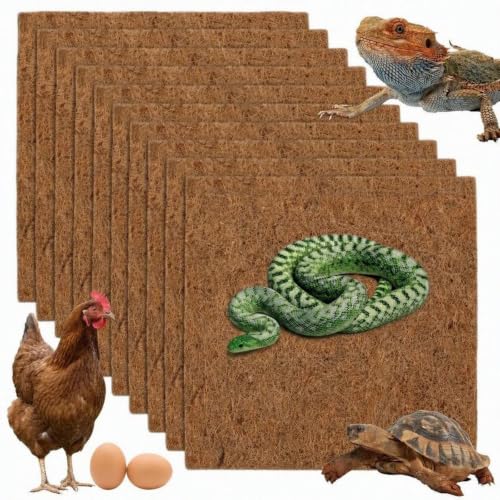
Best for: Small reptile habitats and nesting boxes
This 10-piece set uses natural coconut fiber as a flat liner for terrariums, chicken nesting boxes, planters, and small animal enclosures. Each mat measures 30 x 30 centimeters, or about 11.8 x 11.8 inches. That size fits many compact habitats, though larger spaces may need several pieces. The mats provide a textured surface for lizards, turtles, snakes, geckos, bearded dragons, and tortoises.
The main advantage is the quantity. Ten liners allow you to outfit multiple areas or keep replacements ready for routine changes. The coconut fiber offers a more natural surface than plastic or paper, while the flat shape stays simpler to position than loose bedding. You can also cut each piece to fit corners, nesting areas, or planter containers. At around $19, the pack costs less than buying single mats, but the value depends on how many 12-inch liners your setup needs.
Pros
- Ten pieces provide replacements for several habitats.
- Coconut fiber creates a natural resting and nesting surface.
- Flat mats can be trimmed for custom-sized enclosures.
Cons
- The 11.8-inch square size is too small for many adult or large enclosures.
- Cutting the material may leave loose fibers and uneven edges.
6. Zoo Med Labs Natural Box Turtle Food

Best for: Box turtle owners seeking dry food
Zoo Med Labs Natural Box Turtle Food is a prepared diet sold in a 20-ounce package. It combines plants, fiber, vitamins, minerals, protein, and small amounts of papaya and mango. Animal protein adds another food source for box turtles with varied dietary needs. The formula contains no artificial colors, flavorings, or preservatives. At around $17, it costs more than a simple produce-based routine, but the bag offers a ready-to-serve option for regular meals.
The strongest feature is the range of ingredients in one food. Multiple plants provide more variety than a single leafy base, while added nutrients support normal growth and shell development. The blend is also designed to aid digestion and nutrient absorption, though individual turtles may respond differently to prepared diets. Papaya, mango, and animal protein could make it more appealing to selective eaters, but a turtle may still need time to accept a new food. This is best used as a convenient staple or part of a broader feeding plan.
Pros
- Includes vitamins, minerals, fiber, and protein for a balanced diet.
- Uses several plant ingredients instead of one basic food source.
- Contains no artificial colors, flavors, or preservatives.
Cons
- The 20-ounce size may not last long in a multi-turtle enclosure.
- Animal protein makes it unsuitable for owners seeking plant-only food.
5. Zilla Reptile Terrarium Bedding

Best for: Tropical and forest-dwelling reptiles
Zilla Bark Blend is a loose terrarium substrate made from 100% natural fir bark. It comes in 8-quart and 24-quart bags, giving keepers a smaller option for one enclosure or a larger supply for several habitats. The recommended bedding depth is 1 to 2 inches. At around $15, the 8-quart size costs less than many larger substrate bags, though prices can change.
The bark’s main strength is moisture management. It helps move heat and humidity through the lower part of a terrarium, which suits forest setups for tortoises, land turtles, chameleons, frogs, snakes, skinks, and rainforest geckos. The bark is oven-dried before packaging, a step intended to reduce unwanted pests. Its natural texture also looks closer to a woodland floor than paper-based bedding. Still, this is loose bark, not a complete habitat system. You must match it with the animal’s humidity, temperature, and feeding needs.
Pros
- Made from 100% natural fir bark, giving tropical enclosures a forest-style ground layer.
- Supports moisture and heat movement through the substrate, useful for humid terrariums.
- Offered in 8-quart and 24-quart sizes for single or multiple enclosures.
Cons
- Loose bark is a poor match for species that require dry, compact, or sand-based bedding.
- Moist substrate needs regular spot cleaning and replacement to control waste and odors.
4. MAQIHAN Vermiculite for Reptiles

Best for: Humid reptile and egg setups
MAQIHAN 14OZ Vermiculite is a loose, mineral-based substrate for reptile enclosures, incubators, and breeding boxes. The 14-ounce bag suits small setups, though larger habitats may require several bags. Vermiculite absorbs water and releases it gradually, so it can support steady humidity without becoming as saturated as some moss-based bedding. Its porous texture also leaves air gaps between particles, which helps buried reptile eggs receive airflow.
The material works with snakes, turtles, geckos, frogs, lizards, and some insects. It may also suit plant propagation. For incubation, the listed mixing range is 1:0.7 to 1:1 by weight, vermiculite to water. Add water slowly until the mixture holds moisture but does not release water when squeezed. That step matters, since excess moisture can create poor conditions for eggs. Vermiculite can also buffer temperature changes, but it should not replace a thermostat or proper enclosure heating. At around $7, this is an inexpensive way to add moisture control to a small habitat.
Pros
- Holds and slowly releases water for more stable humidity.
- Porous particles allow airflow around covered eggs.
- Suitable for reptiles, amphibians, incubators, and plant use.
Cons
- A 14-ounce bag may not cover a medium or large enclosure.
- Requires careful weighing and mixing to avoid excess moisture.
3. Exo Terra Turtle Pebbles

Best for: Aquatic turtles with larger shells
Exo Terra Turtle Pebbles, Large are rounded substrate pieces for turtle tanks and aquatic habitats. Each pebble measures about 0.3 to 0.4 inches across, making them a practical fit for turtles with shells at least 4 inches in diameter. The 10-pound plastic pack provides enough material for a broad tank area, though the exact coverage depends on the depth you want.
The smooth surfaces can reduce scrape risks for turtles that forage or rest along the bottom. Their mixed colors and patterns also create a riverbed-style appearance without using sharp gravel. That matters for turtles that push substrate around while searching for food. At around $20, the pack costs more than some basic aquarium gravel, but the larger pieces are easier to identify and remove during cleaning. These stones are meant for larger turtles, not hatchlings or small aquatic species that could swallow them.
Pros
- Smooth, rounded surfaces help limit injuries from sharp edges.
- 0.3- to 0.4-inch pieces suit turtles with 4-inch or larger shells.
- Mixed colors and patterns give tanks a natural riverbed look.
Cons
- The large pieces are not suitable for small turtles or hatchlings.
- A 10-pound pack can be excessive for small tanks and adds weight during setup.
2. Sphagnum Moss Reptile Terrarium Bedding

Best for: humid reptile hides and nesting boxes
This 3.5-ounce pack contains natural sphagnum moss for terrariums. The moss has little to no scent and contains no added dyes, including bright green coloring. It arrives compressed, so the loose volume is not obvious from the package. To prepare it, soak the amount you need in water, then squeeze out excess moisture before placing it in a hide, nesting box, or enclosure.
The moss holds moisture while its loose texture allows air to move through the bedding. That makes it useful for humidity-focused setups with snakes, leopard geckos, box turtles, hermit crabs, lizards, bearded dragons, and salamanders. It can also fill small gaps in hamster habitats, though it should not replace species-specific bedding or safety checks. At around $5, it offers a low-cost way to add a natural layer to a small terrarium. The main trade-off is quantity. A 3.5-ounce brick may work well for spot use, but larger enclosures may need more than one pack.
Pros
- Natural sphagnum moss has no added dye and little to no scent.
- Moisture retention helps maintain a more humid hide or enclosure area.
- Compressed packaging keeps the 3.5-ounce portion compact before soaking.
Cons
- The small pack may not cover a large terrarium or several nesting boxes.
- It needs soaking and squeezing before use, which adds preparation time.
1. Legigo Coconut Fiber Reptile Bedding

Best for: Humidity-loving reptiles and amphibians
Legigo’s four-pack contains compressed coconut coir bricks for terrariums, not loose bedding. Each brick measures about 7.87 by 3.94 by 1.97 inches and weighs roughly 1.4 pounds. Soaking a brick in water expands the dry material into softer, moisture-holding substrate. At around $20, the pack offers a compact way to keep spare bedding on hand.
Natural coconut fiber is the main appeal. The material contains no dirt, harmful chemicals, or other listed impurities. It absorbs water and some waste while helping reduce unpleasant odors. Regular misting can help maintain humidity for species that need a damp enclosure. The loose fibers may also support shallow tunnels and burrows. After removal, used coir can break down naturally and may work as a garden soil additive. This bedding fits snakes, frogs, lizards, turtles, and some invertebrates, but each species has different substrate needs.
Pros
- Four compressed bricks store neatly before use and provide extra bedding for later changes.
- Coconut coir holds moisture, which suits terrariums that need higher humidity.
- Natural fibers can support burrowing and may help reduce waste odors.
Cons
- The bricks must be soaked and expanded before placement, adding preparation time and mess.
- Damp coir needs regular monitoring and replacement. If left wet, it can become unsanitary or encourage mold.
Buying Guide
Moisture control matters most when choosing bedding for a box turtle. The substrate should hold enough humidity for healthy skin and shell, yet drain well enough to avoid a soggy enclosure.
- Moisture retention: Choose organic topsoil, coco coir, or a blend that stays lightly damp when squeezed, not dripping. Aim for about 60% to 80% humidity for many North American box turtles, while checking your species’ needs.
- Digging depth: Add at least 4 inches of loose substrate. Larger adults often benefit from 6 inches, especially when they bury themselves during rest.
- Safe ingredients: Select soil with no fertilizer, pesticides, manure, perlite, or chemical wetting agents. Avoid cedar, pine, calcium sand, walnut shell, and scented bedding.
- Texture and drainage: Use fine to medium particles without sharp chips. A mix of roughly 60% organic topsoil and 40% coco coir gives structure while holding moisture.
- Cleaning and quantity: Replace visibly soiled sections daily and refresh the full layer every 2 to 3 months. A 10- to 20-quart bag may cover a small habitat, but larger enclosures need several bags.
If you cannot have everything, prioritize chemical-free material that maintains stable moisture at the correct depth.
Frequently Asked Questions
How deep should substrate be for a box turtle?
Box turtle substrate should be 4 to 6 inches deep so the animal can burrow and hide. Use chemical-free topsoil mixed with coconut coir, then add pesticide-free leaf litter. The bedding should hold moisture without becoming muddy, and you should replace heavily soiled areas promptly.
What materials make good bedding for box turtles?
Good bedding materials include organic topsoil, coconut coir, sphagnum moss, and clean leaf litter. Choose products without fertilizer, pesticides, dyes, or added chemicals. A practical mix uses about two parts soil to one part coir, with leaves scattered across the surface for cover and foraging.
Can box turtles use sand or wood shavings?
Box turtles should not use loose sand, cedar, pine shavings, or dusty wood bedding because these materials can irritate the lungs or cause problems if swallowed. For a temporary setup, use plain paper towels for 1 to 2 weeks, then switch to moist, natural soil-based bedding.
Are moist substrates safe for box turtle enclosures?
Moist substrate is safe for box turtles when it stays damp but never waterlogged. Squeeze a handful to check it; the material should clump briefly without dripping. Measure enclosure humidity with a gauge, and keep the bedding surface free of standing water, mold, and spoiled food.
Conclusion
Legigo Coconut Fiber Reptile Bedding is the top pick for box turtle keepers who want a soft, moisture-friendly substrate that supports burrowing and routine habitat maintenance. If your priority is easier cleanup or a firmer surface, choose a suitable soil-and-leaf-litter blend instead, since it can provide structure while still allowing natural digging and moisture control. Before buying, double-check the package size, compatibility with your turtle’s species and enclosure, quantity needed for the planned depth, and the current price, since bags and listings can vary. Keep the bedding clean, replace soiled areas promptly, and monitor moisture rather than relying on the label alone. The right substrate should support safe movement, digging, and stable enclosure conditions.