
The OASE CrystalSkim 350 Surface Skimmer is the best aquarium surface skimmer for most buyers because its compact design removes surface film without taking over the tank. It combines a small footprint with adjustable flow, making it practical for many freshwater and planted aquariums. Its clear housing also draws less attention than bulky intake equipment.
This guide is for aquarium owners dealing with oily residue, floating dust, or weak surface circulation. The key factors are tank size, flow control, and how easily you can clean the collection basket and intake. A skimmer that moves too much water can stress smaller fish, while one with too little pull may leave debris behind. The 5 picks below are ranked with clear reasons and honest drawbacks for each, so you can match the surface cleaner to your setup.
Quick Comparison
| # | Product | Best For | Price | |
|---|---|---|---|---|
| 1 | OASE CrystalSkim 350 Surface Skimmer | Compact freshwater tank owners | ~$40 | View → |
| 2 | OASE CrystalSkim 600 Aquarium Surface Skimmer | Large aquarium maintenance needs | ~$61 | View → |
| 3 | Aquatop Aquarium Surface Skimmer | Budget-conscious aquarium keepers | ~$22 | View → |
| 4 | FZONE Aquarium Surface Skimmer | Saltwater reef tank hobbyists | ~$29 | View → |
| 5 | Pawfly Aquarium Surface Skimmer | Beginner aquarium cleaning setups | ~$16 | View → |
5 Top Aquarium Surface Skimmer Picks
These aquarium surface skimmers are ranked from fifth place down to our top pick for easy comparison.
5. Pawfly Aquarium Surface Skimmer
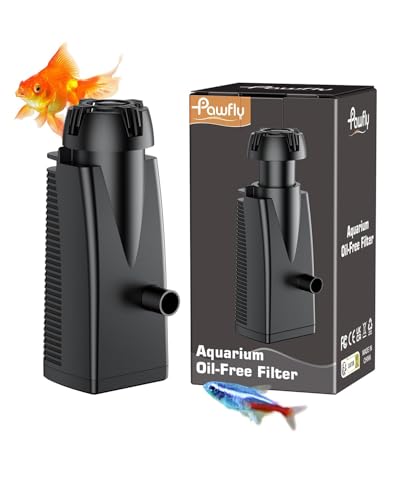
Best for: Removing surface film from planted tanks
The Pawfly 80 GPH Aquarium Surface Skimmer pulls water from the tank’s surface, where oil film and floating debris collect. Its 4-watt motor moves up to 80 gallons per hour, and the 2.15-by-1.85-by-5.7-inch body fits relatively small spaces. Pawfly rates it for aquariums up to 92 gallons, or 350 liters. At around $16, it offers a low-cost way to improve surface circulation without replacing the main filter.
The floating intake adjusts through about 1.4 inches of water-level change, so you should not need to reposition it after minor evaporation. A removable fish guard helps keep fish and floating plants away from the intake. The included bio-sponge provides mechanical and biological filtration, but it should only be rinsed in used tank water to protect beneficial bacteria. Two suction cups hold the unit against the glass. Magnetic levitation also keeps the impeller from rubbing against the housing, which may reduce operating noise and wear.
Pros
- Floating intake tracks water changes up to 1.4 inches.
- Fish guard helps protect small fish and floating plants.
- Includes a bio-sponge for surface debris and biological filtration.
Cons
- The 80 GPH flow rate may feel limited for heavily stocked tanks.
- The compact intake still needs regular sponge cleaning to prevent reduced flow.
4. FZONE Aquarium Surface Skimmer

Best for: Nano planted tanks with surface film
The FZONE Aquarium Surface Skimmer is a compact add-on for removing oil film, floating debris, and protein buildup from aquarium water. Its micro pump pulls water through a floating inlet, which rises and falls about 3 mm as the water level changes. That design helps keep the intake near the surface without frequent manual adjustment. A suction cup holds the unit against the glass, while USB power allows quick setup with a compatible power source.
What stands out is the four-speed controller. Lower settings suit betta tanks and gentle planted setups, while higher settings create more surface movement when film builds up. The pump sits in a slim stainless steel body measuring about 3.5 by 1.2 inches, so it takes up little room in nano aquariums. The reusable sponge rinses clean for routine maintenance. At around $29, it costs more than a basic air-driven solution, but the adjustable flow and floating inlet add useful control.
Pros
- Four speed levels let you match flow to tank size and livestock.
- The floating inlet tracks roughly 3 mm of water-level change.
- Compact stainless steel housing fits small, planted, and betta tanks.
Cons
- USB power requires a suitable adapter or powered USB port, which may not be included.
- It handles surface film and debris, but it does not replace a primary aquarium filter.
3. Aquatop Aquarium Surface Skimmer

Best for: Tanks with surface film
The Aquatop Aquarium Surface Skimmer removes oil, floating debris, and other waste from the water’s surface. It is designed for aquariums up to 100 gallons and works with both freshwater and saltwater setups. Its 65 GPH flow rate supports steady circulation while pulling surface water toward the filtration area. That capacity should suit many home tanks, though larger aquariums may need stronger circulation elsewhere.
The main appeal is its narrow purpose. Instead of relying only on a standard filter, it targets the film that can collect across the surface and block light or gas exchange. Setup and routine cleaning are intended to stay simple, which helps reduce maintenance time. The unit costs around $22, making it a low-cost option for addressing surface buildup. Aquatop describes the construction as durable, but it does not identify the specific material. Buyers should also confirm that the skimmer fits their tank and filtration setup before ordering.
Pros
- Removes surface oils, film, and floating waste.
- Supports freshwater and saltwater aquariums up to 100 gallons.
- Uses a 65 GPH flow rate for added surface circulation.
Cons
- The 65 GPH flow may be modest for heavily stocked or larger tanks.
- Specific construction materials and detailed fit measurements are not provided.
2. OASE CrystalSkim 600 Aquarium Surface Skimmer

Best for: Planted tanks with surface film
The OASE CrystalSkim 600 is a compact internal surface skimmer for freshwater and marine aquariums. It pulls in biofilm, dust, and floating plant pieces from the waterline, then sends water back through a lower outlet. That outlet adds gentle movement in areas where debris tends to settle. OASE rates the unit for tanks up to 160 gallons, or 600 liters. Flow control lets you reduce or increase the skimming rate for different setups.
The floating ring follows small water-level changes, so the intake can keep working without perfect leveling. A removable basket with fine slots helps shield shrimp and small fish while collecting particles that a net may miss. That design suits planted aquariums and aquascapes. The unit is Italian-made, German-engineered, UL-certified, and covered by a three-year warranty. At around $61, it costs more than basic surface attachments, but adds adjustable flow and a lower circulation outlet in one device.
Pros
- Fine intake slots and a removable basket help protect shrimp and nano fish.
- Adjustable flow supports both gentle planted-tank circulation and stronger surface cleaning.
- Floating ring adapts to water-level changes during normal evaporation.
Cons
- It occupies space inside the aquarium and adds another visible piece of equipment.
- This is a surface skimmer, not a complete mechanical or biological filter.
1. OASE CrystalSkim 350 Surface Skimmer
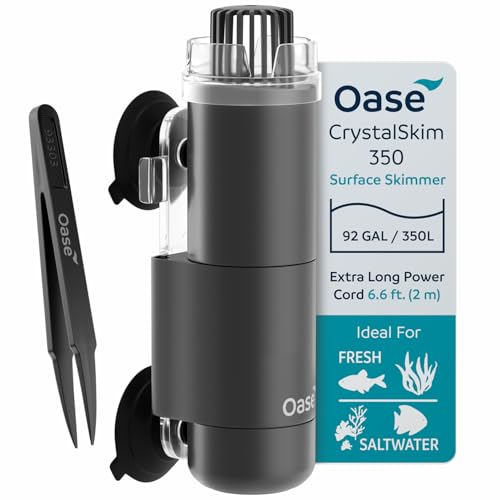
Best for: Freshwater and marine tank owners
The OASE CrystalSkim 350 is a compact internal surface skimmer for aquariums up to 92 gallons, or 350 liters. It pulls biofilm, dust, and floating plant debris into a removable collection basket, helping keep the waterline cleaner. Fine intake slots help protect shrimp and small fish while catching particles too small for a net. The adjustable flow control lets you set a gentler draw for planted tanks or stronger surface cleaning when needed.
A floating ring follows normal water-level changes, so the intake can keep working between top-offs. The lower outlet also adds mild circulation near the bottom, where waste often settles. That makes this unit more useful than a surface-only cleaner, especially in tanks with low-flow corners. OASE lists it as quiet, energy-efficient, UL-certified, and suitable for freshwater or marine setups. Italian production, German engineering, and a three-year warranty add reassurance. At around $40, it costs more than a basic manual net but offers continuous surface cleanup.
Pros
- Fine intake slots help shield shrimp and nano fish.
- Adjustable flow suits planted, freshwater, and marine tanks.
- Lower outlet improves circulation in stagnant areas.
Cons
- The internal housing takes up visible tank space.
- The collection basket needs regular cleaning as debris builds.
Buying Guide
Choose a skimmer that matches your aquarium’s water volume and return-pump flow. An oversized unit can pull in fish or shrimp, while an undersized model may leave an oily film across the surface.
- Tank capacity: Match the rated range to your setup, such as a 10–30 gallon model for a nano tank or a 40–75 gallon unit for a larger aquarium. Stay within the maker’s stated limits.
- Flow control: Look for an adjustable intake or valve. A useful range is about 100–300 gallons per hour for small freshwater tanks, with lower settings available for shrimp and delicate fish.
- Intake protection: Choose a floating guard, sponge, or slotted cover with openings under 1/4 inch for small fish and shrimp. A removable prefilter also reduces clogging.
- Water-level tolerance: Check the required water depth and adjustment range. Models that handle 1–2 inches of daily evaporation need less frequent repositioning than fixed-height designs.
- Cleaning and noise: Pick a unit with tool-free access to the cup, impeller, and intake. Clean the cup every few days, and favor listings that state noise below roughly 40 decibels if the aquarium sits near a bed or desk.
If you cannot have everything, prioritize correct tank compatibility and adjustable flow, since poor sizing causes the most serious problems.
Frequently Asked Questions
How do aquarium surface skimmers work?
Aquarium surface skimmers remove floating oils, protein film, and fine debris by drawing the top layer of water into a filter or overflow. Most models attach to an internal filter, hang-on-back filter, or canister intake. A compact unit may need cleaning every few days when fish food or plant matter collects around its intake.
What size surface skimmer do I need for my aquarium?
Choose a skimmer rated for your aquarium’s volume and filter flow, with an adjustable intake for changing water levels. For a 20-gallon tank, a model rated for roughly 20 to 40 gallons can provide useful capacity without an oversized intake. Always match the attachment style to your existing filter.
Can a surface skimmer harm fish or shrimp?
A surface skimmer can harm small fish or shrimp if its intake lacks a guard or pulls water too strongly. Choose a unit with a strainer, sponge prefilter, and adjustable flow. For nano tanks, check the intake several times daily after installation, since tiny livestock can approach openings.
Are aquarium surface skimmers worth using?
Aquarium surface skimmers are worth using when oily film blocks light, reduces gas exchange, or keeps floating debris on the water. They are less useful in tanks with clear surfaces and strong surface movement. Many aquarists run one for 15 to 30 minutes after feeding, then switch it off.
Conclusion
OASE CrystalSkim 350 Surface Skimmer is the top pick for aquarium keepers who want a compact, adjustable unit for removing surface film and floating debris. If your priority is extra flow control, a quieter setup, or a different tank size, choose a flow-adjustable alternative instead because it can better match your aquarium and livestock. Before buying, double-check your aquarium’s size, the model’s compatibility with your tank and filter setup, the quantity included in the package, and the current price. A surface cleaner can improve gas exchange and water clarity, but it still needs regular emptying and maintenance. Pick the model that fits your equipment, livestock, and cleaning routine.