
As someone who loves aquariums, picking between the Dwarf Aquarium Lily and Tiger Lotus is both fun and a bit tough. It affects how my tank looks and how healthy it is. The hard part is choosing the right plant for the tank.
I face a big question about which plant is right for my tank. I figured out if the Dwarf Aquarium Lily or the Tiger Lotus is better for my tank’s size, how much work I can do, and how I want it to look. It’s not always simple to decide how to make the tank both pretty and easy to take care of.
Fortunately, I’ve found solutions to this question. In this article, I’ll talk about the special characteristics of the Dwarf Aquarium Lily and the Tiger Lotus. I’ll discuss how to take care of them, how they grow, and which tank sizes they work well with. By the end, you’ll know which plant is best for your aquarium.
Are you ready to find out more about these amazing water plants? Check out this detailed guide. It’ll help you choose the right one to make your aquarium a beautiful and peaceful place for fish.
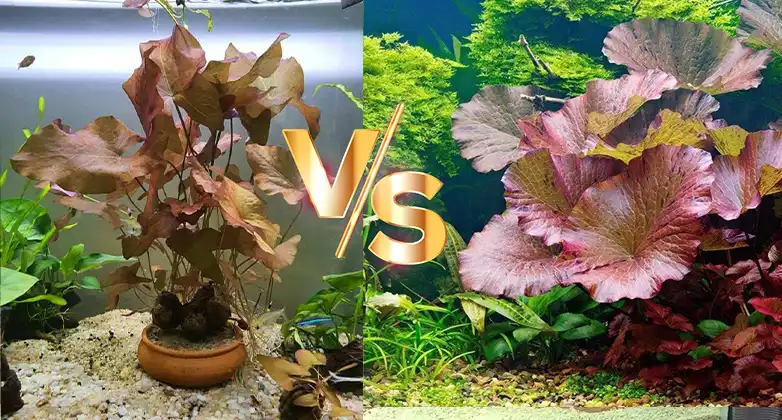
Differences and Similarities
Differentiating between Dwarf Aquarium Lilies and Tiger Lotuses is essential for aquarium lovers. These plants share some similarities but also have notable differences in appearance, care, and growth. Let’s discuss their unique characteristics and similarities:
Contrasting Features of Dwarf Aquarium Lily and Tiger Lotus
- Leaf Structure and Appearance: Dwarf Aquarium Lilies boast small, round reddish-brown leaves and star-shaped surface flowers. In contrast, Tiger Lotuses exhibit larger, arrowhead-shaped green leaves and spectacular flowers that emerge above the waterline, creating a striking display.
- Growth Rate and Size: Dwarf Lilies are compact, reaching 6 to 12 inches in height, making them suitable for smaller tanks. Tiger Lotuses can grow much taller, often exceeding 18 inches, making them ideal for larger aquariums.
- Care Requirements: Dwarf Lilies thrive in moderate light and are less demanding in terms of care, making them beginner-friendly. Tiger Lotuses, on the other hand, require higher lighting levels and benefit from nutrient-rich substrates, making them better suited for more experienced aquarists.
Common Aspects Between Dwarf Aquarium Lily and Tiger Lotus
- Aquascaping Benefits: Both plants contribute to the aesthetic appeal of your aquarium. Dwarf Aquarium Lilies and Tiger Lotuses can serve as focal points, adding beauty to your underwater landscape. Their distinctive leaf shapes and colors enhance the overall aquascape.
- Adaptability to Tanks: Both plants are adaptable to a variety of tank sizes, offering aquarists flexibility in their choices. Whether you have a small or large aquarium, you can incorporate these plants to create visually pleasing underwater environments.
- Aesthetic Contributions: Both plants enhance the beauty of your aquarium. Dwarf Aquarium Lilies and Tiger Lotuses contribute unique aesthetics, with their leaf shapes and colors adding visual interest to your tank, making it a captivating aquatic display.
Appearance and Growth
The appearance and growth of Dwarf Aquarium Lilies and Tiger Lotuses are key factors in your underwater garden. These plants have unique looks and sizes, which affect the overall charm of your aquarium. Let’s discuss their distinctive features:
Dwarf Aquarium Lily (Nymphaea Stellata)
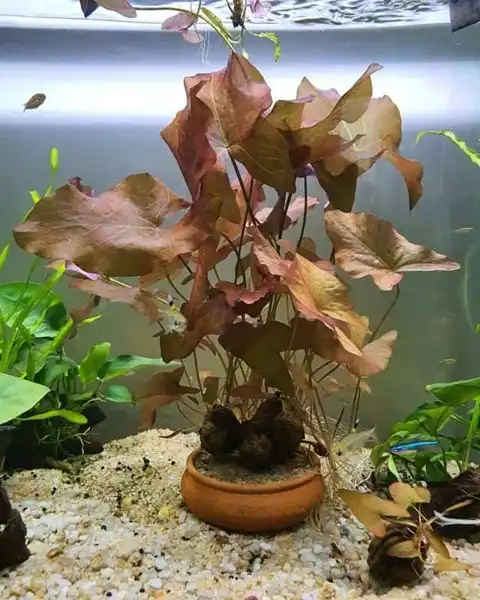
A Dwarf Aquarium Lily is a small water plant that’s perfect for aquariums. It has round reddish-brown leaves and star-shaped flowers. It’s great for smaller tanks and doesn’t need super bright lights.
- Leaves: The Dwarf Aquarium Lily boasts delicate, round leaves that are reddish-brown and grow on short stalks.
- Flowers: This plant produces lovely star-shaped blooms that float on the water’s surface.
- Size: It typically reaches a compact height of 6 to 12 inches, making it suitable for smaller tanks.
| Scientific Name: | Nymphaea Stellata |
| Common Name: | Dwarf Aquarium Lily |
| Origin: | India and Southeast Asia |
| Size: | Less than 5 inches (12.7 cm) |
| Temperature: | 72°F To 82°F |
Tiger Lotus (Nymphaea Lotus)
A Tiger Lotus is another cool aquarium plant. It has big, green, arrowhead-shaped leaves and showy flowers that pop out of the water. It’s taller than the Dwarf Lily and needs more light to thrive. Good for bigger aquariums.
- Leaves: Tiger Lotus leaves are known for their vibrant green color and distinctive, arrowhead-shaped appearance.
- Flowers: They produce impressive, showy flowers that emerge above the waterline.
- Size: Tiger Lotus can grow significantly taller, reaching heights of up to 18 inches or more.
| Scientific Name: | Nymphaea lotus |
| Common Name: | Tiger Lotus |
| Origin: | India and Southeast Asia |
| Size: | 30+ inches tall (76.2+ cm) and 20+ inches wide (76.2+ cm) |
| Temperature: | 70° to 85°F |
Care Requirements
Taking care of Dwarf Aquarium Lilies and Tiger Lotuses in your aquarium is essential for their well-being. These plants have different needs, including lighting, water conditions, and nutrients. Let’s go further for their care requirements in detail.
Lighting
Dwarf Aquarium Lily: This plant thrives in moderate lighting conditions, making it a great choice for beginners.
Tiger Lotus: It requires higher light levels to flourish, often necessitating the use of more intense aquarium lighting.
Water Parameters
Dwarf Aquarium Lily: It prefers slightly acidic to neutral water with a temperature range of 72-82°F (22-28°C).
Tiger Lotus: Tiger Lotus can adapt to a broader range of water conditions, but it does best in slightly acidic water with temperatures ranging from 75-82°F (24-28°C).
Nutrient Needs
Dwarf Aquarium Lily: It’s not particularly demanding in terms of nutrients, but it benefits from a nutrient-rich substrate or regular liquid fertilization.
Tiger Lotus: This plant appreciates a nutrient-rich substrate and the addition of root tabs to ensure optimal growth.
Visual Impact
The way Dwarf Aquarium Lilies and Tiger Lotuses look can transform your aquarium’s visual appeal. Their distinct features and sizes have a big impact on how your tank will appear. Let’s have a look at their visual effects.
Dwarf Aquarium Lily
Aesthetic: Its charming reddish-brown leaves and star-shaped flowers add a unique touch to your aquarium.
Size: Suitable for smaller tanks, it’s an excellent choice for aquascaping and creating a focal point.
Tiger Lotus
Aesthetic: The lush, green leaves and striking aerial flowers make the Tiger Lotus a showstopper in larger aquariums.
Size: With its taller growth, it’s ideal for larger setups, creating a dramatic visual impact.

Maintenance
Maintaining Dwarf Aquarium Lilies and Tiger Lotuses is essential to keep your underwater garden growing. These plants require regular care, including trimming, to ensure they remain healthy and visually pleasing. Let’s focus on their maintenance needs.
Dwarf Aquarium Lily: Pruning is minimal, and it generally requires less maintenance. Regular removal of spent leaves is recommended.
Tiger Lotus: It can grow rapidly, necessitating more frequent pruning and maintenance to control its size and shape.
Compatibility
Understanding which fish and tank mates get along with Dwarf Aquarium Lilies and Tiger Lotuses is vital. Compatibility can impact the plants’ growth and your aquarium’s harmony. Let’s see how to choose the right companions for these aquatic beauties.
Dwarf Aquarium Lily: Suitable for community aquariums with smaller fish and peaceful tankmates.
Tiger Lotus: Better suited for larger tanks with more robust fish, as it can dominate smaller aquariums.
Advantages and Disadvantages
Analyzing the advantages and disadvantages of Dwarf Aquarium Lilies and Tiger Lotuses helps you make the right choice for your aquarium, ensuring a flourishing underwater scenery.
Advantages and Disadvantages of Dwarf Aquarium Lily
- Advantages: Dwarf Lilies are beginner-friendly, adding charm to smaller tanks with their compact size. They require less maintenance, making them an excellent choice for those with limited time.
- Disadvantages: They may not have the dramatic visual impact of Tiger Lotuses, and their small size can get lost in larger aquariums, limiting their versatility.
Advantages and Disadvantages of Tiger Lotus
- Advantages: Tiger Lotuses create a visually stunning display in larger tanks, with vibrant colors and impressive flowers. They can be a centerpiece plant.
- Disadvantages: They demand higher lighting and more maintenance, making them less suitable for beginners or those with smaller tanks.
Choosing the Right Plant (Bonus Tips)
Selecting the perfect plant for your aquarium, whether it’s the Dwarf Aquarium Lily or the Tiger Lotus, is essential for a beautiful and flourishing underwater ecosystem. Let’s make the right choice.
Factors to Consider when Selecting between Dwarf Aquarium Lily and Tiger Lotus
- Tank Size and Layout: Consider the size and layout of your aquarium. For smaller tanks, the compact Dwarf Lily is an ideal choice, while larger tanks can accommodate the towering Tiger Lotus.
- Maintenance Level and Expertise: Assess your maintenance capabilities. Dwarf Lilies are easier to care for, making them suitable for beginners. Tiger Lotuses, with their higher demands, are better suited for experienced hobbyists.
- Desired Aesthetic and Functionality: Think about the visual impact you want. Dwarf Lilies provide a charming, compact aesthetic, while Tiger Lotuses offer a dramatic, showy presence. Your choice should align with your aquarium’s desired look and functionality.
Key Questions
Q1. Can I keep both plants in the same tank?
A: It’s possible, but be mindful of their different care requirements and sizes.
Q2. Do these plants require CO2 injection?
A: Both can benefit from CO2 supplementation, especially in high-light setups.
Q3. Can I grow these plants from seeds?
A: While it’s possible, it’s more common to propagate them from rhizome divisions or bulb offsets.
Q4. Are they compatible with goldfish?
A: Neither plant is an ideal choice for goldfish tanks, as goldfish tend to nibble on their leaves.
Q5. How often should I fertilize these plants?
A: Regular liquid or substrate fertilization every 2-4 weeks is typically sufficient.
Q6. What’s the best substrate for these plants?
A: Both plants do well with nutrient-rich substrates, such as aquatic plant-specific soils.
Q7. Can I grow them in a low-tech aquarium?
A: It’s possible, but expect slower growth and potentially smaller leaves and fewer blooms.
For related issues, see A Comprehensive Guide to Led Vs T5 Aquarium Lighting, Aquarium Silicone vs Regular Silicone, Is 10mm Glass Good for the Aquarium? Crystal Clear Decisions.
Conclusion
Choosing between the Dwarf Aquarium Lily and the Tiger Lotus depends on your aquarium’s size, lighting conditions, and your preference for plant appearance. The Dwarf Aquarium Lily offers a charming, compact option, while the Tiger Lotus makes a bold statement with its lush, towering presence. Consider your tank’s specific requirements and your desired aesthetic when making your decision.


