
API Betta Water Conditioner is the best water conditioner for betta owners who want a simple tap-water treatment. It is the top pick for most buyers because one formula treats chlorine, chloramines, and heavy metals before they reach a fish. That broad protection makes routine water changes easier, especially for small aquariums where water quality can shift quickly.
This guide is for new betta keepers and experienced fish owners comparing treatments for regular maintenance. The key factors are tank size and dosing accuracy, since overdosing wastes product while underdosing leaves harmful chemicals untreated. Bottle capacity also matters if you maintain several tanks or perform frequent water changes. The seven picks below are ranked by their main strengths, practical uses, and honest drawbacks, so you can choose a conditioner that fits your aquarium and routine.
Quick Comparison
| # | Product | Best For | Price | |
|---|---|---|---|---|
| 1 | API Betta Water Conditioner | For routine betta water changes | ~$4 | View → |
| 2 | Crystalpro Betta Water Conditioner | For budget-conscious betta keepers | ~$8 | View → |
| 3 | Aqueon Betta Bowl Plus Water Conditioner | For small betta bowls | ~$7 | View → |
| 4 | Fluval Betta Plus Water Conditioner | For Fluval aquarium owners | ~$3 | View → |
| 5 | Crystalpro Betta Minerals Aquarium Supplement | For mineral-deficient aquarium water | ~$8 | View → |
| 6 | Tetra BettaSafe Water Conditioner | For quick tap-water treatment | ~$4 | View → |
| 7 | API TAP WATER CONDITIONER Aquarium Water Conditioner | For multi-tank water changes | ~$8 | View → |
7 Top Water Conditioners for Bettas
These picks are ranked by formula, safety, bottle size, and value, counting down to the top choice.
7. API TAP WATER CONDITIONER Aquarium Water Conditioner

Best for: Regular aquarium water changes
API Tap Water Conditioner comes in one 16-ounce bottle for treating aquarium water before use. Its main job is to neutralize chlorine, chloramines, and other harmful chemicals found in tap water. That helps reduce the risk of gill damage, tissue irritation, and fish deaths linked to untreated water. The formula works for both freshwater and saltwater aquariums, so one bottle can cover more than one tank type.
The concentrated formula is the main practical advantage. Add 1 milliliter for every 20 gallons of aquarium water, including water added during a change. The conditioner also fits routines that involve adding new fish, not just scheduled maintenance. At around $8, it is a low-cost option for fishkeepers who need basic tap-water treatment. Still, the small dose requires a measuring tool, especially for tanks under 20 gallons. This product treats the listed water chemicals, but it does not replace water testing, filtration, or proper aquarium cycling.
Pros
- Neutralizes chlorine and chloramines before they harm fish.
- Works in freshwater and saltwater aquariums.
- A 16-ounce bottle uses only 1 milliliter per 20 gallons.
Cons
- Small doses can be difficult to measure accurately.
- It does not replace filtration, water testing, or aquarium cycling.
6. Tetra BettaSafe Water Conditioner

Best for: Small betta tank water changes
Tetra BettaSafe Water Conditioner treats tap water for bettas and other ornamental fish. The 1.69-ounce bottle is a low-cost option for owners who need a simple water treatment during aquarium setup or routine maintenance. It is priced around $4, though store prices can change.
The formula works within seconds and targets several common tap-water hazards, including chlorine, chloramines, ammonia, and heavy metals. That makes it useful during monthly partial water changes and when replacing water lost through evaporation. Its main advantage is broad coverage in one small bottle, rather than requiring separate treatments for chlorine and metals. Still, buyers should follow the bottle’s dosing directions for their tank size. This product conditions water, but it does not replace an aquarium filter, regular water testing, or proper tank cycling.
Pros
- Treats chlorine, chloramines, ammonia, and heavy metals in tap water.
- Works within seconds, which helps during quick water changes.
- Suitable for new tank setup, monthly changes, and evaporation replacement.
Cons
- The 1.69-ounce bottle contains a limited amount, so frequent water changes may require another bottle.
- It only conditions the water and does not replace filtration, testing, or tank cycling.
5. Crystalpro Betta Minerals Aquarium Supplement

Best for: Betta tanks using soft or RO water
Crystalpro Betta Minerals is a concentrated mineral additive for freshwater aquariums. It is made for soft or reverse-osmosis water, which may lack calcium, magnesium, potassium, and sodium. The formula also supplies electrolytes that help create more suitable water conditions for Betta fish. It may support a healthy slime coat, normal activity, and stronger color, though results depend on water quality, diet, and overall tank care.
Dosing is simple but very small. Add 1 to 2 drops per 1 liter, or 1 quart, of water each week. The built-in drop cap releases about 15 drops per milliliter, while one capful equals about 7 ml. The 4.2-ounce, 125 ml bottle can treat up to 1,875 liters, or 500 gallons, at the lower dosing rate. Around $8, it offers a low-cost way to remineralize small tanks. The additive is also listed as suitable for freshwater plants, shrimp, and snails.
Pros
- Adds calcium, magnesium, potassium, sodium, and electrolytes to soft or RO water.
- Precise drop dosing suits small Betta aquariums and weekly maintenance.
- One 125 ml bottle can treat up to 1,875 liters of water.
Cons
- It does not replace a dechlorinator, water conditioner, or proper tank cycling.
- Tiny doses can be difficult to measure accurately without a consistent dropper technique.
4. Fluval Betta Plus Water Conditioner
Best for: Small betta tank water changes
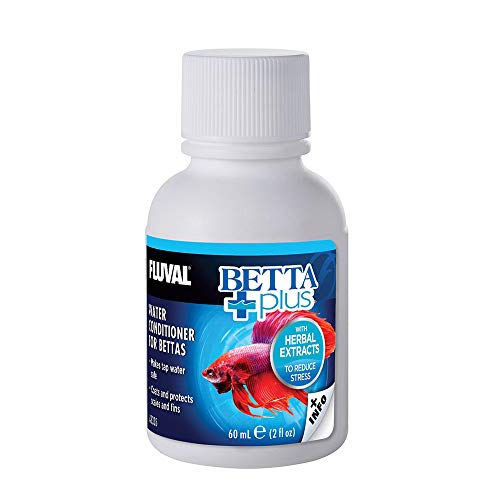
Fluval Betta Plus is a liquid conditioner for preparing tap water before it goes into a betta aquarium. It treats chlorine, chloramine, and unwanted metals that can harm fish. The formula also aims to protect scales and fins while easing stress during routine water changes. It comes in a 2 fl. oz. bottle, equal to 60 mL, and usually costs around $3.
The herbal extracts set it apart from a basic dechlorinator, although buyers should not expect them to replace good aquarium care. You still need regular water changes, a suitable filter or tank setup, and water testing when needed. The small bottle fits easily beside a desktop aquarium, but it may not last as long in larger tanks or homes with frequent changes. Since the product information does not provide a treatment amount here, check the bottle label before dosing. That matters because adding too much conditioner wastes product, while too little may leave treated water unsafe.
Pros
- Neutralizes chlorine and chloramine in tap water.
- Helps protect betta scales and fins during water preparation.
- Compact 60 mL bottle costs around $3 and suits small aquariums.
Cons
- The 2 fl. oz. size may run out quickly in larger tanks.
- It does not replace water testing, filtration, or regular aquarium maintenance.
3. Aqueon Betta Bowl Plus Water Conditioner
Best for: Small betta bowls and routine water changes
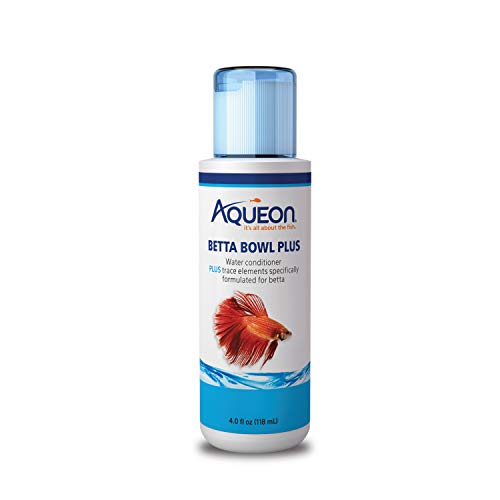
Aqueon Betta Bowl Plus is a liquid conditioner for tap or purified water used in betta tanks. The 4-ounce bottle treats water during setup and regular changes. Its dosage cap measures 5 mL, or 1 teaspoon, per 1 gallon of temperature-adjusted water. At around $7, it offers a low-cost way to prepare replacement water.
The formula treats chlorine-related tap water concerns by detoxifying heavy metals, ammonia, and other compounds linked to fish waste. It also adds trace elements made for bettas. That makes it useful after transport, netting, or other stressful handling. The main advantage is simple dosing for small aquariums, though owners still need to match the new water’s temperature. A 4-ounce bottle provides about 15 teaspoons, so it can treat roughly 15 gallons at the listed rate.
Pros
- Treats tap water before adding it to a betta bowl.
- Includes a cap for measuring the 5 mL-per-gallon dose.
- Adds betta-focused trace elements and supports fish after stressful handling.
Cons
- The 4-ounce size may run out quickly for larger tanks or frequent water changes.
- It does not replace regular water changes, waste removal, or proper tank maintenance.
2. Crystalpro Betta Water Conditioner

Best for: Betta owners doing small water changes
Crystalpro Betta Water Conditioner is a concentrated tap-water treatment for betta aquariums. The 4.2-ounce (125 ml) bottle treats up to 660 gallons, according to the product details. A dose of about four drops treats one gallon, while roughly 15 drops equal 1 ml. It is designed to neutralize chlorine, chloramines, ammonia, and heavy metals found in tap water.
The formula also adds electrolytes and minerals for fish kept in treated water. Its small drop cap helps with precise dosing and reduces spills, which matters when working with one-gallon bowls or small tanks. At around $8, the bottle costs little upfront and should last through many partial water changes. Still, buyers should view its ammonia claim as part of water care, not a replacement for testing, filtration, or regular maintenance. Tap water can vary by location, so checking ammonia and chlorine with an aquarium test kit remains sensible.
Pros
- Treats up to 660 gallons from a 125 ml bottle.
- Four drops handle one gallon of tap water.
- Targets chlorine, chloramines, ammonia, and heavy metals.
Cons
- Tiny drop doses can be difficult to count accurately, especially during larger water changes.
- It does not replace cycling the aquarium, testing water, or removing waste through routine maintenance.
1. API Betta Water Conditioner
Best for: Small betta bowls and routine changes
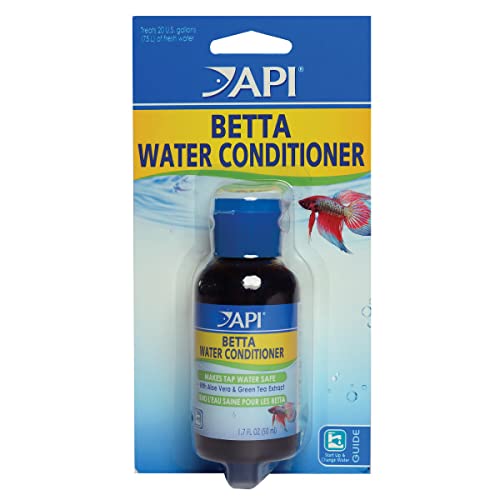
API Betta Water Conditioner comes in one 1.7-ounce bottle and treats tap water for freshwater bettas. It is made for two common tasks: filling a new bowl or aquarium and replacing water during routine maintenance. The formula targets chlorine, chloramines, ammonia, and other tap-water chemicals that can damage gills, irritate tissue, or cause death. At around $4, it costs little to add basic water treatment to a small setup.
The formula also contains aloe vera and green tea extract. These ingredients are intended to help reduce inflammation and support healing after fish face irritation from poor-quality tap water. That extra focus makes this product more specific than a general aquarium conditioner. Still, the 1.7-ounce size suits small betta habitats best. Larger tanks or frequent water changes may use the bottle quickly. The product prepares tap water, but it does not replace regular water testing, filtration, or a properly cycled aquarium.
Pros
- Neutralizes chlorine, chloramines, and ammonia in tap water.
- Aloe vera and green tea extract support irritated fish.
- Small 1.7-ounce bottle fits compact betta setups.
Cons
- The small bottle may not last long for larger aquariums.
- It does not replace cycling, filtration, or water testing.
Buying Guide
The most important factor is confirmed removal of both chlorine and chloramine. These disinfectants can damage a betta’s gills, so a formula that treats only chlorine may leave tap water unsafe.
- Water treatment coverage: Choose a label that clearly lists chlorine and chloramine removal. If your water report shows ammonia, consider a product that also temporarily binds ammonia.
- Dose accuracy: Pick a bottle with a marked cap, pump, or dropper. For a 5-gallon tank, the label should provide a dose you can measure accurately, such as 0.5 to 2.5 mL.
- Treatment speed: Select a conditioner rated for immediate use after dosing. This makes weekly water changes easier, though the label should confirm the required wait time.
- Cost per treated gallon: Compare coverage, not bottle size. A 4-fluid-ounce bottle contains about 118 mL, but the treated volume depends on its dose, often listed per 5 or 10 gallons.
- Formula and tank fit: Avoid products with unnecessary dyes or fragrances. If your aquarium contains shrimp, snails, live plants, or medication, verify compatibility before use.
If you cannot have everything, prioritize proven chloramine removal and an accurate dose for your tank size.
Frequently Asked Questions
How often should I use water conditioner for a betta tank?
You should add water conditioner every time you add tap water to your betta’s aquarium. Use the dosage printed on the bottle, including during partial changes; a 5-gallon tank often needs conditioner for the full replacement volume, not just the water removed.
What ingredients should I look for in betta water treatment?
Choose a betta water treatment that neutralizes chlorine and chloramine, and avoid products that only address chlorine. Look for clear dosing directions, since municipal water can contain both disinfectants; some labels also list protection for fish slime coats, but that feature does not replace regular tank maintenance.
Can I use regular aquarium conditioner for a betta?
Yes, you can use a general aquarium water conditioner for a betta if it treats chlorine and chloramine and you follow its fish-safe dosage. For example, a 10-gallon bottle dose may differ from a 5-gallon dose, so measure the new water before adding the product.
Are liquid conditioners better than tablets for betta tanks?
Liquid conditioners are usually more practical than tablets for betta tanks because they dissolve quickly and make small water changes easier to dose. A 1-gallon change may need only a few drops, while tablets can be harder to divide accurately; check the label for the exact amount.
Conclusion
API Betta Water Conditioner remains the top pick for betta keepers who want a simple, small-bottle treatment for routine water changes. If your priority is treating a larger aquarium or several tanks, pick a concentrated conditioner such as Seachem Prime instead, because its dosing can cover more water with less product. Before buying, double-check the bottle size, freshwater compatibility, treatment quantity, and current price, since a low shelf price may not mean the lowest cost per treated gallon. Keep the label nearby and measure each dose carefully. For one betta in a small aquarium, a compact bottle can reduce storage space and leftover product. Choose based on treated gallons, not bottle size alone.