
The Foreverlast Ray-Guard Reef Wading & Fishing Boots Gen II are the best saltwater wading boots for most buyers because their ray-guard construction adds protection while you walk over shallow, rough bottoms. These are purpose-built fishing boots, with coverage that helps shield feet and lower legs from stingrays, shells, and other hazards around reefs and flats.
This guide is for shore anglers, wade fishers, and beachcombers who need more protection than water shoes provide. Focus on accurate sizing, ray-guard coverage, sole grip, and how easily each pair drains and dries after use. A snug fit matters, but it should leave room for socks without pinching. The five picks below are ranked with clear reasons and honest drawbacks for each, so you can match protection, comfort, and price to your usual shoreline conditions.
Quick Comparison
| # | Product | Best For | Price | |
|---|---|---|---|---|
| 1 | Foreverlast Ray-Guard Reef Wading & Fishing Boots Gen II | Reef anglers needing stingray protection | ~$55 | View → |
| 2 | FROGG TOGGS Aransas II Neoprene Fishing Wading Boots | Cold-water anglers wanting neoprene warmth | ~$38 | View → |
| 3 | FROGG TOGGS Hellbender Waterproof Fishing Wading Boot | Waterproof anglers fishing muddy banks | ~$90 | View → |
| 4 | Foxelli Wading Boots for Men | Men seeking lightweight wading support | ~$90 | View → |
| 5 | ForEverlast Ray-Guard Generation II Reef Fishing Boots | Tropical reef fishermen needing rugged traction | ~$55 | View → |
5 Top Saltwater Wading Boot Picks
These saltwater wading boots are ranked by protection, traction, comfort, and value, counting down to the top pick.
5. ForEverlast Ray-Guard Generation II Reef Fishing Boots
Best for: Reef walkers and shallow-water anglers
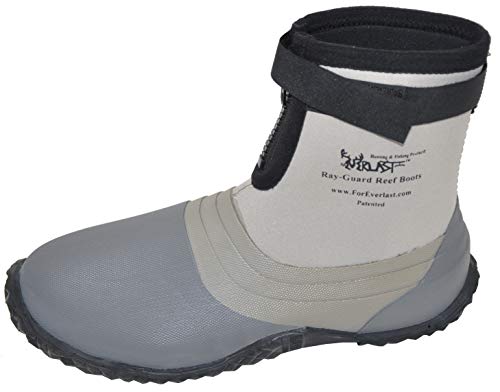
The ForEverlast Ray-Guard Reef Boots are neoprene wading shoes with a hard, vulcanized rubber outsole. This Size 12 listing is built for uneven riverbeds, reef surfaces, beaches, and boat decks. Four rubber layers add a stronger barrier against sharp rocks and rough underwater ground than a soft water shoe. The design also includes ankle support, a zipper, and a hook-and-loop cuff for a closer fit.
Water drainage is the main feature that sets these boots apart. A vent inside the sole lets excess water move out, while the SD system helps keep small rocks and grit from entering. Water-resistant materials can help reduce moisture and limit the spread of invasive species between waterways, but they will not replace proper cleaning and drying after each trip. At around $55, they offer more structure than basic beach footwear. The trade-off is a firmer, less flexible feel from the protective sole.
Pros
- Four layers of vulcanized rubber help shield feet from sharp rocks and uneven reef surfaces.
- Interior sole vents allow water to drain instead of pooling inside.
- Zipper and hook-and-loop cuff provide adjustable ankle coverage and a secure fit.
Cons
- The hard sole may feel stiff for long walks on land or soft sand.
- The listed Size 12 option limits choice unless other sizes are available from the seller.
4. Foxelli Wading Boots for Men

Best for: Anglers hiking to rocky streams
Foxelli Wading Boots are lightweight rubber-sole shoes for fly fishing, river crossings, and walks to remote banks. Each boot weighs 1.3 pounds and uses a microfiber and plaid nylon upper. Reinforced stitching, rubber toe and heel protection, and an abrasion-resistant exterior help handle gravel, brush, and repeated contact with rocks. Around $90, they sit in the midrange for dedicated fishing footwear.
Comfort is a clear focus. Removable OrthoLite insoles and EVA midsoles add cushioning, while the flexible upper allows natural movement. Mesh drain ports let water escape after a deep step, and the treaded rubber outsole is designed for mud, moss, and wet rocks. These boots have a roomy toe box. For standard 2–3mm neoprene stockingfoot waders, use your regular shoe size. A 4–5mm sock or thick winter layer calls for one size up. They are uninsulated and not fully waterproof, so pair them with neoprene booties when temperatures drop. Rinse them after use and air-dry them away from direct heat.
Pros
- 1.3-pound boots reduce bulk on long approaches.
- Rubber toe and heel rands protect against rocks and brush.
- Drain ports and lugged rubber soles suit wet riverbeds.
Cons
- The uninsulated design offers limited warmth in cold water.
- Not fully waterproof, so water can reach the neoprene sock area.
3. FROGG TOGGS Hellbender Waterproof Fishing Wading Boot

Best for: Anglers needing affordable wading traction
The FROGG TOGGS Hellbender is a men’s wading boot built for river fishing and shoreline access. This size 11 version uses a mesh and PVC upper that drains water, while reinforced toe and heel caps help protect against rocks and rough ground. The cleated sole is designed for traction on wet rocks, gravel, mud, and loose debris. A felt version is also available for anglers who prefer that sole type and can use it legally in their area.
Comfort comes from a polyurethane midsole, padded ankle collar, and wide wading last. That broader shape may provide better support when worn with waders, though fit can vary by foot shape and sock thickness. Speed laces and a locking lace clip make adjustments quicker at the riverbank. Around $90, the Hellbender offers useful fishing features without moving into premium pricing. Its materials target a full day outdoors, but buyers should still check local felt-sole rules before choosing that option.
Pros
- Cleated sole supports footing on mud, gravel, wet rocks, and debris.
- Mesh and PVC upper drains water and adds structure.
- Wide last, padded collar, and polyurethane midsole improve walking comfort.
Cons
- Cleated soles may provide less grip than felt on some slick rock surfaces.
- Mesh and PVC construction can feel less breathable than lighter fabric footwear in warm weather.
2. FROGG TOGGS Aransas II Neoprene Fishing Wading Boots

Best for: Shore anglers needing sand-resistant boots
The FROGG TOGGS Aransas II is a waterproof wading boot for fishing, surf, and sandy shorelines. This size 11 model uses a 5mm neoprene shell with a one-piece rubber athletic outsole. Cleated tread gives the sole extra bite on wet ground, while reinforced toe and heel caps help protect against contact with rocks. An EVA midsole adds cushioning underfoot for longer sessions.
The snug neoprene upper is the main standout. An adjustable ankle tension strap helps secure the fit, and the front zipper uses a full gusset to limit sand and grit from entering. That design is useful when walking through surf or loose shoreline debris. At around $38, this boot offers a practical feature set for anglers who want more protection than a basic water shoe. The 5mm material also brings warmth, which can help in cooler water but may feel heavy in hot weather.
Pros
- 5mm neoprene provides waterproof coverage and added warmth.
- Cleated rubber outsole improves traction on wet, uneven ground.
- Gusseted zipper, snug upper, and ankle strap help block sand.
Cons
- Thick neoprene may feel warm and bulky during summer use.
- Cleated soles can feel awkward on smooth indoor floors or hard pavement.
1. Foreverlast Ray-Guard Reef Wading & Fishing Boots Gen II
Best for: Rocky reefs and shallow river crossings
The Foreverlast Ray-Guard Reef Boots are water footwear for wading, fishing, and beach use. This Generation II pair combines a neoprene upper with a hard vulcanized rubber sole. The bottom uses four rubber layers to shield feet from sharp rocks, uneven riverbeds, and rough reef surfaces. Size 11 is listed here, and the design is made for both men and women. At around $55, these boots sit in the midrange for specialized wading footwear.
The fit uses a hook-and-loop cuff plus a zipper, giving you two ways to secure the ankle opening. A vent inside the sole lets water drain, while the SD system helps keep small rocks and grit out as water exits. The materials are described as waterproof and hydrophobic, which should help limit water retention and reduce the chance of carrying water between locations. Strong ankle support adds stability, though comfort will depend on your foot shape and the fit of size 11. The hard sole offers useful protection, but it may feel less flexible than a soft water shoe.
Pros
- Four layers of vulcanized rubber protect against sharp, uneven underwater surfaces.
- A zipper and hook-and-loop cuff allow a more secure ankle fit.
- Sole venting and the SD system help drain water while limiting grit entry.
Cons
- The rigid hard sole can feel stiff during long walks or extended shoreline use.
- Size 11 may not suit buyers between sizes, since the closure cannot change the boot’s length.
Buying Guide
Traction is the most important factor in saltwater wading footwear. Oyster shells, algae-covered rocks, and wet boat ramps can cause serious falls, so the sole must grip across changing surfaces.
- Sole traction: Choose rubber soles with lugs about 5–8 mm deep. Avoid felt unless local rules allow it, since several regions restrict felt to reduce invasive species.
- Saltwater resistance: Look for synthetic leather, rubber, or TPU uppers and corrosion-resistant hardware. Rinse the pair with fresh water after every saltwater trip, then air-dry it fully.
- Fit with waders: Bring your wader socks when sizing. Many anglers need one size larger than normal shoes, while a snug heel and limited toe movement help prevent blisters.
- Drainage: Select boots with mesh panels or drain ports that release water quickly. Avoid sealed designs that can hold several pounds of water after a deep crossing.
- Weight and support: Aim for roughly 2–3 pounds per pair. A firm midsole, padded ankle, and reinforced toe provide useful protection without making long walks exhausting.
If you must compromise, prioritize reliable traction over weight, drainage, or appearance.
Frequently Asked Questions
How do I choose saltwater wading boots?
Choose saltwater wading boots with a snug heel, room for your toes, corrosion-resistant hardware, and a sole suited to the shoreline you fish. For rocky beaches, rubber or felt soles can improve grip, but felt may be restricted locally. Check fishing rules before buying. Leave space for one pair of wading socks inside the boots.
What sole is best for saltwater wading?
Rubber soles are the best all-around choice for saltwater wading because they handle sand, shells, and boat decks without the restrictions that affect felt. Look for deep lugs, roughly 4 to 6 millimeters deep, when fishing rocky shorelines. Flatter rubber patterns suit sandy flats and clean more easily after each trip.
Can I use freshwater wading boots in saltwater?
Yes, you can use freshwater wading boots in saltwater if you rinse and dry them after every trip and protect metal parts from corrosion. Flush them with fresh water for several minutes, remove the insoles, and let the pair dry fully before storing. Salt buildup can stiffen laces and damage eyelets over time.
Are bootfoot or stockingfoot waders better for saltwater fishing?
Stockingfoot waders are usually better for saltwater fishing when you want adjustable fit and easier boot replacement, while bootfoot models offer faster setup and fewer separate pieces. A stockingfoot system lets you replace worn boots without replacing the waders. Bootfoot designs may save several minutes during launch and pack-up.
Conclusion
Foreverlast Ray-Guard Reef Wading & Fishing Boots Gen II suit anglers who need extra protection while walking across rocky reefs, oyster beds, and shallow saltwater. If your priority is easier walking and a lighter feel, pick the more flexible boot from the roundup instead, even if it gives up some armor. Before buying, double-check the size chart, fin or wader compatibility, pair quantity, and current price, since listings can vary. These boots make the most sense for careful anglers who value coverage over minimal bulk. They may feel excessive on sandy beaches or short shoreline sessions. Match the boot to your usual terrain, fishing style, and packing space before placing an order.