
The Aquatic Life RO Buddie 4-Stage RO Water Filter System is the top pick for most buyers. It earns the title best ro unit for aquarium because it provides four-stage purification in a compact, relatively affordable setup. That makes it a practical choice for freshwater tanks, reef aquariums, and regular water changes.
This guide is for aquarists who need cleaner source water without buying a large commercial filter. The most important factors are daily output capacity and replacement filter cost, since both affect setup time and long-term ownership. A smaller unit may suit one tank, while larger aquariums need faster production or extra storage. The five picks below are ranked by their filtration design, value, and intended use. Each includes clear reasons to consider it, along with honest drawbacks that could affect your choice.
Quick Comparison
| # | Product | Best For | Price | |
|---|---|---|---|---|
| 1 | Aquatic Life RO Buddie 4-Stage RO Water Filter System | Budget-Conscious Reef Tank Keepers | ~$70 | View → |
| 2 | iSpring RCC1DP Tankless RO/DI System | High-Volume Aquarium Water Preparation | ~$194 | View → |
| 3 | AquaticLife 4-Stage RO/DI Filter | Dedicated Reef Tank Hobbyists | ~$154 | View → |
| 4 | Aquatic Life RO Buddie 3-Stage Aquarium Water Filter | Small Freshwater Aquarium Owners | ~$62 | View → |
| 5 | Aquatic Life Twist-in RO/DI Aquarium Filter | Quick-Change Filter Users | ~$98 | View → |
5 Top RO Units for Aquariums
These ranked picks count down from practical options to the top aquarium RO unit for cleaner makeup water.
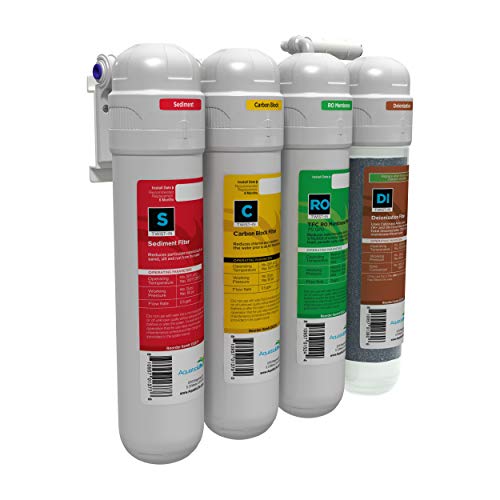
5. Aquatic Life Twist-in RO/DI Aquarium Filter
Best for: Reef keepers needing low-TDS water
This Aquatic Life system is a four-stage reverse osmosis/deionization filter for aquarium water. It uses sediment, carbon, RO membrane, and DI resin stages in one compact setup. The rated output reaches up to 75 gallons per day, although actual production can vary by water conditions. At around $98, it offers a practical route to purified water without buying each filtration stage separately.
The first two cartridges catch sediment and reduce chlorine, helping remove dirt, sand, rust, and other particles that can cloud aquarium water. The RO membrane cuts total dissolved solids at a listed 1:10,000 ratio. A mixed-bed DI cartridge then polishes the water further. Its resin changes from blue to tan as it becomes exhausted, giving you a visible replacement signal. Twist-in cartridges require no tools, which makes routine changes simpler than systems with threaded housings. This filter does not remove chloramines, so check your tap water before buying.
Pros
- Four stages produce up to 75 gallons per day of purified water.
- Color-changing DI resin shows when the final cartridge needs replacement.
- Twist-in cartridges change without tools or a filter wrench.
Cons
- It does not reduce chloramines, which some municipal water systems use.
- The 75 GPD rating is a maximum, so output may be lower under less favorable water conditions.
4. Aquatic Life RO Buddie 3-Stage Aquarium Water Filter

Best for: Aquarists needing low-TDS water
The Aquatic Life RO Buddie is a three-stage reverse osmosis unit for aquariums, fountains, humidifiers, and other water needs. Its listed capacity is 50 gallons per day, so it suits routine water preparation more than large, rapid fill-ups. At around $62, it offers a lower-cost way to treat tap water at home.
Water first passes through a sediment filter that catches sand, silt, and similar particles. Next, the carbon block filter helps reduce chlorine and unpleasant odors. The final RO membrane removes most remaining dissolved solids, with the system rated to reduce total dissolved solids by up to 98%. That can give sensitive fish and aquatic plants more consistent water than untreated tap water. The main detail to remember is that the carbon stage does not remove chloramines. Buyers should also check their source water and the manufacturer’s technical PDF for full performance information.
Pros
- Three filtration stages target sediment, chlorine, odors, and dissolved solids.
- Up to 98% TDS reduction can help with sensitive aquatic life.
- The 50 GPD rating supports regular aquarium water preparation.
Cons
- A 50 GPD output is slower than a direct tap-water fill, especially for larger tanks.
- The carbon filter does not remove chloramines, so it may not suit every municipal water supply.
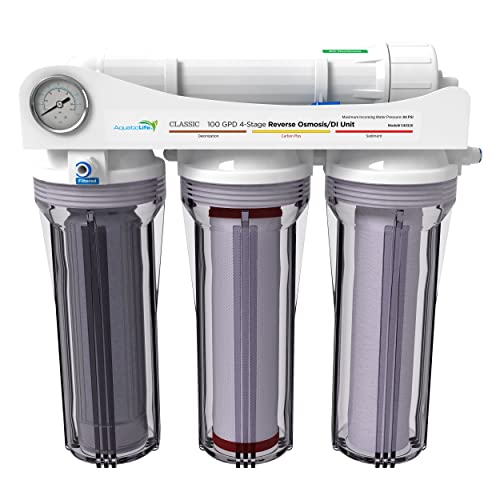
3. AquaticLife 4-Stage RO/DI Filter
Best for: Reef tank water preparation
The AquaticLife 4-Stage RO/DI Filter produces up to 100 gallons per day for aquarium water preparation. Its four stages include a sediment cartridge, Carbon Plus cartridge, 100 GPD reverse osmosis membrane, and a refillable 10-inch deionization cartridge. The color-changing resin gives you a visual cue when the DI media needs attention. At around $154, it fits between basic hobby filters and larger commercial setups.
The Carbon Plus cartridge targets common disinfectants, with claimed removal of up to 98% of chloramines and 99% of chlorine. A liquid-filled pressure gauge helps track system performance and can signal when the membrane may need replacement. The automatic shutoff solenoid stops production when the connected storage container reaches capacity, while the flush valve supports membrane maintenance. This unit is made for aquarium and other non-drinking uses, not household drinking water.
Pros
- Four filtration stages combine sediment, carbon, membrane, and DI treatment.
- The 100 GPD membrane can supply water for larger aquariums.
- Pressure gauge, automatic shutoff, and flush valve add useful control.
Cons
- It is not intended to filter water for drinking.
- Actual output depends on incoming water pressure and conditions, and DI resin eventually needs replacement.
2. iSpring RCC1DP Tankless RO/DI System

Best for: Reef aquariums with low water pressure
The iSpring RCC1DP is a tankless, five-stage RO/DI water filter rated for up to 150 gallons per day. It uses a pump to support filtration where incoming pressure is low, making it suitable for aquariums, laboratories, dental facilities, and microelectronics work. The system needs a suitable water connection and power source for the pump.
Its strongest feature is the final de-ionization stage. iSpring rates the system to reduce more than 1,000 pollutants, with up to 98% lead reduction and removal of chlorine, fluoride, and other dissolved contaminants. Output water can reach 0–1 ppm total dissolved solids, which suits reef tanks and other sensitive aquatic setups. Around $194, it costs more than basic under-sink RO filters, but the higher 150 GPD rating and pump add useful capacity. A 30-day money-back guarantee and one-year limited warranty provide some purchase protection.
Pros
- Pump-assisted filtration helps maintain flow with low incoming water pressure.
- 150 GPD membrane provides more output than many smaller RO systems.
- DI stage can produce 0–1 ppm TDS water for reef aquariums.
Cons
- DI resin and other filter cartridges require replacement, adding ongoing costs.
- Rated output depends on feed-water conditions, and the pump requires an electrical outlet.
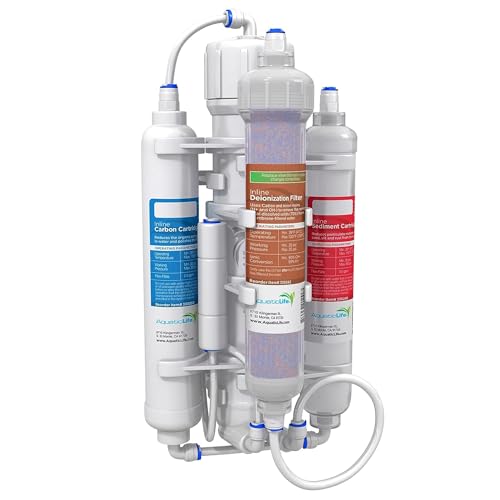
1. Aquatic Life RO Buddie 4-Stage RO Water Filter System
Best for: Reef tanks needing low-TDS water
The Aquatic Life RO Buddie is a four-stage water filter for aquariums, fountains, humidifiers, and other uses. It produces up to 50 gallons per day through a sediment filter, carbon block, reverse osmosis membrane, and deionizing resin cartridge. At around $70, it offers a compact way to make cleaner water at home.
The first stage catches sand, silt, and other visible debris. The carbon block reduces chlorine and odors, but it does not remove chloramines. The RO membrane then removes most total dissolved solids from tap water. A final DI stage removes much of the remaining TDS. Its resin changes from blue to tan as it becomes exhausted, giving you a clear replacement signal. That visual indicator is the most useful feature for routine aquarium maintenance. Still, the 50 GPD rating may feel slow for large tanks or frequent water changes.
Pros
- Four filtration stages produce cleaner, lower-TDS water for sensitive fish, coral, and plants.
- The sediment and carbon filters reduce dirt, chlorine, and unpleasant odors.
- Color-changing DI resin makes cartridge replacement easier to judge.
Cons
- The carbon filter does not remove chloramines, so treated municipal water may need another solution.
- A 50 GPD system can take substantial time to fill large containers or support multiple aquariums.
Buying Guide
Water purity is the most important factor when choosing an aquarium reverse-osmosis system. Fish, shrimp, and corals can react to chlorine, metals, nitrate, and other dissolved solids.
- Filtration stages: Choose three to five stages. A useful setup includes sediment, carbon, RO membrane, and DI resin. Use carbon rated for chloramine if your water supply contains it.
- Output rate: A 50 to 75 GPD unit suits many home aquariums. Choose 100 GPD for tanks over 100 gallons or frequent water changes. Cold water and low pressure reduce actual output.
- Wastewater ratio: Look for a stated ratio near 3:1 or lower. That means three gallons discarded for each gallon produced. Reuse reject water for plants when local rules allow.
- Water pressure: Confirm that your supply reaches about 50 to 80 PSI. Add a booster pump if pressure stays below the membrane’s recommended range.
- Maintenance cost: Budget $30 to $100 yearly for sediment, carbon, and DI replacements. Standard 10-inch cartridges are easier to find and replace.
If you cannot prioritize everything, choose dependable water purity before faster output or a lower purchase price.
Frequently Asked Questions
How do I choose an RO filter for my aquarium?
Choose an RO unit by matching its output, filtration stages, and replacement costs to your aquarium’s size and water chemistry. For most home systems, a four- or five-stage unit is a practical starting point; add a deionization stage when tap water still contains measurable dissolved solids.
What capacity should an aquarium reverse osmosis system have?
Choose a unit rated for at least your weekly water demand, with extra capacity for slow production and wastewater. A 50-gallon-per-day membrane can suit a medium setup, but actual output drops with cold water, low pressure, or clogged prefilters. Check the manufacturer’s rating conditions before buying.
Can I use an RO/DI filter for freshwater and saltwater tanks?
Yes, you can use an RO/DI filter for freshwater or saltwater aquariums, but remineralize the water before adding it to freshwater tanks. Saltwater keepers usually mix purified water with marine salt, while freshwater owners can use a remineralizer matched to their fish and plants.
Are four-stage RO units enough for aquarium use?
Four-stage units are enough for many aquariums when tap water has moderate contaminants, while five-stage RO/DI systems suit tanks needing near-zero TDS. A typical four-stage setup uses sediment filtration, carbon filtration, reverse osmosis, and a second carbon filter; the fifth stage adds deionization resin.
Conclusion
For most reef keepers and freshwater aquarists who need a compact, affordable purification setup, the Aquatic Life RO Buddie 4-Stage RO Water Filter System remains the top recommendation. If your priority is higher daily output, greater filter capacity, or easier expansion, choose a larger reverse-osmosis system instead, since it may better match demanding water changes and larger aquariums. Before buying, double-check the unit’s physical size, faucet or hose compatibility, included filter quantity, replacement-cartridge availability, wastewater connection, and current price, because installation needs and long-term costs can vary between listings. A good match should fit your available space, connect to your water source, and produce enough purified water for regular maintenance without creating storage problems.