
Your Choice Aquatics of-Nano Overflow Box is the top pick for most buyers. It earns that spot as the best overflow box for aquarium setups because its nano-focused design suits smaller tanks without adding unnecessary bulk. Its compact format makes it a practical starting point for reef tanks, planted aquariums, and other space-limited setups.
This guide is for aquarium owners who need a cleaner way to move water into a sump or filtration system. The key details are box dimensions, drain capacity, and construction material. Those factors affect fit, water flow, noise, and long-term durability. A unit that is too large may crowd the tank, while a low-capacity model can restrict circulation. The 7 picks below are ranked with clear reasons and honest drawbacks for each, so you can compare these aquarium overflow systems with fewer surprises.
Quick Comparison
| # | Product | Best For | Price | |
|---|---|---|---|---|
| 1 | Your Choice Aquatics of-Nano Overflow Box | Nano Reef Tank Owners | ~$75 | View → |
| 2 | Blue Ocean 600 Continuous Siphon Overflow Box | Continuous Siphon Setup Seekers | ~$120 | View → |
| 3 | Eshopps AEO11000 Overflow Box | Compact Aquarium Plumbing Upgraders | ~$140 | View → |
| 4 | Eshopps AEO11010 Overflow Box | Custom Overflow Installation Projects | ~$163 | View → |
| 5 | Aqueon Aquarium Overflow Accessory Kit | Overflow Accessory Replacement Buyers | ~$80 | View → |
| 6 | Fiji Cube Low Profile Overflow Box | Low-Profile Aquascape Builders | ~$185 | View → |
| 7 | Eshopps PF-1200 Overflow Box for Aquariums | High-Flow Aquarium Keepers | ~$165 | View → |
7 Top Aquarium Overflow Boxes
Below, we rank seven aquarium overflow boxes, counting down from a practical starting option to our top pick.
7. Eshopps PF-1200 Overflow Box for Aquariums

Best for: Large aquariums needing sump overflow
The Eshopps AEO11015 PF-1200 is an overflow box for aquarium tanks. Its listed capacity reaches aquariums up to 400 gallons, putting it in the large-system category rather than the nano or small freshwater market. An overflow box helps route water from the display tank toward filtration equipment, such as a sump, when the aquarium setup supports that arrangement.
Its main strength is the high capacity rating. A 400-gallon limit gives owners more room for large reef, marine, or freshwater systems. The price is around $165, so this is a serious purchase for a specialized aquarium component. The available product details list capacity but do not provide dimensions, drain fitting sizes, included plumbing, or material information. Buyers should confirm those points before ordering, since compatibility depends on the tank and filtration layout. Smaller aquarium owners may pay for capacity they will never use.
Pros
- Supports aquarium systems up to 400 gallons.
- Fits large tank setups that use sump-based filtration.
- Offers more capacity than overflow boxes intended for small aquariums.
Cons
- Around $165, it costs more than many small-tank overflow options.
- The listed details do not confirm dimensions, fittings, plumbing, or materials.
6. Fiji Cube Low Profile Overflow Box

Best for: DIY reef tank owners needing compact overflow
The Fiji Cube Low Profile External Overflow Box is designed for aquariums that need an external drain without a large box extending from the back. Its listed flow rate is 1,200 GPH, which suits many medium-sized reef systems, though the tank’s return pump and plumbing still determine actual flow. The slim profile can preserve space behind the aquarium, but installation requires drilling the glass or acrylic. That makes careful measurements essential.
The package includes a drilling template and diamond hole saw, along with PVC pipe for an emergency drain setup. A detachable skimmer box makes access easier during cleaning, while front and rear covers help limit water noise and splashing. Plumbing can be arranged in a Herbie-style configuration. Some models also support a Bean Animal setup, but that option is not universal across the range. At around $185, it costs more than simple internal overflow parts, yet the kit includes several installation components that would otherwise require separate purchases.
Pros
- 1,200 GPH capacity fits many medium-sized reef aquariums.
- Detachable skimmer box simplifies access for cleaning and inspection.
- Template, diamond hole saw, and PVC emergency-drain pipe support DIY installation.
Cons
- Drilling the aquarium is permanent and leaves little room for measurement errors.
- Bean Animal plumbing is available only on selected models, so buyers must confirm compatibility first.
5. Aqueon Aquarium Overflow Accessory Kit

Best for: All-Glass overflow system owners
The Aqueon Fish Tank Overflow Accessory Kit is a new accessory package made for All-Glass Aquarium systems. It is intended for aquariums that use an overflow setup, helping owners replace or add the parts needed around that system. The listing identifies it as an All-Glass Aquarium product, rather than a universal overflow kit. That makes system matching the main buying point.
The strongest detail is its brand-specific design. Buyers with a compatible All-Glass aquarium may prefer this kit over sorting through unrelated fittings. The manufacturer also describes the construction as meeting its usual quality standard, though the available listing does not name the included parts, materials, dimensions, or quantity. That missing information matters for aquarium plumbing, where a small size mismatch can stop installation. At around $80, this kit is not a casual add-on purchase. Check your aquarium model and compare the package contents before ordering. Compatibility should come first, since the product page provides limited technical detail.
Pros
- Designed for All-Glass Aquarium overflow systems, which can simplify brand-specific replacement shopping.
- New condition gives buyers a fresh accessory option instead of used plumbing parts.
- Made by All-Glass Aquariums, so it may provide a closer system match than generic fittings.
Cons
- The listing does not specify included components, measurements, or quantities.
- Around $80, it may cost more than buying individual generic plumbing parts.
4. Eshopps AEO11010 Overflow Box
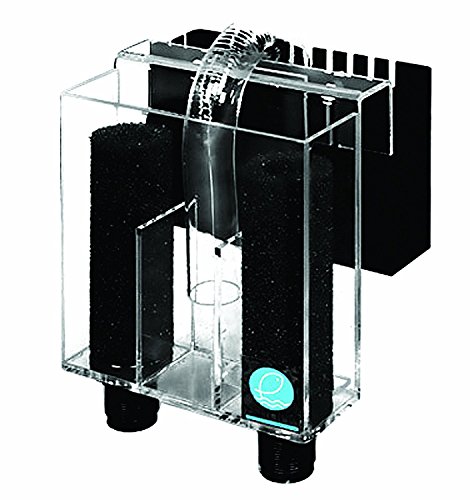
Best for: Large aquariums needing external overflow
The Eshopps PF-1000 is an aquarium overflow box designed for tanks up to 150 gallons. It helps move water from the display tank to external filtration equipment, making it useful for aquarium setups that need more controlled water flow. Its setup-focused design should appeal to owners who want an overflow system without choosing a more complex arrangement. At around $163, it is a sizable purchase, so tank compatibility matters before ordering.
The main feature is its dual-drain layout. Two drains provide a backup path if one becomes clogged, which can reduce the risk of a single blocked drain stopping water movement. That does not remove the need for regular cleaning, but it adds useful protection to the plumbing setup. The PF-1000 is best suited to larger freshwater or saltwater systems within its 150-gallon limit. Buyers should also confirm that their aquarium has enough space behind it for an overflow box and connected plumbing.
Pros
- Supports aquariums up to 150 gallons.
- Dual drains provide a backup if one drain clogs.
- Setup-focused design can simplify installation compared with more complex overflow arrangements.
Cons
- It is not intended for aquariums larger than 150 gallons.
- The external box and plumbing require clearance behind the tank, which may not suit compact stands or wall-mounted setups.
3. Eshopps AEO11000 Overflow Box

Best for: Large reef and freshwater tank owners
The Eshopps AEO11000 Overflow Box Pf-300 is an aquarium overflow system for tanks up to 400 gallons. It moves water from the display tank toward filtration equipment through an external drain setup. That makes it a practical option for large aquariums that need more plumbing capacity than a small internal overflow can provide. The listed price is around $140, though costs can change.
Its strongest feature is the dual-drain layout. If one drain becomes clogged, the second provides another outlet instead of leaving the system with only one path for water. The box also uses a setup-focused design, which should make installation less complicated than building a custom overflow from separate parts. Still, this is aquarium plumbing equipment, not a simple plug-in accessory. Buyers need compatible drain lines, filtration equipment, and enough space behind the tank. The 400-gallon rating also makes this box a poor fit for many small aquariums.
Pros
- Supports aquariums up to 400 gallons, making it suitable for large tank systems.
- Dual drains provide a backup path if one drain gets clogged.
- Setup-focused design can reduce the work compared with assembling a custom overflow.
Cons
- Around $140, it costs more than basic overflow parts for smaller tanks.
- The large capacity may be unnecessary for compact aquariums and still requires separate plumbing and filtration components.
2. Blue Ocean 600 Continuous Siphon Overflow Box

Best for: Reef tanks needing external overflow
The Blue Ocean 600 Overflow Box is a hang-on-back overflow for aquariums that need water routed to a sump or filtration system. Its 7.50 by 8.00 by 9.75-inch body fits over the tank wall, while the included 1-inch inside-diameter bulkhead provides the drain connection. It requires at least 6 inches of clearance behind the aquarium, so measure the space before ordering.
Its rated flow reaches 600 gallons per hour, giving it enough capacity for many medium-sized reef or freshwater setups. The continuous siphon design can help maintain water movement without drilling the tank, which is the main appeal for aquarium owners who want an external overflow. At around $120, it costs more than basic overflow boxes, but the included bulkhead adds useful value. The biggest ownership concern is setup guidance. No manual comes with the box, so buyers may need to contact the seller for instructions or rely on their own plumbing knowledge.
Pros
- Handles up to 600 GPH for sump-based filtration systems.
- Includes a 1-inch ID bulkhead for connecting drain plumbing.
- Hang-on-back design avoids drilling through the aquarium.
Cons
- Needs at least 6 inches of rear clearance, which may not suit tight stands or wall placements.
- No setup manual is included, so installation may require seller support or prior plumbing experience.
1. Your Choice Aquatics of-Nano Overflow Box

Best for: Small reef tanks needing overflow drainage
The Your Choice Aquatics YCA of-Nano is a compact overflow box for aquariums that need an external drain without drilling the tank. It uses a surface skimmer box to pull water from the top, then sends that water through the included U-tube and bulkhead. The setup is aimed at nano and smaller reef systems, where cabinet space and tank size can limit plumbing choices. It costs around $75, though prices can change.
Its main advantage is the self-priming design. If the return pump loses power, the overflow is designed to restart water flow when power returns, which can reduce the risk of manually resetting the siphon. A cylindrical foam sleeve surrounds the drain area to help lower operating noise. That said, the box still depends on correct installation and a clear U-tube. Foam also needs periodic cleaning because trapped debris can restrict flow. Buyers should confirm the box fits their tank rim and plumbing layout before ordering, since the listed features do not provide exact dimensions or flow-rate limits.
Pros
- Self-priming operation helps restore the siphon after a power failure.
- The surface skimmer removes water from the tank’s upper layer.
- Included U-tube, bulkhead, and foam sleeve reduce the need for separate parts.
Cons
- Exact tank fit and flow capacity are unclear from the listed information.
- The U-tube and foam sleeve require cleaning to prevent buildup and reduced flow.
Buying Guide
The most important factor is drain capacity, because an overflow must handle your return pump without raising the water level too high. Choose a model rated for at least 25% more flow than your pump delivers after head-height losses.
-
Flow rating: Match the box to your actual return rate, not the pump’s advertised maximum. For a 600 gallons-per-hour system, choose a unit rated for at least 750 gallons per hour.
-
Tank compatibility: Confirm the box fits your aquarium’s glass thickness and water volume. Many hang-on models suit rimless or framed tanks from 10 to 120 gallons, but the listed range varies.
-
Siphon design: Prefer dual U-tubes or another design with backup water paths. A single siphon can stop draining if air collects inside it, which may flood the display tank.
-
Drain plumbing: Check the drain bulkhead size, such as 1 inch or 1.5 inches, and confirm it matches your hose, standpipe, or sump fitting. Flexible tubing should not kink behind the tank.
-
Noise and maintenance: Look for an adjustable gate valve, removable screens, and accessible siphon tubes. A strainer with openings under 1/4 inch helps block fish and large debris, but requires regular cleaning.
If you cannot have everything, prioritize capacity with a reliable backup siphon over quiet operation or compact size.
Frequently Asked Questions
How do I choose the right overflow box for my aquarium?
Choose an overflow box by matching its rated flow to your return pump, checking emergency drainage, and confirming it fits your tank and sump layout. A model rated for 600 to 1,000 gallons per hour suits many medium reef systems, but actual flow drops through plumbing, valves, and elbows.
What features matter most in an aquarium overflow box?
The most useful features are a reliable siphon design, a separate emergency drain, adjustable bulkheads, and an intake screen that resists snails and fish. Look for dual 1-inch drains or similar capacity when the system needs quiet, redundant drainage, though tank glass thickness must match the box.
Can an overflow box be added to a tank without drilling it?
Yes, a hang-on-back overflow can add sump drainage to an established aquarium without drilling, provided the box fits the rim and maintains a dependable siphon. Many units suit glass panels about 1/4 to 1/2 inch thick, so measure the tank before buying.
Are external aquarium overflow boxes quieter than internal models?
External overflow boxes are often quieter than internal models because they keep the drain and water drop outside the display, but noise depends on plumbing and water level. A gate valve and a full-length drain pipe can reduce splashing, while poor siphon adjustment may still cause gurgling.
Conclusion
Your Choice Aquatics of-Nano Overflow Box is the top recommendation for aquarists who need a compact overflow setup for a nano reef or small aquarium. If your priority is higher drainage capacity or a larger display, choose a model sized for that system instead, since a tiny box can restrict flow and leave little room for adjustment. Before buying, double-check the box dimensions, tank compatibility, included quantity, and current price, since listings can vary. Also confirm the required drain plumbing and water-level adjustment range. A good match should fit the tank rim, support your planned flow rate, and leave enough space for maintenance. Choose the smallest reliable unit that meets those needs, not simply the cheapest listing.