
The Moistenland Reptile Humidifier is the best humidifier for terrarium for most buyers because its adjustable mist output makes humidity easier to manage. It is built for reptile and amphibian enclosures, where steady moisture matters more than extra features. Its straightforward design also suits keepers who want a dedicated enclosure humidifier without a complicated setup.
This guide is for anyone maintaining tropical geckos, frogs, snakes, or other moisture-loving species. The key factors are tank size, water capacity, and how precisely you can control mist output. A small enclosure can become too wet quickly, while a larger habitat may need longer runtime and wider coverage. The five picks below are ranked with clear reasons and honest drawbacks for each, so you can match the unit to your animal’s habitat and care routine.
Quick Comparison
| # | Product | Best For | Price | |
|---|---|---|---|---|
| 1 | moistenland Reptile Humidifier | Best for compact terrariums | ~$28 | View → |
| 2 | MRREPTILE Reptifogger Terrarium Humidifier | Best for tropical reptiles | ~$30 | View → |
| 3 | COOSPIDER Reptile Fogger Humidifier | Best for adjustable fog output | ~$68 | View → |
| 4 | Coospider Reptile Fogger Mister | Best for misting multiple enclosures | ~$50 | View → |
| 5 | YOUENKITY Automatic Reptile Mister | Best for scheduled humidity control | ~$30 | View → |
5 Top Terrarium Humidifier Picks
This ranked list counts down from solid terrarium humidifiers to the top pick for different enclosure sizes.
5. YOUENKITY Automatic Reptile Mister

Best for: Reptile terrariums needing steady humidity
The YOUENKITY Automatic Humidity Reptile Mister combines a fogger, humidity sensor, and control panel in one compact unit. It monitors the enclosure’s moisture level and adjusts misting toward your chosen target. Four preset levels, 35%, 50%, 70%, and 85%, cover common needs for reptiles, plants, and terrariums. You can also enter a custom humidity percentage instead of using a preset. The price is around $30, though it can change.
Its main advantage is simpler setup than systems that need separate sensors, tubing, and controllers. After selecting a target, the unit stops misting when the reading reaches that level, then resumes as humidity drops. That makes it useful during sleep or short trips when frequent adjustments are inconvenient. Still, the product details do not list the water tank capacity, misting range, or operating time per fill. Buyers with large enclosures may need those numbers before deciding if this compact fogger can keep up. Placement also matters, since humidity readings can vary across a terrarium.
Pros
- Built-in humidity sensing removes the need for an external sensor.
- Four presets, from 35% to 85%, make setup quick.
- Custom percentage control supports species with narrower humidity needs.
Cons
- The listed details do not provide tank size or runtime.
- One compact unit may not produce enough mist for large terrariums.
4. Coospider Reptile Fogger Mister
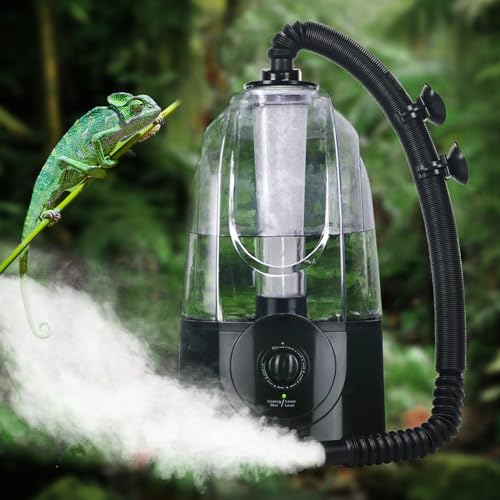
Best for: 10–40 gallon humid terrariums
The Coospider 3.8L Reptile Fogger Mister adds cool mist to single-compartment terrariums. Its reservoir measures 13 by 7.5 by 7.5 inches, with enough capacity for longer periods between refills. The included hose adjusts from 1.5 to 6.3 feet, and two suction cups help hold the tube in position. A front rotary knob controls mist volume, while a rear switch powers the unit. At around $50, it targets keepers who want basic automatic humidity control without a complicated setup.
The listed runtime reaches up to 26 hours at a medium mist level, or about 10 hours at maximum output. The highest setting uses up to 380 milliliters per hour. Ultrasonic atomization produces a fine, even mist, and the stated noise level stays below 35 decibels. A dry-off safety feature changes the indicator from green to red and stops operation when the reservoir empties. That protects the machine, but this model does not measure humidity or adjust output on its own.
Pros
- Large 3.8L tank reduces refill frequency for compatible enclosures.
- Adjustable hose and two suction cups support flexible tube placement.
- Dry-off protection stops the unit when water runs out.
Cons
- No timer or humidity sensor, so monitoring and scheduling require separate tools.
- The maximum setting can use 380 milliliters per hour, requiring refills after about 10 hours.
3. COOSPIDER Reptile Fogger Humidifier

Best for: Humid terrariums needing timed mist
This COOSPIDER fogger adds moisture to reptile, amphibian, and other vivarium enclosures. Its removable 5-liter tank can reduce refill frequency, while the 3/4-inch hose extends from 1.5 to 6.3 feet. Two suction cups help hold the hose in place. The unit measures 3.15 by 3.15 by 11.42 inches, so its tall shape needs shelf clearance.
Humidity can be set from 45% to 90% in 5% steps, and the timer runs for 1 to 12 hours. A sensor can trigger mist automatically based on that setting. Mist output has three levels, and the maker lists operating noise below 32 dB. A low-water alert changes the light from green to red, sounds an alert, then stops after nine seconds. Top filling makes routine care easier, but the tank should be cleaned every one to two weeks. Around $68, it offers more control than a basic mister, though the Celsius-only display may bother some buyers.
Pros
- Five-liter capacity can reduce refill frequency.
- Adjustable humidity and a 1–12-hour timer automate moisture control.
- Remote control, three mist levels, and low-water shutoff add convenience.
Cons
- Celsius-only temperature display limits appeal for Fahrenheit users.
- Water cannot be added during operation, and regular cleaning is required.
2. MRREPTILE Reptifogger Terrarium Humidifier

Best for: Humidity-loving reptiles and amphibians
The MRREPTILE Reptile Fogger is a terrarium humidifier with a 2.8-liter water reservoir. It is designed for snakes, geckos, chameleons, frogs, turtles, iguanas, and other species that need moist habitat conditions. At around $30, it offers a lower-cost way to add regular mist without manually spraying the enclosure several times a day. The larger tank can also reduce refill frequency compared with compact foggers.
Its automatic shutoff is the most useful safety feature. The unit stops when the reservoir runs dry, which helps protect the pump from continued operation without water. A sealed design and circuit control board are intended to reduce leak and electrical risks, though the fogger still needs a stable, dry location outside the enclosure. The manufacturer also describes it as quiet, making it a better fit for bedrooms, offices, or living spaces. Exact mist duration depends on the selected output and enclosure size, so buyers should not assume 2.8 liters will last for a set number of days.
Pros
- The 2.8-liter tank supports longer use between refills.
- Automatic dry-run shutdown adds a useful layer of pump protection.
- Low-noise operation suits quiet rooms and sensitive animals.
Cons
- The reservoir and fogger require shelf space near the terrarium.
- It does not measure humidity, so a separate hygrometer is needed to prevent overly damp conditions.
1. moistenland Reptile Humidifier
Best for: Multi-enclosure reptile keepers
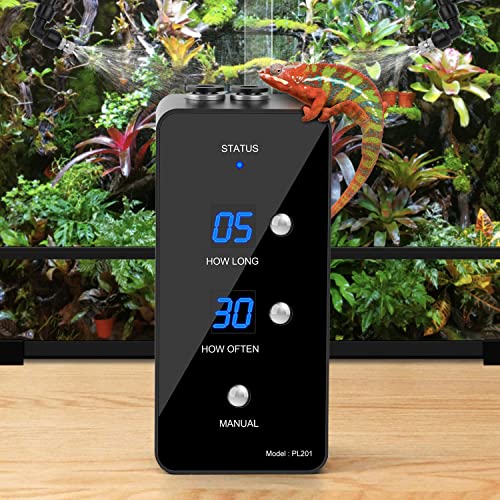
The moistenland Reptile Humidifier is a pump-driven misting system for terrariums, vivariums, and paludariums. It pulls water from an external bucket or other reservoir, so the unit does not include a built-in water tank. A 16-foot black hose connects to two adjustable spray nozzles. Their 360-degree rotation lets you direct mist toward different areas of an enclosure. Around $28, it costs less than many enclosed humidifiers, but the final price can change.
Three buttons control the timer. You can set each spray session for up to five minutes and choose intervals from one hour to 30 days. That range suits routine humidity schedules and short trips away from home. The kit is designed for a DIY setup, with tubing and mounting accessories included. However, setup depends on secure connections. Push the hose fully into each fitting, tighten the nozzle heads, and keep the intake filter submerged. If the pump does not catch water, the manual watering button may need to run for at least 10 seconds.
Pros
- Two rotating nozzles distribute mist across larger or divided terrariums.
- A 16-foot hose supports flexible reservoir placement.
- Programmable intervals range from one hour to 30 days.
Cons
- It requires a separate bucket or water reservoir.
- Loose tubing or nozzle connections can cause leaks and poor spraying.
Buying Guide
The most important factor is adjustable mist output. Different terrarium animals need different humidity levels, and too much moisture can cause mold, poor shedding, or respiratory problems.
- Output control: Choose a fogger or misting unit with at least three intensity settings, or a dial that adjusts from low to high. Aim for stable humidity within about 5% of your target.
- Tank capacity: Match the reservoir to the enclosure and schedule. A 1- to 2-gallon tank can support several short misting cycles per day, while small 250- to 500-milliliter units may need daily refills.
- Timer options: Look for programmable cycles, such as 30 seconds to 5 minutes per session. A unit with two to six daily settings suits many tropical enclosures better than a simple on/off model.
- Hygrometer compatibility: Use a digital hygrometer inside the habitat, preferably one that records minimum and maximum readings. Many tropical species need 70% to 90% humidity, while some reptiles need far less.
- Cleaning and noise: Pick a model with a removable tank, accessible tubing, and washable parts. Clean it every 3 to 7 days, and avoid units rated above roughly 40 decibels for quiet rooms.
If you cannot have every feature, prioritize precise output control over tank size or extra timer settings.
Frequently Asked Questions
How often should I run a terrarium humidifier?
Run a terrarium humidifier in short, controlled cycles, based on the enclosure’s plants, ventilation, and target humidity. Start with 5 to 10 minutes, then check a digital hygrometer before changing the schedule. Excess moisture can cause mold, while constant mist may leave substrate and décor saturated.
What type of humidifier is best for a terrarium?
An ultrasonic cool-mist humidifier is usually the most practical choice for a terrarium because it creates fine mist without adding heat. Pick one with adjustable output, a timer, and a water reservoir you can clean easily. A low setting is often safer than continuous mist, especially in a glass enclosure.
Can I use a regular room humidifier in a terrarium?
You can use a regular room humidifier with a terrarium only if its output is adjustable and mist can enter through tubing without soaking the enclosure. Place a hygrometer inside and check it twice daily at first. Keep the unit outside the habitat to reduce spills, heat, and electrical risk.
Are humidifiers safe for reptiles and plants?
Humidifiers are safe for reptiles and plants when they maintain the species’ recommended humidity without leaving surfaces wet. Use distilled water when the manufacturer allows it, clean the unit at least weekly, and watch for condensation. Persistent droplets on glass can signal too much mist or poor ventilation.
Conclusion
Moistenland Reptile Humidifier is the top pick for reptile keepers who want adjustable mist output and a straightforward way to support steady enclosure humidity. If your priority is quiet operation or a smaller setup, choose a compact fogger with a lower tank capacity and controls suited to your enclosure. Before buying, double-check the tank size, terrarium compatibility, included quantity, and current price, since listings and bundles can change. Match the unit’s output to your animal’s care sheet rather than running it at maximum power. A timer, flexible hose, and easy-to-clean reservoir can also make daily care simpler. Watch for excess condensation, wet substrate, or poor airflow, since too much moisture can create health and mold problems.