
The ALEGI Aquarium Sponge Filter Pad is the top pick for most buyers because its porous sponge design traps debris without blocking water flow too quickly. It earns a place among the best filter pads for aquarium by offering a simple, reusable way to support mechanical filtration. Its straightforward format suits shoppers seeking a basic replacement pad.
This guide is for aquarium owners replacing worn media, improving debris capture, or setting up a freshwater tank on a budget. Focus first on the pad’s dimensions and foam density. The right size must fit the filter chamber, while suitable pores should catch waste without cutting water flow. Material safety and cleanability also matter for fish health and long-term use. The five picks below are ranked with clear reasons and honest drawbacks for each.
Quick Comparison
| # | Product | Best For | Price | |
|---|---|---|---|---|
| 1 | ALEGI Aquarium Sponge Filter Pad | Aquarium owners needing coarse filtration | ~$9 | View → |
| 2 | Aquatic Experts FilterFirst Aquarium Filter Floss | Fishkeepers seeking fine debris removal | ~$22 | View → |
| 3 | Aquatic Experts Bonded Aquarium Filter Pad | DIY filter media cutters | ~$22 | View → |
| 4 | Aquatic Experts Aquarium Polishing Filter Pad | Removing particles before aquarium displays | ~$16 | View → |
| 5 | Borlech Aquarium Filter Pad | Budget-minded aquarium filter replacements | ~$6 | View → |
5 Top Aquarium Filter Pad Picks
These aquarium filter pad picks are ranked by filtration value, durability, fit, and maintenance needs, counting down to the top choice.
5. Borlech Aquarium Filter Pad
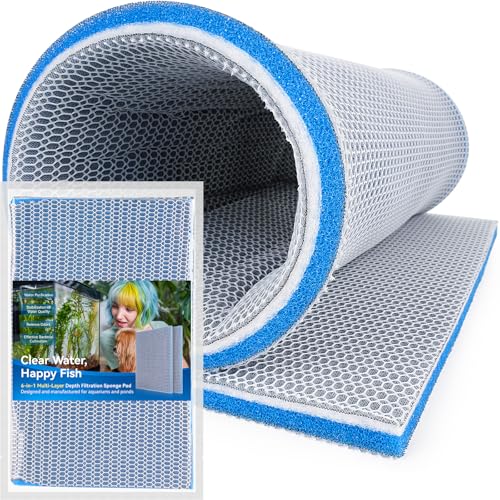
Best for: Custom-size fish tank filter setups
The Borlech aquarium filter pad is a single, cut-to-size sheet measuring 15.75 by 11.81 by 0.6 inches. Its eight-layer construction combines three-dimensional honeycomb mesh, fiber biochemical cotton, and a non-adhesive nano-filter mesh. Together, these layers catch fish waste, leftover food, and other small particles before they circulate through the tank. At around $6 per pack, it offers an inexpensive way to add mechanical filtration to an aquarium, pond, or sump.
The main advantage is flexibility. You can trim the sheet to fit different filter chambers instead of buying a pad made for one specific model. The material is designed to maintain water flow while trapping fine debris, which can help water look clearer without blocking circulation immediately. It can also be rinsed and reused, reducing the number of replacement pads you need over time. Still, this is only one sheet, and the 0.6-inch thickness may not fill larger filter compartments by itself.
Pros
- Eight layers capture fine particles, fish waste, and uneaten food.
- The 15.75-by-11.81-inch sheet can be cut for custom fits.
- Washable construction allows repeated use after cleaning.
Cons
- One pack contains only one filter sheet.
- It requires trimming and regular rinsing to maintain water flow.
4. Aquatic Experts Aquarium Polishing Filter Pad

Best for: DIY aquarium filter media
This Aquatic Experts polishing pad is a large sheet of fine filter material for aquariums and other water systems. It measures 24 by 36 inches, is 1/8 inch thick, and comes as one pad. The 100-micron rating targets small floating particles that can pass through coarser filter media. Cut it to fit an aquarium filter, sump, wet/dry setup, or aquaponics system.
The pad uses interwoven polyester fibers, giving it a firm, reusable construction. The large sheet can supply several custom-sized inserts, depending on your filter dimensions. It can also be layered with coarser pads to catch particles in stages. Since the dense material collects fine debris quickly, the manufacturer recommends regular cleaning. It is listed as washable in a washing machine, although cleaning frequency and pad life will depend on your tank and setup. Made in the USA, this option costs around $16 and may cost less than buying many pre-cut pieces.
Pros
- The 24-by-36-inch sheet provides plenty of material for custom cuts.
- The 100-micron fibers capture fine floating debris.
- Polyester construction can be washed and reused.
Cons
- You must measure and cut the pad before installation.
- Fine filtration can clog quickly, so regular cleaning is necessary.
3. Aquatic Experts Bonded Aquarium Filter Pad

Best for: Sump, canister, and reef filters
Aquatic Experts Bonded Aquarium Filter Pad is a bulk sheet of blue-and-white polyester filter media. It measures 12 by 72 inches and is ¾ inch thick, giving you six square feet to cut for different filter compartments. The open fiber structure catches uneaten food, plant debris, waste, and other suspended particles while allowing water to pass through. It works in freshwater, saltwater, reef, turtle, and terrarium setups.
The main advantage is flexibility. You can trim pieces for sump chambers, wet/dry filters, filter boxes, or canister trays instead of buying several pre-cut inserts. The pad is made in the USA, and its bonded polyester fibers use resin to hold the material together. The company says its construction can last twice as long as some competing pads, though actual life depends on tank waste levels and water flow. Rinsing or replacing it every one to two weeks can help remove solid waste before it breaks down. At around $22, the large sheet may cost less over time than branded replacement pads.
Pros
- Six square feet of material provides multiple custom-cut filter pieces.
- ¾-inch thickness offers particle capture without blocking flow too quickly.
- Suitable for freshwater, saltwater, reef, turtle, and terrarium systems.
Cons
- Cutting the sheet takes extra time and requires scissors or a sharp utility knife.
- Dirty pads need frequent rinsing or replacement, often every one to two weeks.
2. Aquatic Experts FilterFirst Aquarium Filter Floss

Best for: Custom-cut aquarium filter replacements
This aquarium filter floss comes as a 12-inch-wide, 72-inch-long roll. Its 3/4- to 1-inch thickness gives you enough material for repeated filter changes, and you can cut pieces for canister filters, sumps, or hang-on-back systems. The polyester pad uses two densities, so the coarser layer catches larger debris while the finer layer collects smaller particles. At around $22, it costs more upfront than a small pack of pre-cut pads.
The main advantage is flexibility. One roll can supply many custom-sized inserts, which helps when standard cartridges do not fit your setup. The material is dye-free and chemical-free, and the company says it is made specifically for aquarium filtration rather than repurposed HVAC use. You can rinse the pad several times before replacing it, though its useful life will depend on tank waste and how often you clean it. It is intended for freshwater and saltwater aquariums with aquatic life.
Pros
- The 12-by-72-inch roll fits many filter shapes and sizes.
- Two-density polyester catches both coarse waste and fine particles.
- Rinsable material can reduce the number of replacement pads needed.
Cons
- You must measure and cut each piece before installation.
- Filter floss only removes suspended particles, not dissolved chemicals or odors.
1. ALEGI Aquarium Sponge Filter Pad

Best for: Custom-cut aquarium filter setups
This ALEGI aquarium sponge filter pad is a 20 x 20 x 1-inch sheet of 20 PPI foam. It suits shoppers who need replacement or extra media for an aquarium system, rather than a ready-made cartridge. Its open structure catches suspended debris, waste, and other particles as water passes through. At around $9, it is a low-cost option for a compatible filter.
The main advantage is flexibility. You can cut the sheet to match a filter chamber, intake guard, or other compartment, then rinse it and reuse it. The material is designed to resist deformation, breakdown, and dissolving, so it should keep its shape through repeated cleaning. Actual service life depends on water conditions and cleaning frequency. Rinse biological media in aquarium water, since tap-water disinfectants can harm helpful microbes. This is a reusable foam pad, not a complete filter, pump, or fitted cartridge.
Pros
- 20 x 20 x 1-inch sheet provides material for custom-sized inserts.
- 20 PPI foam captures suspended particles and visible waste.
- Washable design can reduce recurring replacement costs.
Cons
- It requires measuring and cutting, with no frame or cartridge included.
- One-inch foam may not fit narrow filter slots or replace a complete filtration system.
Buying Guide
The most important factor is a precise fit for your filter model. A pad that sits tightly in the tray catches debris without leaving bypass gaps or slowing water to a trickle.
- Exact dimensions: Measure the old insert, including length, width, and thickness. Allow no more than 1/8 inch of difference for tight filter compartments.
- Media type: Choose coarse foam around 20 to 30 PPI for reusable mechanical filtration. Use fine floss, roughly 100 to 200 microns, for polishing cloudy water.
- Flow restriction: Pick a pad that does not bend or compress under the lid. Replace disposable floss when water flow drops noticeably, often within 1 to 4 weeks in a stocked tank.
- Pack count and cost: Compare the price per pad, not only the package total. A 6-pack priced near $8 to $15 usually costs less than small two-pad packs over several months.
- Tank and filter type: Match the insert to hang-on-back, canister, or internal filters. Saltwater tanks may need media without copper treatments, while carbon pads require replacement on the schedule listed by the manufacturer.
If you cannot get everything, prioritize exact fit and unrestricted water flow, because poor circulation can stress fish and reduce biological filtration.
Frequently Asked Questions
How often should I replace aquarium filter pads?
Replace aquarium filter pads when they become clogged, damaged, or difficult to rinse clean, usually every 2 to 4 weeks for mechanical media. Heavily stocked tanks may need weekly changes, while lightly stocked aquariums can go longer. Rinse reusable foam in removed tank water, not tap water, to protect beneficial bacteria.
What material works best for fish tank filter media?
Coarse foam is usually the best all-purpose material for aquarium filtration because it traps debris while allowing steady water flow. Choose a pad with pores around 10 to 30 ppi for general use, and keep finer floss nearby for polishing cloudy water.
Can I cut filter pads to fit my aquarium filter?
Yes, you can cut filter media to fit a particular aquarium filter, as long as the pad covers the intake area without folding into the impeller. Measure the old insert first, then leave about 1 centimeter of clearance around moving parts to reduce clogging and noise.
Are layered filter pads useful for clearer aquarium water?
Yes, layered filter pads are useful when a tank needs both debris removal and clearer water. Put coarse foam first, fine floss second, and chemical media last in the water path. Replace or rinse each layer according to its condition, often every 1 to 4 weeks.
Conclusion
ALEGI Aquarium Sponge Filter Pad is the top pick for aquarium owners who want reusable mechanical filtration, simple maintenance, and broad tank coverage at a reasonable cost. If your priority is catching very fine debris, choose a denser polishing pad instead, since its tighter material can trap smaller particles before water returns to the tank. Before buying, double-check the pad’s dimensions, filter compatibility, package quantity, and current price, since similar-looking products can vary in thickness and value. A proper fit helps water pass through the media instead of around it. Replace or rinse the pad according to your tank’s waste level, and clean it with removed aquarium water to protect beneficial bacteria.