
For most reef aquariums, Aquatic Experts Bonded Aquarium Filter Pad is the top pick. It earns the best filter media for reef tank spot because its bonded pad material traps suspended debris while you can cut the sheet to fit different filter chambers. This is mechanical filtration, not a chemical cure-all. Replace or rinse it as needed, since a loaded pad can restrict flow and return captured waste to the water. Its simple format suits sump socks, overflow chambers, and other setups that need a custom fit.
This guide is for reef keepers choosing media for sumps, hang-on-back filters, and canister systems. The key factors are pore density, material, sheet size, and how easily each option can be cleaned or replaced. Fine pads catch smaller particles but clog sooner. Coarser media allows more flow but may leave cloudy water behind. The six picks below are ranked with clear reasons and honest drawbacks for each, so you can match filtration to your tank’s layout and maintenance routine.
Quick Comparison
| # | Product | Best For | Price | |
|---|---|---|---|---|
| 1 | Aquatic Experts Bonded Aquarium Filter Pad | Custom Cut Filter Pad Users | ~$22 | View → |
| 2 | Fluval Carbon Filter Media | Everyday Freshwater Tank Keepers | ~$15 | View → |
| 3 | Reefing Art Ceramic Bio Filter Media | Reef Tank Biological Filtration | ~$17 | View → |
| 4 | Marineland Black Diamond Carbon Filter Media | Odor Control On A Budget | ~$11 | View → |
| 5 | Fluval Spec/Evo/Flex Activated Carbon | Fluval Spec And Evo Owners | ~$6 | View → |
| 6 | Fluval BioMax Biological Material Remover | Fluval BioMax Media Replacements | ~$20 | View → |
6 Top Reef Tank Filter Media Picks
These reef tank media picks are ranked by filtration value, durability, and maintenance needs, counting down to the top choice.
6. Fluval BioMax Biological Material Remover
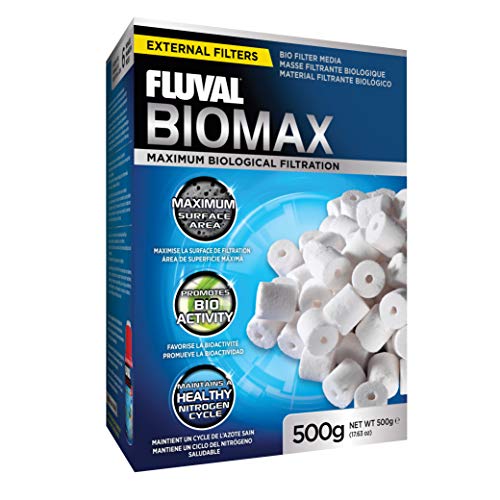
Best for: Fluval canister filter owners
Fluval BioMax is a 500 g pack of porous biological filter media for canister aquariums. It gives beneficial bacteria more surface area and contact time as water passes through, which can help manage ammonia and nitrate in an established nitrogen cycle. The listed compatibility covers Fluval 104, 105, 106, 204, 205, 206, 304, 305, 306, 404, 405, 406, FX5, and FX6 filters.
BioMax suits freshwater and saltwater tanks, and it does not change the water’s basic characteristics. Its main appeal is simple maintenance. Replace the media monthly for the stated best results, but change only half at a time. Keeping the other half in place helps preserve seeded bacteria for more stable filtration. The porous structure may support clearer water, though it cannot fix overfeeding, poor circulation, or an undersized filter. At around $20, the 500 g quantity offers fair value for compatible Fluval owners.
Pros
- Supports biological filtration by providing porous surface area.
- Works in both freshwater and saltwater aquariums.
- Compatible with 14 listed Fluval filter models.
Cons
- Monthly replacement creates an ongoing maintenance cost.
- Compatibility centers on Fluval filters, so other brands require size checks.
5. Fluval Spec/Evo/Flex Activated Carbon

Best for: Fluval desktop aquarium owners
This three-pack contains replacement activated carbon inserts for Fluval Spec, Evo, and Flex desktop aquariums. The black carbon media acts as chemical filtration, absorbing pollutants that can affect water quality. It is designed to help reduce heavy metals, odors, and yellow or cloudy discoloration. Since the inserts are made for specific Fluval filter compartments, they offer a simpler replacement option than measuring loose carbon or trimming generic media.
The carbon is described as premium, research-grade material with a large surface area. That gives impurities more places to collect as water passes through the filter. Clearer water is the main reason to use these inserts, especially after removing medications or dealing with unwanted smells. The pack includes three pieces, and the price is usually around $6. That makes it a low-cost maintenance purchase, though the actual replacement schedule depends on tank conditions and the aquarium’s care routine.
Pros
- Helps remove odors, discoloration, pollutants, and some heavy metals.
- Pre-cut inserts fit Fluval Spec, Evo, and Flex desktop aquarium filters.
- Three inserts provide ready replacements for future filter maintenance.
Cons
- These inserts are limited to compatible Fluval aquarium filter systems.
- Activated carbon does not replace mechanical or biological filtration media.
4. Marineland Black Diamond Carbon Filter Media

Best for: Clear-water aquarium maintenance
Marineland Black Diamond is loose activated carbon media for aquarium filters. This 22-ounce container uses heat-activated, bituminous coal-based carbon to help reduce odors, yellow or cloudy discoloration, and some dissolved impurities. It is intended for freshwater and saltwater setups, and the media can fit many filter styles when placed in a suitable media bag or chamber.
The carbon is specially sized to keep water moving through the material instead of passing around large chunks. Marineland says it continues working longer than some standard carbons, but the actual replacement interval depends on tank size, water quality, and filter flow. Around $11, this container offers a practical supply for routine water polishing. Carbon can make aquarium water look clearer, but it is not a substitute for water changes, mechanical filtration, or biological media.
Pros
- Helps reduce aquarium odors and yellow discoloration.
- Heat-activated, bituminous carbon provides chemical filtration.
- 22 ounces supplies media for many filter setups.
Cons
- Loose carbon usually needs a separate media bag or compatible filter chamber.
- It can remove some medications and beneficial dissolved compounds, so it should be removed during certain treatments.
3. Reefing Art Ceramic Bio Filter Media
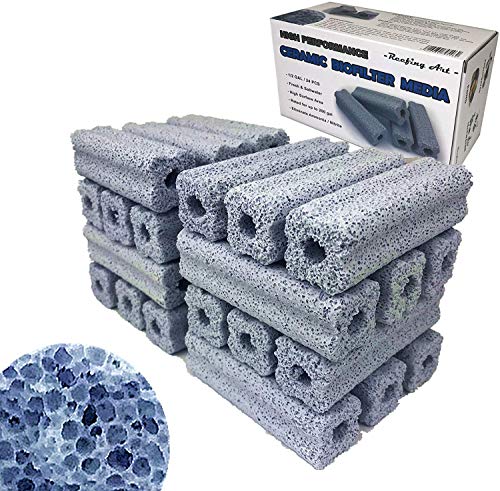
Best for: Budget sump and canister filtration
This box contains 24 ceramic bio-filter pieces, with a total volume of about half a gallon and a listed weight of 1.75 pounds. The pieces can fit into sump chambers, canister baskets, or other media compartments, provided the openings are large enough. Their porous internal structure gives beneficial bacteria plenty of room to colonize. Those bacteria help process ammonia and nitrite, supporting cleaner water as part of a complete filtration setup.
The ceramic is non-metallic and labeled aquarium safe, so it should not add aluminum or other heavy metals to the water. That makes this media suitable for freshwater tanks, ponds, and saltwater aquariums. At around $17, it offers a low-cost way to add biological media without buying a complete filter. Still, it does not replace mechanical filtration, water changes, or proper cycling. Rinse it with treated aquarium water before use, since untreated tap water can harm established bacteria. No replacement schedule is provided, so cleaning will depend on water flow and debris buildup. Biological media also needs time to become active.
Pros
- Provides 24 ceramic pieces with about half a gallon of media volume.
- Porous construction supports bacteria that process ammonia and nitrite.
- Non-metallic ceramic suits freshwater, pond, and saltwater systems.
Cons
- The pieces may not fit smaller filter baskets or narrow media compartments.
- It will not provide instant biological filtration before bacteria colonize.
2. Fluval Carbon Filter Media

Best for: Fluval canister filter owners seeking clearer water
Fluval Carbon comes as three nylon bags, each filled with 100 grams of premium, low-ash activated carbon. The carbon’s porous structure provides plenty of surface area to absorb impurities that can cloud aquarium water or create unwanted odors. It can also help reduce discoloration, which is useful after adding driftwood or treating other water-quality issues. The pack costs around $15, though prices can change.
These carbon media bags fit several Fluval canister filters, including the 106, 206, 306, 406, FX5, 105, 205, 305, 405, 104, 204, 304, and 404. They also work with most canister filters when the bag fits securely in the media compartment. The three-bag format gives you 300 grams total, so you can replace one bag at a time or keep spares ready. For consistent results, Fluval recommends changing the carbon every four weeks. It suits both freshwater and saltwater setups.
Pros
- Three pre-filled 100-gram nylon bags simplify filter maintenance.
- Porous, low-ash carbon helps improve clarity, color, and odors.
- Compatible with many Fluval models and most canister filters.
Cons
- Remove the carbon during aquarium medication, or it may absorb the treatment.
- Four-week replacement intervals create an ongoing supply cost, and live-plant owners should use carbon carefully.
1. Aquatic Experts Bonded Aquarium Filter Pad

Best for: Bulk media for sump filters
The Aquatic Experts Bonded Aquarium Filter Pad is a thick, cut-to-fit sheet for aquarium filtration. It measures 12 by 72 inches and is 3/4 inch thick, giving you a long strip for sump chambers, canister trays, filter boxes, turtle tanks, and terrariums. The open polyester fibers catch uneaten food, plant debris, waste, and other floating particles while allowing water to pass through. It works with freshwater, saltwater, and reef setups.
The pad’s main advantage is flexibility. You can cut pieces for different filter compartments instead of buying several pre-sized cartridges. Aquatic Experts makes this material in the USA and bonds the polyester fibers with resin for added structure. The company says its design has been refined through 25 years of aquarium-store and service-route use, and that the pad can last twice as long as competing media. That durability claim is difficult to verify independently, but the thick, reusable sheet should appeal to owners who want bulk media. Around $22, it may cost less over time than branded replacement pads.
Pros
- 72-inch length provides multiple replacement pieces.
- 3/4-inch thickness catches solid waste effectively.
- Open fibers support water flow and resist quick clogging.
Cons
- You must measure and cut each piece yourself.
- Rinsing or replacing it every 1 to 2 weeks adds maintenance.
Buying Guide
Match the media to the contaminant you need to control. Carbon, phosphate removers, nitrate media, and biological media perform different jobs, so the wrong choice can waste money or stress corals.
- Target pollutant: Test nitrate and phosphate before buying. Activated carbon handles dissolved organics and odors, while GFO or another phosphate remover targets measurable phosphate.
- Dose and capacity: Compare the label’s grams-per-gallon rate and replacement period. Start at 50% of the suggested dose, then retest phosphate or nitrate after 3 to 7 days.
- Flow requirements: Match the media to your filter or reactor. GFO should barely tumble, while carbon needs enough flow for contact but not so much that granules grind into dust.
- Reef safety: Choose aquarium-specific media without copper or unknown additives. Rinse loose granules with purified water until the runoff looks clear before adding them.
- Cost and replacement: Calculate the monthly cost, not just the package price. Compare cost per 100 grams, and check whether the media needs replacement every 2 weeks, 4 weeks, or 3 months.
If you cannot have everything, prioritize the correct pollutant match, because even premium media cannot fix the wrong water chemistry.
Frequently Asked Questions
How often should I replace filter media in a reef tank?
Replace mechanical media weekly, but rinse biological media only when flow drops or debris builds up. Disposable filter floss may need changing every 3 to 7 days, while ceramic blocks can last for years when rinsed in removed tank water instead of tap water. Activated carbon follows its product schedule, often monthly.
What type of filter media works best for reef aquariums?
Porous biological media is usually the most important choice, while activated carbon and phosphate remover handle specific water-quality problems. Ceramic rings, sintered glass, and marine-pure blocks support nitrifying bacteria, but they do not replace adequate circulation, oxygen, or regular water changes. Use carbon for odors or discoloration, not as a cure-all.
Can reef tank media help control algae?
Yes, filter media can reduce nuisance algae when it removes the nutrients feeding that growth, but it cannot fix excess feeding or weak maintenance alone. A phosphate-removing resin may help when phosphate is elevated, while frequent floss changes capture waste before it breaks down. Check nitrate and phosphate before choosing media.
Are all filter media safe for a saltwater reef setup?
Yes, reef-safe media can be used in a sump, hang-on-back filter, or media reactor, provided water passes through it at the maker’s recommended rate. Keep carbon in a mesh bag, place fine floss where it is easy to remove, and avoid packing media so tightly that flow stops.
Conclusion
Aquatic Experts Bonded Aquarium Filter Pad is the top pick for reef keepers who want straightforward mechanical filtration and a pad that fits a sump or filter chamber. If your priority is removing dissolved odors, discoloration, or some organic compounds instead, choose a reef-safe activated carbon media, since bonded pads mainly catch suspended particles. Before buying, double-check the pad’s dimensions, compatibility with your filter’s tray or chamber, package quantity, and current price, because similar listings can offer very different amounts of material. Also consider how often you will replace or rinse the media, since clogged material restricts water flow and increases maintenance. Choose the option that matches your tank’s actual filtration needs.