
Sukh Ceramic Aquarium Filter Rings are the top pick for most buyers because their porous ceramic design provides ample surface area for beneficial bacteria. They fit the phrase best filter media for freshwater aquarium because they support biological filtration without adding chemicals or requiring power. Ceramic rings also work in many canister, hang-on-back, and internal filters, making them a practical choice for common freshwater tanks.
This guide is for aquarium owners choosing new biological media or replacing worn-out material. The key factors are pore structure, ring size, and how well the pieces fit your filter basket. The seven picks below are ranked with clear reasons and honest drawbacks for each. You will find options for small tanks, larger filters, and setups that need efficient water flow without wasting usable space.
Quick Comparison
| # | Product | Best For | Price | |
|---|---|---|---|---|
| 1 | Sukh Ceramic Aquarium Filter Rings | Budget Biofiltration Upgrades | ~$7 | View → |
| 2 | 12-in-1 Aquarium Filter Media | Customizable Multi-Stage Setups | ~$14 | View → |
| 3 | Fluval Carbon Filter Media, 3-Pack | Odor and Discoloration Control | ~$15 | View → |
| 4 | Sukh Ceramic Bio Balls Aquarium Filter Media | High-Flow Biological Filtration | ~$7 | View → |
| 5 | Marineland White Diamond Zeolite | Freshwater Ammonia Reduction | ~$3 | View → |
| 6 | Marineland Diamond Blend Filter Media | Carbon and Zeolite Filtration | ~$9 | View → |
| 7 | Seachem Purigen Organic Filtration Resin | Crystal-Clear Water Polishing | ~$9 | View → |
7 Top Freshwater Filter Media Picks
This ranked list moves from solid everyday media to the strongest overall pick, counting down to number one.
7. Seachem Purigen Organic Filtration Resin

Best for: Small freshwater and marine aquariums
Seachem Purigen is a 100 ml organic filtration resin for freshwater and saltwater aquariums. Its unique synthetic polymer material works inside a filter to remove organic waste before it breaks down further. That can help control ammonia, nitrites, and nitrates as part of a complete filtration setup. Around $9, it costs less than many specialty filter media, though replacement costs add up if you maintain several tanks.
The resin’s color changes as it collects waste, giving you a visual clue about its condition. That feature makes maintenance easier than with media that looks the same before and after use. Purigen is also regenerable, so one 100 ml container can be reused instead of discarded after a single service cycle. The product does not replace water changes, biological filtration, or regular testing. It also needs compatible filter space and proper handling during regeneration. Its main appeal is a reusable format that targets dissolved organic material without taking up much room.
Pros
- Regenerable resin can reduce the need for frequent media replacements.
- Color changes offer a simple visual maintenance cue.
- Works in both freshwater and saltwater filtration systems.
Cons
- It requires careful regeneration and rinsing before reuse.
- It cannot replace cycling, water changes, or routine aquarium tests.
6. Marineland Diamond Blend Filter Media

Best for: Freshwater tanks with ammonia concerns
Marineland Diamond Blend combines Black Diamond premium activated carbon with zeolite in a 50-ounce package. The carbon targets dissolved organic waste and other impurities, while the zeolite is intended to remove toxic ammonia from freshwater aquarium and pond water. It is loose media, not a cartridge, so you place it in a suitable filter bag or compartment.
The main appeal is the two-part formula. Many freshwater setups need help with both waste buildup and ammonia control, and this blend addresses those jobs in one container. At around $9, the package costs little compared with buying separate carbon and zeolite. Still, it is not a substitute for water changes, proper filtration, or water testing. Marineland instructs owners to test ammonia levels frequently and add the blend as directed. Check your filter first, since the media does not provide a universal fit or fixed replacement schedule.
Pros
- Combines activated carbon and zeolite in one 50-ounce package.
- Helps reduce dissolved organic waste and toxic ammonia.
- Works for freshwater aquariums and ponds.
Cons
- Loose media may require a separate filter bag or compatible compartment.
- Requires frequent ammonia testing, and it does not replace regular water changes.
5. Marineland White Diamond Zeolite

Best for: New freshwater tanks with ammonia spikes
Marineland White Diamond Zeolite is a loose filtration medium for freshwater aquariums and ponds. The 50 oz container provides a substantial amount for filling or refreshing compatible filter media, depending on the filter’s design. Its clinoptilolite zeolite is sourced in the United States and is intended to remove toxic ammonia from the water. That makes it a practical option when a new aquarium is still settling or when ammonia levels rise unexpectedly.
The main appeal is its narrow purpose and low price, around $3. It targets ammonia instead of acting as a general water-treatment product. That focus lets fishkeepers add ammonia control without buying an expensive media system. Still, it does not replace regular water changes, ammonia testing, or a properly established biological filter. The package also does not state a universal service life. Replacement timing will depend on ammonia levels, tank size, and water conditions. Check your filter instructions before adding loose crystals.
Pros
- Removes toxic ammonia from freshwater aquarium or pond water.
- 50 oz package provides a sizable supply for compatible filters.
- U.S.-sourced clinoptilolite media costs around $3.
Cons
- Not intended for saltwater aquariums.
- Loose crystals may require a suitable filter compartment or media bag.
4. Sukh Ceramic Bio Balls Aquarium Filter Media

Best for: Flexible aquarium filter setups
Sukh 15oz Ceramic Bio Balls are loose quartz filter media for freshwater and saltwater aquariums. The package contains approximately 15 ounces, so you can divide it among a canister filter, sump, top filter, or hang-on-back unit. Their porous surfaces allow water to move around the media while helping catch fish debris and other particles. At around $7, this is a low-cost option for adding media to an existing filtration system.
The main advantage is the inert quartz material. It should not change pH or otherwise shift water chemistry, which makes it suitable for tanks with stable parameter needs. The open surface also supports water circulation and oxygen exchange inside the filter. That can help reduce cloudy water and control some aquarium odors, but these balls are not a complete filtration solution. They mainly support mechanical filtration and water flow. You will still need suitable biological media, chemical media, or regular water changes based on your aquarium’s needs.
Pros
- Approximately 15 ounces can fit several filter types and setups.
- Inert quartz should not alter pH or water chemistry.
- Porous surfaces help catch debris and support water circulation.
Cons
- Loose media may require a mesh bag to keep pieces contained during cleaning.
- The package does not replace a full filtration system or routine maintenance.
3. Fluval Carbon Filter Media, 3-Pack

Best for: Routine canister-filter water polishing
Fluval Carbon comes as three pre-filled nylon bags, each containing 100 grams of low-ash carbon. The porous media absorbs impurities, reduces odors, and helps clear tinted aquarium water. Each bag fits compatible Fluval canister filters, including the 106, 206, 306, 406, FX5, and older 104, 204, 304, and 404 models. It also works in many other canister filters that accept loose media bags.
The three-bag format gives aquarists a simple replacement supply. For best results, replace the carbon about every four weeks, so one pack can cover roughly three months of routine use. The media suits both freshwater and saltwater tanks. Its main strength is water polishing rather than biological filtration, so it should complement, not replace, sponge or other biological media. At around $15, the pack offers a modest ongoing cost, although replacement expenses can add up over time.
Pros
- Three 100-gram nylon bags provide ready-to-use carbon media.
- Helps reduce odors and improve water clarity and color.
- Compatible with many Fluval canister filters and freshwater or saltwater aquariums.
Cons
- Remove the bags during medication use, since carbon can reduce treatment effectiveness.
- Use caution with live plants, and replace the media about every four weeks.
2. 12-in-1 Aquarium Filter Media

Best for: Mixed tank filtration upgrades
This 12-in-1 media pack combines ceramic rings, activated carbon, bio balls, and other filter materials in one reusable mesh bag. Different textures and pore patterns provide several filtration surfaces, supporting biological filtration while trapping some physical debris. It fits sump, canister, pond, koi, top-box, bottom, and external filter systems for freshwater or marine setups. Rinse the media before placing it in the filter.
The practical standout is the zippered bag. You can lift the full bundle out for rinsing instead of handling loose pieces individually. Durable media can be reused multiple times before replacement. The mix also supports water circulation and oxygen exchange around beneficial bacteria, but it cannot replace water changes, water testing, or a properly sized filter. At around $14, it offers an inexpensive way to add several media types at once. The listing does not state the quantity of each type, so comparing value with separate media packs is difficult.
Pros
- Includes 12 media types, including ceramic rings, carbon, and bio balls.
- Zippered mesh bag makes removal and rinsing easier.
- Works with freshwater, marine, pond, koi, sump, and canister systems.
Cons
- The amount of each media type is not specified.
- A mixed bag gives you less control over individual media ratios.
1. Sukh Ceramic Aquarium Filter Rings
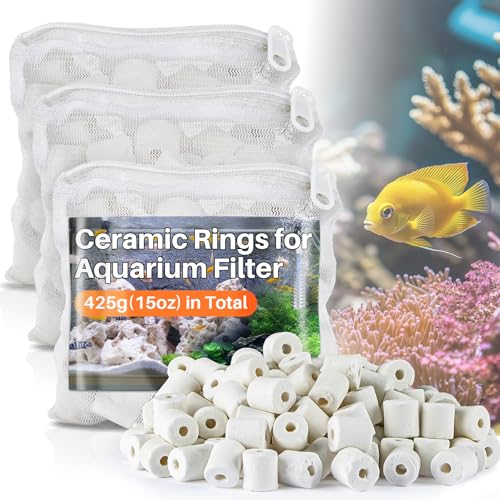
Best for: budget-conscious aquarium filter upgrades
Sukh Ceramic Rings provide 15 ounces of porous ceramic media across three bags. Each ring has a hollow center and textured surface, giving water room to pass through while catching some floating debris. The material also provides space for beneficial bacteria, which can support biological filtration in freshwater and saltwater tanks. At around $7, this is a low-cost way to add media to an existing setup.
The rings fit filter chambers, cartridges, ponds, and other containers. They are listed as compatible with systems such as the 106, 206, 306, 406, FX5, FX6, 105, 205, 305, 405, 104, 204, 304, and 404. Rinse them with clean water before use, then place them in a media basket or filter chamber. The manufacturer recommends replacing part of the media every six months to one year. The three separate bags also make storage and portioning easier.
Pros
- Three bags and 15 ounces provide useful media for a small or medium filter.
- Hollow, porous rings allow water flow and support biological filtration.
- Fits freshwater, saltwater, pond, cartridge, and many listed filter systems.
Cons
- Ceramic rings do not replace dedicated mechanical pads or chemical media.
- The product does not specify the ring dimensions, so fit may be uncertain in compact or unusual filter chambers.
Buying Guide
The most important factor is the media type matched to your filtration goal. Biological media supports beneficial bacteria, while mechanical media removes debris and chemical media targets odors, medications, or discoloration.
- Media type: Use coarse sponge or foam for debris, biological rings or porous blocks for bacteria, and activated carbon only for short-term odor or medication removal.
- Tank volume: Match the package to your filter chamber and aquarium size. A 20-gallon tank often needs about 1 to 2 liters of biological media, depending on fish load and filter design.
- Flow resistance: Choose coarse foam for filters with strong water flow. Fine pads can clog within days, so leave space for at least one coarse stage before finer material.
- Maintenance needs: Rinse reusable sponge and ceramic media in removed aquarium water about once a month. Replace disposable polishing pads when water flow drops, often every 1 to 4 weeks.
- Pack value: Compare cost per liter, not just package price. A useful target is about $8 to $25 per liter for reusable biological media, while carbon usually costs less but needs replacement every 2 to 4 weeks.
If you cannot have everything, prioritize biological capacity that fits your filter without restricting water flow.
Frequently Asked Questions
How often should I replace freshwater aquarium filter media?
Replace coarse sponge or floss when it becomes clogged, but keep biological media unless it crumbles or cannot be rinsed clean. Rinse reusable pieces in removed aquarium water, not tap water, to protect beneficial bacteria. Many tanks need floss every one to four weeks and sponge cleaning monthly.
What filter media is best for a freshwater aquarium?
Porous sponge and ceramic media are usually the best choices for freshwater tanks because they support mechanical and biological filtration without changing water chemistry. Use coarse sponge for debris, fine floss for polishing, and ceramic rings for bacteria. A layered setup often uses two or three media types.
Can I use activated carbon in a freshwater tank filter?
Yes, activated carbon can be used in a freshwater filter, but it is optional and should not run continuously in every tank. Replace it about every two to four weeks, and remove it when dosing medication because carbon can absorb many treatments. It also does not replace biological media.
Are ceramic rings or sponge pads better for freshwater aquarium filtration?
Sponge pads are better for trapping debris, while ceramic rings are better for biological filtration, so using both usually gives the most balanced setup. Choose a coarse sponge before the rings, then rinse each piece in old tank water. Ceramic media can remain useful for six to twelve months if intact.
Conclusion
Sukh Ceramic Aquarium Filter Rings remain the top recommendation for freshwater keepers who want ceramic biological media in a standard filter setup. If your priority is easy rinsing and stronger debris capture, choose a coarse sponge instead, since it traps particles and can be cleaned without replacing the entire load. Before ordering, double-check the ring size, filter compatibility, package quantity, and current price, because media baskets and refill packs vary widely. Also confirm that the rings fit your basket without blocking water flow. Rinse new media with treated aquarium water, not chlorinated tap water, to protect useful bacteria. Replacing all media at once can also remove established biological support, so match the media to your filter design and maintenance routine.