
The AquaMiracle 3-Stage Internal Aquarium Filter is the best filter for goldfish for most buyers because it combines mechanical, biological, and chemical filtration in one compact unit. Its internal design keeps equipment inside the tank, while the three-stage setup provides more complete filtration than a single-sponge filter.
This guide is for owners choosing filtration for new or established goldfish aquariums. The key factors are tank capacity and flow rate, since goldfish produce heavy waste and need strong circulation without a harsh current. Easy access to filter media also matters because sponges and cartridges need regular cleaning or replacement. The five picks below are ranked by practical fit, with clear reasons and honest drawbacks for each. Use the list to match each filter’s output and maintenance needs to your tank size and fish load.
Quick Comparison
| # | Product | Best For | Price | |
|---|---|---|---|---|
| 1 | AquaMiracle 3-Stage Internal Aquarium Filter | Multi-Stage Filtration Seekers | ~$20 | View → |
| 2 | Submersible Aquarium Filter for Fish Tanks | Compact Tank Owners | ~$32 | View → |
| 3 | Aqueon Medium Replacement Filter Cartridges | Aqueon Filter Replacement Shoppers | ~$17 | View → |
| 4 | Pawfly Aquarium Bio Sponge Filter | Shrimp Tank Keepers | ~$7 | View → |
| 5 | 1.5 Gallon Aquarium Starter Kit | First-Time Nano Aquarium Owners | ~$29 | View → |
5 Top Goldfish Filter Picks
These aquarium filters are ranked by performance, maintenance needs, and value, counting down to the top pick.
5. 1.5 Gallon Aquarium Starter Kit

Best for: Small-space betta keepers
This 1.5-gallon starter kit measures 8.7 by 6 by 10 inches. It includes a clear PET plastic tank, a water pump, a USB-powered LED light, and one plastic plant. The plastic body weighs less than glass and will not shatter easily, which suits desks, shelves, and children’s rooms. At around $29, it offers a low-cost way to begin with a compact aquarium setup.
The pump circulates water and adds oxygen, while its noise should stay low when the tank has the recommended water level. The light offers blue, white, and mixed blue-white modes. The USB cable does not include a wall adapter, so you may need one separately. Despite the listing’s broad species claims, 1.5 gallons is too small for goldfish long term. Bettas and shrimp are more realistic choices, though a betta still needs warm, conditioned water. Rinse the parts before setup, use water conditioner, and acclimate new fish slowly. The included guidance suggests floating the fish bag for two to three hours.
Pros
- Compact 8.7-by-6-inch footprint fits desks, shelves, and dorm rooms.
- PET plastic resists shattering and weighs less than a glass aquarium.
- Three LED color settings and a circulation pump come included.
Cons
- The 1.5-gallon capacity is unsuitable for goldfish and limits stocking choices.
- The USB light lacks a wall adapter, and the plastic plant adds no live-plant filtration.
4. Pawfly Aquarium Bio Sponge Filter

Best for: Shrimp, fry, and betta tanks
The Pawfly Large Aquarium Bio Sponge Filter is an air-powered sponge filter for tanks up to 50 gallons. Its 3.3-inch diameter and 8.2-inch height provide plenty of sponge surface, while the soft foam catches debris without pulling in small fish, shrimp, or fry. The sponge also supports biological filtration, giving beneficial bacteria a place to grow. This makes it useful for breeding tanks, feeding setups, and aquariums with delicate livestock.
Its main appeal is simple operation at around $7, though prices can change. The filter runs quietly when connected to an air pump and helps move oxygen through the water. Before placing it, squeeze the sponge underwater to remove trapped air so the unit sinks properly. Cleaning takes some care. Detach the sponge and rinse it every two to four weeks using aquarium water, not tap water, which can harm helpful bacteria. The package does not include an air pump, so buyers need compatible equipment before the filter can run.
Pros
- Gentle sponge intake protects shrimp, fry, bettas, and other small fish.
- 3.3-inch by 8.2-inch design suits aquariums up to 50 gallons.
- Combines debris removal with biological filtration and quiet aeration.
Cons
- An air pump and likely airline tubing are required, but not included.
- The 8.2-inch body takes up more tank space than smaller sponge filters.
3. Aqueon Medium Replacement Filter Cartridges
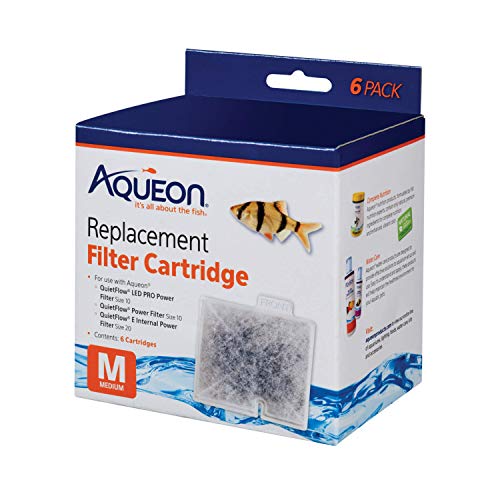
Best for: Aqueon QuietFlow filter owners
Aqueon Replacement Filter Cartridges Medium come in a six-pack for routine aquarium maintenance. Each cartridge uses dense floss on both sides, plus activated carbon to capture debris and help keep aquarium water clear. The medium size fits Aqueon QuietFlow LED PRO Power Filter Size 10, Power Filter Size 10, and E Internal Power Filter Size 20. At around $17, the pack costs less than buying single replacements.
The cartridge design spreads carbon across the filter instead of leaving it concentrated in one area. Aqueon also claims over 25% more activated carbon than leading brands, though that comparison depends on which brands and cartridges you use. Installation takes only a quick rinse under cold water. Match the “FRONT” tab to the filter housing, then insert the cartridge. Aqueon recommends replacing it about every four weeks for normal performance. Other sizes include X-Small, Small, and Large, but this six-pack is only the Medium version.
Pros
- Six cartridges provide roughly six months of replacements on a four-week schedule.
- Dual-sided floss and activated carbon handle particles and water impurities together.
- The front-orientation tab makes cartridge placement straightforward.
Cons
- These cartridges fit specific Aqueon filters, not every aquarium power filter.
- Replacing one about every four weeks creates an ongoing supply cost.
2. Submersible Aquarium Filter for Fish Tanks

Best for: Medium tanks with turtles or fish
This submersible aquarium filter is designed for tanks from 20 to 55 gallons. It measures 11.4 inches tall and 2.75 inches wide with all sections attached. Remove one section, and its height drops to 7.6 inches for smaller setups. The unit combines a sponge filter with biological filtration, while its internal pump adds water movement and oxygen. At around $32, it costs less upfront than many cartridge-based aquarium filters.
Water enters through the bottom instead of the sides. That design sends water through more of the filter media before returning it to the tank, which may help reduce uneven filtration. The reusable sponges are marketed as long-lasting, so routine replacement pads should not be necessary. Detachable sections also make this filter suitable for goldfish, tropical fish, turtles, and some saltwater tanks. Its waves may appeal to active fish, but the stronger flow needs care with delicate species. A one-year warranty comes from the Manchester-based seller.
Pros
- Reusable sponge media can reduce ongoing pad costs.
- Adjustable 7.6-inch or 11.4-inch height fits different tank sizes.
- Combines mechanical and biological filtration with added oxygenation.
Cons
- It is not suitable for small shrimp or very small fish.
- The 55-gallon rating may be optimistic for heavily stocked tanks or messy turtles.
1. AquaMiracle 3-Stage Internal Aquarium Filter

Best for: 10–40 gallon community tanks
The AquaMiracle is an internal aquarium filter for fish tanks, turtle setups, and similar freshwater habitats. Its 3.5-watt motor moves up to 130 gallons per hour and can lift water 2.5 feet. That makes it a practical match for tanks from 10 to 40 gallons, although the larger end may need extra circulation. The filter costs around $20, depending on the seller and current price.
Inside, three sponge blocks handle different debris sizes. A coarse sponge catches food scraps, waste, and plant pieces. The carbonized sponge targets odors, chlorine, and smaller particles, while the fine sponge helps polish the returning water. A clear filter box lets you see when the media needs cleaning. Dual water outlets spread the return flow across the tank, and the included air tubing adds oxygen through a venturi inlet. Keep that air inlet above the waterline to reduce the risk of backflow. Replacement sponge sets are available under product code B09W23YJD7.
Pros
- Three filtration stages cover large waste, odors, and fine particles.
- Dual outlets promote broader water movement than one return stream.
- Compact 3.5-watt operation uses modest power and includes aeration.
Cons
- The 130 GPH flow may be limited for a heavily stocked 40-gallon tank.
- The air inlet must stay above the waterline, and sponge media requires regular cleaning or replacement.
Buying Guide
Filtration capacity matters most because goldfish produce heavy waste. Choose a unit rated for at least two to four times your aquarium’s volume per hour, then reduce the flow if it creates strong currents.
-
Flow rate: For a 40-gallon tank, look for a filter rated around 80 to 160 gallons per hour. Goldfish need clean water, but they should not struggle to swim.
-
Media space: Choose a model with room for mechanical, biological, and chemical media. A chamber measuring about 6 by 4 inches provides more useful capacity than a small cartridge-only design.
-
Tank compatibility: Check the manufacturer’s aquarium-size range, and size up when the tank holds two or more goldfish. A filter rated for 75 gallons suits a heavily stocked 55-gallon setup better than a 55-gallon model.
-
Maintenance: Select washable foam or sponge media with replacement parts available. Rinse reusable media in removed aquarium water every two to four weeks, rather than replacing all bacteria-carrying material at once.
-
Intake safety: Use a sponge prefilter or guarded intake. This helps protect fins and keeps young fish from entering the tube.
If you must compromise, prioritize biological media capacity and an appropriate flow rate over quiet operation or extra features.
Frequently Asked Questions
How do I choose a filter for a goldfish tank?
Choose an aquarium filter rated for at least twice your tank’s stated volume, with strong mechanical and biological filtration. Goldfish produce heavy waste, so a 40-gallon aquarium should use a unit rated for 80 gallons or more. Pick adjustable flow if the fish struggle against the current.
What type of filtration works best for goldfish?
A hang-on-back or canister filter usually works best for goldfish because it handles waste efficiently and provides room for several filter media types. Choose a model with mechanical, biological, and optional chemical stages. For a 55-gallon tank, look for a filter rated around 110 gallons.
Can a sponge filter keep goldfish water clean?
Yes, a sponge filter can keep goldfish water clean when matched with frequent maintenance and regular water changes. It provides useful biological filtration and gentle circulation, but larger tanks may need extra equipment. Use a large sponge filter, or two smaller ones, for aquariums above 30 gallons.
Are two filters better for a goldfish aquarium?
Yes, two filters can improve circulation, waste removal, and backup protection in a goldfish aquarium. Place them on opposite sides to reduce dead spots and spread water movement. Two units also let you clean one filter while beneficial bacteria remain active in the other.
Conclusion
The AquaMiracle 3-Stage Internal Aquarium Filter suits goldfish keepers who want a compact, multi-stage filter for an aquarium with internal installation space. If your priority is handling a larger tank or reducing how often you clean the filter, choose a higher-capacity model with more media space instead. Before buying, double-check the recommended tank size, compatibility with your aquarium’s dimensions and setup, the quantity included in the package, and the current price, since listings and bundles can change. Goldfish produce considerable waste, so match filtration to the fish load rather than choosing by tank size alone. A filter that is easy to access and clean can also make routine maintenance less difficult.