
For most buyers, Turtle Tank Aquarium Filter is the top pick because its turtle-focused design handles messy aquarium water with less fuss. If you need the best filter for 29 gallon freshwater tank, this model offers a practical starting point for a medium-size setup, especially when easy cleaning matters more than advanced controls. Its appeal comes from straightforward filtration and broad tank use.
This guide is for new fish keepers, turtle owners, and anyone replacing an undersized pump. Focus on flow rate, filter capacity, and how much room the unit takes inside the tank. Quiet operation and replacement-media costs also affect daily use, but the first three factors matter most. The 5 picks below are ranked with clear reasons and honest drawbacks for each, so you can compare aquarium filters before choosing one.
Quick Comparison
| # | Product | Best For | Price | |
|---|---|---|---|---|
| 1 | Turtle Tank Aquarium Filter | Messy turtle habitats | ~$40 | View → |
| 2 | Tetra Whisper IQ Power Filter | Quiet community aquariums | ~$32 | View → |
| 3 | Marineland Bio-Wheel Penguin Aquarium Filter | Bio-filtration focused keepers | ~$41 | View → |
| 4 | 290GPH Turtle Tank Filter, Adjustable Flow, Low-Water Use | Low-water turtle tanks | ~$40 | View → |
| 5 | Hang-On-Back Aquarium Filter with UV Light | UV-conscious aquarium owners | ~$85 | View → |
5 Top Filters for 29-Gallon Aquariums
These picks are ranked by filtration capacity, tank fit, maintenance needs, and value, counting down to the top choice.
5. Hang-On-Back Aquarium Filter with UV Light

Best for: Large tanks with cloudy water
This hang-on-back filter is sized for 40- to 150-gallon aquariums. It combines mechanical, chemical, and biological filtration in one unit, with reusable activated carbon, ceramic balls, a reusable sponge, and two filter socks. The surface skimmer pulls in floating debris and oil film, while the waterfall return adds surface movement and oxygen exchange. A telescopic intake pipe and adjustable flow knob help match different tank depths and current needs.
The main feature is the isolated 7-watt UV chamber. Its 253.7nm light targets green or yellow-green water and odor-causing particles without placing the bio-sponge section directly under the lamp. That separation helps protect beneficial bacteria. The filter works with freshwater and saltwater setups, and the flow can be reduced for shrimp, frogs, turtles, or delicate fish. Around $85, it costs more than basic hang-on-back filters, but the included media set reduces the need for immediate add-ons.
Pros
- UV chamber helps clear green water, yellow-green water, and odors.
- Includes five reusable media types, including two filter socks.
- Adjustable flow and telescopic intake suit varied tank levels and livestock.
Cons
- The 7-watt UV lamp will eventually need replacement, adding future upkeep.
- Large aquariums may need frequent media cleaning when debris levels are high.
4. 290GPH Turtle Tank Filter, Adjustable Flow, Low-Water Use

Best for: Turtle tanks with low water levels
This submersible aquarium filter moves up to 290 gallons per hour and is rated for tanks from 20 to 85 gallons. It suits freshwater, saltwater, and muddy setups with turtles, fish, shrimp, or amphibians. The adjustable flow helps match the current to different animals and tank sizes. At around $40, it costs more than basic sponge filters but combines several functions in one unit.
A bottom intake pulls waste and leftover food from the tank floor. Inside, a mesh sponge catches larger particles, while ceramic bio-balls provide space for beneficial bacteria that process ammonia and nitrites. The waterfall outlet adds surface movement and oxygen exchange. Four suction cups allow mounting at different angles, and the 2.6-inch minimum water level works for shallow turtle enclosures. The top cover gives access to the media, though the pump head needs cleaning two or three times each month. A 180-day warranty provides limited post-purchase coverage.
Pros
- 290 GPH flow supports aquariums from 20 to 85 gallons.
- Bottom suction removes waste from the tank floor.
- Sponge and ceramic bio-ball media provide mechanical and biological filtration.
Cons
- The pump head may clog with debris and needs cleaning two or three times monthly.
- A 2.6-inch minimum water level limits use in very shallow habitats.
3. Marineland Bio-Wheel Penguin Aquarium Filter
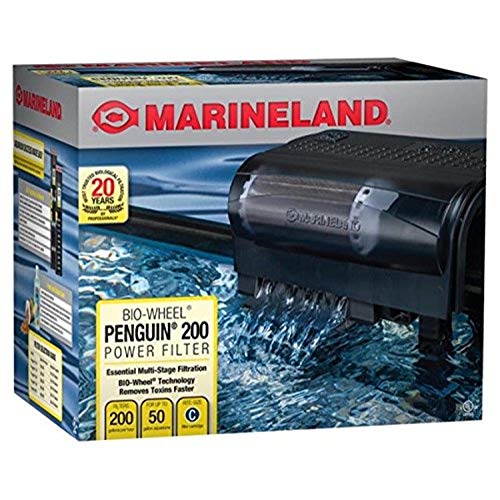
Best for: Aquariums needing multi-stage filtration
The Marineland Bio-Wheel Penguin 200 GPH Power Aquarium Filter combines mechanical, chemical, and biological filtration in one unit. Its 200 GPH rating identifies the model’s water-flow class, while the lineup also includes 75, 100, 150, and 350 GPH versions. That range gives shoppers more options for different aquarium setups. The filter uses Marineland Rite-Size cartridges, so replacement cartridges need to match the filter’s recommended size.
Its rotating Bio-Wheel is the main feature that separates this filter from basic cartridge models. The wheel supports wet/dry biological filtration as water passes over its surface, helping provide a home for beneficial bacteria. It does not replace regular cartridge changes or aquarium maintenance. At around $41, this model sits in the affordable-to-midrange price area for a powered aquarium filter. Buyers should also consider water flow before choosing it, since 200 GPH may be excessive for some smaller tanks or insufficient for larger systems.
Pros
- Combines mechanical, chemical, and biological filtration in one filter.
- Rotating Bio-Wheel supports wet/dry biological filtration.
- Five flow-rate choices make the lineup easier to match to different aquariums.
Cons
- Replacement cartridges must be Marineland Rite-Size models matched to the filter.
- The 200 GPH version may not suit every aquarium, so water flow requires careful matching.
2. Tetra Whisper IQ Power Filter
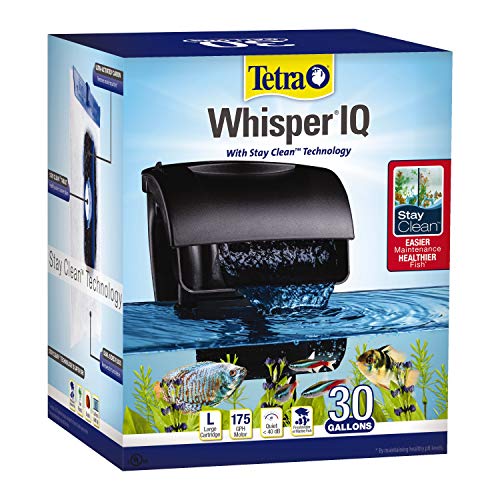
Best for: Quiet tanks up to 30 gallons
The Tetra Whisper IQ Power Filter is a hang-on-back aquarium filter designed for tanks measuring up to 30 gallons. Its 175 GPH flow rate moves water through the filter while the submerged motor starts automatically, so manual priming is not required. That makes setup simpler after cleaning or a power interruption.
Its sound shield is the main draw for bedrooms, offices, and living rooms. Tetra rates the filter below 40 dB, which should help reduce motor noise near the aquarium. Stay Clean technology is designed to help maintain healthier pH levels and reduce routine maintenance. The filter uses large Tetra Whisper Bio-Bag cartridges, which should be changed monthly. Those refills are sold separately, so factor replacement costs into the budget. At around $32, the unit offers a practical option for smaller community aquariums, though its 30-gallon rating leaves little extra capacity for larger setups or heavily stocked tanks.
Pros
- The submerged motor starts without manual priming.
- A sound shield keeps rated noise below 40 dB.
- Monthly cartridge changes provide a clear maintenance schedule.
Cons
- Large Bio-Bag replacement cartridges cost extra and create an ongoing expense.
- The 30-gallon maximum limits use in larger aquariums or tanks with heavy fish loads.
1. Turtle Tank Aquarium Filter

Best for: Large turtle and fish tanks
This adjustable aquarium filter is rated for tanks from 20 to 75 gallons and moves up to 290 gallons per hour. It suits freshwater or saltwater setups, including turtle habitats, fish tanks, and enclosures for frogs or amphibians. The pump lets you reduce or increase flow, which helps match the current to different animals and tank sizes. It can run with as little as 2.6 inches of water, a useful detail for shallow turtle tanks.
The filter uses a dense, double-sided mesh sponge to catch waste, leftover food, plant pieces, and fine debris. Its ceramic bio-balls provide porous space for beneficial biological filtration and may help reduce odors and discoloration. A top-access canister makes media changes easier, while the waterfall outlet adds surface movement for aeration. Around $40, it offers several filtration stages without moving into premium pricing. The included one-year support period gives buyers a contact point if setup or operation problems arise.
Pros
- Adjustable flow works across 20- to 75-gallon tanks.
- Double-sided sponge captures both larger waste and fine particles.
- Ceramic bio-balls add porous biological media for waste breakdown.
Cons
- The large filter body may take up significant space inside a smaller 20-gallon tank.
- Sponge and ceramic media still need regular cleaning or replacement, adding maintenance beyond the initial setup.
Buying Guide
The most important factor is usable flow rate. A 29-gallon aquarium needs enough circulation to move water through the media, but excessive current can stress slow-moving fish and shrimp.
- Flow rate: Choose a model rated for at least 30 gallons, with roughly 120 to 175 gallons per hour of circulation. Adjustable output helps calm the current.
- Filter type: Hang-on-back filters offer easy access, while canister filters provide more media space. Sponge filters work well for fry, shrimp, and low-current setups.
- Media capacity: Look for room for mechanical, biological, and chemical media. A chamber at least 2 inches wide is more useful than a cartridge-only design.
- Tank fit: Measure the aquarium rim and space behind it. Many hang-on-back units need 3 to 5 inches of clearance and may not fit tanks with lids.
- Maintenance and safety: Choose a filter with a reusable intake sponge, easy impeller access, and a flow restart feature after power loss. Replacement media should cost about $5 to $15 per pack.
If you must compromise, prioritize adjustable flow and adequate media capacity over extra features.
Frequently Asked Questions
How powerful should a filter be for a 29-gallon freshwater tank?
Choose a filter rated for at least 30 gallons, with a target flow of roughly 120 to 180 gallons per hour. A 29-gallon aquarium benefits from adjustable output, especially with bettas, shrimp, or other fish that dislike strong currents. Check the manufacturer’s rating, since actual flow drops as filter media collects debris.
What type of filter works best for a 29-gallon aquarium?
An adjustable hang-on-back filter is usually the most practical choice for a 29-gallon freshwater tank because it offers mechanical, biological, and optional chemical filtration in one compact unit. Look for room for a sponge and ceramic media, plus a pre-filter on the intake. Canister filters work too, but cost more and require more setup.
Can one filter clean a 29-gallon fish tank?
Yes, one properly sized filter can clean a 29-gallon aquarium, provided its flow rating and media capacity match the tank’s needs. Select a model rated for 30 to 40 gallons, then reduce the output if fish struggle in the current. Heavy stocking, messy species, or infrequent maintenance may justify a second filter.
Are sponge filters good for a 29-gallon freshwater aquarium?
Sponge filters can work well in a 29-gallon freshwater aquarium, but they need an air pump and may provide less mechanical polishing than powered models. Choose a sponge rated for 30 gallons or more, and rinse it in removed tank water during maintenance. They suit shrimp, fry, and fish that prefer gentle circulation.
Conclusion
The Turtle Tank Aquarium Filter remains the top pick for aquarists who want a straightforward option for a 29-gallon freshwater setup, including owners who keep turtles or fish in the same general tank range. If quiet operation and gentle water movement matter more, pick a sponge filter instead, especially for shrimp, fry, or small fish. Before buying, double-check the filter’s rated tank size, freshwater compatibility, package quantity, and current price, since listings can change. Also confirm that replacement media is easy to find and that the filter will fit your aquarium’s rim and available space. A good match should support clear water without creating excessive flow or adding needless maintenance.