
Sukh Ceramic Bio Balls Filter Media is the top pick for most buyers seeking the best bio filter media for freshwater aquarium, mainly because its porous ceramic construction gives beneficial bacteria plenty of space to colonize. These lightweight balls can fit many filter setups, from hang-on-back units to canister filters and sumps. They also offer a practical way to add biological filtration without complicated equipment.
This guide is for freshwater fishkeepers replacing worn media, improving biological filtration, or setting up a new tank. The most important factors are the ceramic material, the media’s surface area, and the ball size, since larger pieces may not fit every filter basket. Quantity matters, too, because a small pack may not provide enough capacity for a large aquarium. The five picks below are ranked by their strengths, with clear reasons and honest drawbacks for each.
Quick Comparison
| # | Product | Best For | Price | |
|---|---|---|---|---|
| 1 | Sukh Ceramic Bio Balls Filter Media | Pond Owners Needing Biofiltration | ~$7 | View → |
| 2 | Sukh Ceramic Rings Aquarium Filter Media | Freshwater Tank Ring Media | ~$7 | View → |
| 3 | Fluval BioMax Biological Filter Media | Fluval Canister Filter Owners | ~$20 | View → |
| 4 | 12-in-1 Aquarium Filter Media Mix | Customizing Multi-Stage Filtration | ~$14 | View → |
| 5 | Segarty 12-in-1 Aquarium Filter Media | Budget-Conscious Aquarium Keepers | ~$10 | View → |
5 Top Freshwater Bio Media Picks
These freshwater bio media picks are ranked by filtration value, durability, and setup needs, counting down to the top choice.
5. Segarty 12-in-1 Aquarium Filter Media

Best for: Mixed-media aquarium filter setups
Segarty’s filter media pack contains 1.1 pounds of mixed material for aquarium sumps, canister filters, ponds, and koi tanks. The assortment includes 12 types, such as ceramic rings, bio balls, volcanic rock, zeolite, maifan rock, mineral rings, and several infrared-labeled pieces. Activated carbon comes in its own small pouch, while the other media sit inside a zippered mesh bag.
The main advantage is variety in one inexpensive package, which costs around $10. The porous pieces provide surfaces for beneficial bacteria, while the carbon can help reduce odors and some dissolved impurities. The mesh bag also makes removal easier during filter maintenance. Rinse everything before use, since loose dust may remain from shipping. The media can fit top filter boxes, sump chambers, external canisters, and pond filter systems, but the 1.1-pound quantity may not fill larger setups. Claims about pH control, chlorine removal, sterilization, and oxygen content depend on the media type and the aquarium’s water conditions.
Pros
- Includes 12 different media types in one 1.1-pound pack.
- Separate carbon pouch allows carbon use without mixing it into the biological media.
- Zippered mesh bag makes removal, rinsing, and filter maintenance easier.
Cons
- The modest 1.1-pound amount may be insufficient for large tanks or pond filters.
- Mixed media makes it harder to measure or replace one specific material separately.
4. 12-in-1 Aquarium Filter Media Mix

Best for: Mixed-media filtration on a budget
This 12-in-1 aquarium media set combines ceramic rings, activated carbon, bio balls, and other filter materials in one reusable mesh bag. The different textures and pore sizes support mechanical filtration while providing surfaces for beneficial bacteria. It suits freshwater and marine tanks, plus sump, canister, top-box, bottom, pond, and koi filtration systems. At around $14, it offers a low-cost way to replace or refresh several media types at once.
The zippered bag is the most practical feature. It keeps the pieces together during removal and makes rinsing simpler than handling loose media. Rinse everything with aquarium-safe water before installation, then place the bag where water flows through your filter. The mix can be reused multiple times, but activated carbon does not last forever and may need more frequent replacement than ceramic media. The listing does not clearly state the amount of each media type, so larger tanks may need more than one bag. This set can support clearer water, but it cannot replace regular water changes, proper stocking, or an adequately sized filter.
Pros
- Includes 12 media types, including ceramic rings, carbon, and bio balls.
- Reusable mesh bag with a zipper simplifies installation and cleaning.
- Works with many freshwater, marine, sump, pond, and canister setups.
Cons
- Individual quantities and total media volume are not clearly specified.
- Activated carbon requires periodic replacement, even if the other media remains usable.
3. Fluval BioMax Biological Filter Media
Best for: Freshwater tanks needing extra biofiltration
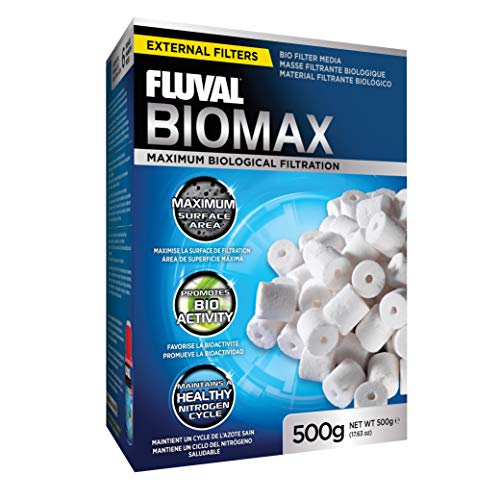
Fluval BioMax is porous biological filter media for aquarium canister filters. This 500 g container fits Fluval 104, 204, 304, 404, 105, 205, 305, 405, 106, 206, 306, 406, FX5, and FX6 models. The material gives beneficial bacteria more surface area, which can support biological filtration and help control ammonia and nitrate levels as water passes through the media.
What stands out is its broad use. BioMax works in both freshwater and saltwater aquariums, and it should not change the water’s basic characteristics. The porous shape also allows longer contact between water and the media. Fluval recommends replacing it monthly for best results, but only half the media should be changed at once. That leaves established bacteria in the filter. At around $20, the 500 g container offers a practical refill option for compatible canisters, though larger filters may require more than one container.
Pros
- Fits 14 Fluval canister filter models, including FX5 and FX6.
- Supports biological filtration that helps control ammonia and nitrate.
- Works in freshwater and saltwater setups without altering water characteristics.
Cons
- Requires monthly replacement for the best stated performance, which adds ongoing cost.
- Replacing only half at a time makes maintenance slower and limits how quickly all media can be refreshed.
2. Sukh Ceramic Rings Aquarium Filter Media
Best for: Small tanks needing extra media
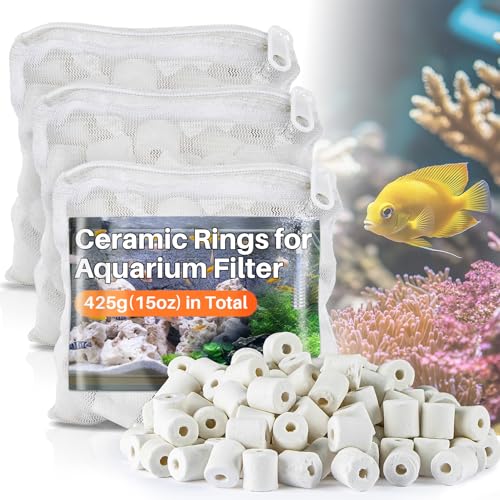
Sukh’s ceramic filter rings provide 15 ounces of porous media across three bags. Each ring has a hollow center and open structure, giving water more paths through the material. That design can catch some suspended debris while supporting biological filtration in freshwater or saltwater setups. The rings fit filter chambers, cartridges, ponds, and other containers that have enough room for loose media. They can also supplement sponge, floss, or chemical media.
Setup takes little effort. Rinse the rings with clean water, then place them in a media basket or directly inside the filter chamber. The package works with several Fluval-style systems, including the 104 through 406 series, 105 through 405 series, and FX5 or FX6. Sukh recommends replacing part of the media every six months to one year, rather than removing everything at once. At around $7, the three-bag package offers a low-cost way to add ceramic media, though the value depends on how much chamber space your filter has.
Pros
- Three bags provide 15 ounces of ceramic media for multiple filter compartments.
- Hollow, porous rings allow steady water flow and help limit clogging.
- Compatible with freshwater, saltwater, pond, and several listed filter systems.
Cons
- The rings do not replace mechanical media, regular cleaning, or water changes.
- Loose ceramic pieces need a media basket or suitable chamber to stay contained.
1. Sukh Ceramic Bio Balls Filter Media

Best for: Flexible aquarium filter media setups
Sukh’s 15-ounce pack contains loose ceramic-style balls made from inert quartz. Their porous surfaces allow water to pass around the media, so they can fit in canister filters, sump systems, top filters, and hang-on-back filters. The loose format also lets you adjust the amount used around other filter materials.
The main appeal is stable water chemistry. Quartz should not change pH, making this media suitable for freshwater and saltwater aquariums. Its open surface can support water circulation and oxygen exchange while catching some fish debris before it moves through the system. That may help reduce cloudy water and aquarium odors, but these balls are not a substitute for fine mechanical pads or regular filter maintenance. At around $7, the pack offers a low-cost way to add media to a smaller filter or top off an existing setup.
Pros
- Inert quartz should not alter pH in freshwater or saltwater tanks.
- Porous surfaces allow water flow and added oxygen exchange.
- Loose 15-ounce media fits several filter styles and layouts.
Cons
- The package does not provide a stated ball count, so coverage is harder to estimate.
- Coarse balls may miss fine particles that filter floss or polishing pads can catch.
Buying Guide
The most important factor is usable surface area, because nitrifying bacteria need stable pore space to process ammonia and nitrite. A large-looking bag is not automatically better; pore structure, water access, and the amount that fits your filter matter more than marketing claims.
- Media volume: For a lightly to moderately stocked freshwater tank, start with about 1 liter per 25–50 gallons of water, then follow the manufacturer’s loading chart. Overfilling can restrict flow.
- Porosity and material: Sintered glass, porous ceramic, and pumice can support bacterial colonies. Pieces around ½–1 inch fit many canister and hang-on-back compartments.
- Flow resistance: Choose media that leaves roughly 20–30% empty space in the basket. Water should pass through the media, not around a tightly packed block.
- Fit and containment: Measure the filter chamber before buying. For loose granules, use a mesh bag with 2–5mm openings, and leave room for mechanical sponges.
- Water chemistry and upkeep: Select inert media for neutral community tanks. Avoid coral-based products if you do not want higher pH or hardness. The media should tolerate rinsing in removed tank water every 1–3 months.
If you cannot have everything, prioritize porous media that fits the filter without reducing water flow.
Frequently Asked Questions
How do I choose biological filter media for a freshwater aquarium?
Choose biological media with high surface area, good water flow, and a size that fits your filter. Ceramic rings, sintered glass, and porous stone can all support nitrifying bacteria, but performance depends on circulation and oxygen. For a small hang-on-back filter, 250–500 mL of media is a practical starting point.
What type of bio media works best when filter space is limited?
Sintered glass media is usually the most space-efficient choice for freshwater tanks when filter space is limited. Its tiny pores provide substantial colonization area, but the material needs steady flow and should not be packed tightly. A 100–200 mL layer can suit a lightly stocked aquarium, while larger systems need more media.
Can I mix ceramic rings and other biological media?
Yes, you can mix ceramic rings, sintered glass, and porous stone in one freshwater filter if all pieces are aquarium-safe and water can pass through them. Use coarse mechanical media before the biological section, and place finer pieces in a mesh bag to prevent clogging. Rinse new media with dechlorinated water.
Are ceramic rings effective for freshwater aquariums?
Yes, ceramic rings are effective biological media for many freshwater aquariums, especially when water flows through their pores. They are affordable and reusable, but they do not remove ammonia instantly and need time for bacteria to establish. Keep them submerged, avoid replacing all at once, and rinse them only in aquarium water.
Conclusion
Sukh Ceramic Bio Balls Filter Media is the top recommendation for freshwater aquarists who want compact, reusable biological filtration at a reasonable cost. If your priority is maximum bacterial capacity in limited filter space, choose a quality sintered-glass medium instead, since its porous structure can provide more interior area per handful. Before buying, double-check each option’s media size, filter compatibility, package quantity, and current price, because listings can vary between sellers and aquarium setups. Confirm that the pieces fit your filter basket, chamber, or media bag without blocking water flow. Rinse new media with treated aquarium water, then add it gradually so the tank’s established biological filter has time to adjust.