
For most buyers, the UPETTOOLS Electric Aquarium Gravel Cleaner is the top pick among the best sand cleaners for saltwater aquariums. Its powered suction makes routine substrate cleaning easier than using a hand-operated siphon, while the design can help remove waste without disturbing the whole tank. This electric aquarium gravel cleaner suits owners who want less effort during maintenance and a more controlled way to clean sand or fine substrate.
This guide is for saltwater hobbyists choosing a cleaner for regular tank care. The key factors are suction control, intake design, hose reach, and how easily the filter or collection area empties. Tank size also matters, since a small cleaner may work well in nano aquariums but slow down on larger systems. The six picks below are ranked with practical reasons and honest drawbacks for each.
Quick Comparison
| # | Product | Best For | Price | |
|---|---|---|---|---|
| 1 | UPETTOOLS Electric Aquarium Gravel Cleaner | Best for Quick Aquarium Maintenance | ~$36 | View → |
| 2 | AQQA Electric Aquarium Gravel Vacuum | Best for Adjustable Gravel Cleaning | ~$36 | View → |
| 3 | Natural Rapport Aquarium Gravel Cleaner | Best for Manual Tank Care | ~$16 | View → |
| 4 | hygger Electric Aquarium Gravel Cleaner | Best for Planted Aquarium Owners | ~$46 | View → |
| 5 | CLASSIC SAND & PLAY Aquarium Sand | Best for Budget Sand Substrate | ~$45 | View → |
| 6 | Aqua Natural Oolitic Aragonite Aquarium Sand | Best for Marine Reef Aquariums | ~$15 | View → |
6 Top Sand Cleaners for Saltwater Tanks
These ranked picks count down to the top choice, with each sand cleaner matched to different saltwater aquarium needs and budgets.
6. Aqua Natural Oolitic Aragonite Aquarium Sand

Best for: Reef tanks needing natural pH buffering
Aqua Natural Aquarium Sand is a 10-pound bag of fine-grain oolitic aragonite for saltwater and marine aquariums. Its main material is calcium carbonate, listed at 98% purity. The grain size suits reef tanks, fish tanks, plenum systems, and refugiums. The price is usually around $15, though it can change. This is not a freshwater substrate. In marine setups, aragonite can support an alkaline environment near pH 8.2, but actual readings depend on salinity, alkalinity, livestock, and water changes.
The useful difference is the sand’s chemical and biological role. Calcium carbonate can buffer pH and act as a flocculant, so initial cloudiness is expected after setup. A working filter should remove suspended material over time. The fine grains also provide substantial space for beneficial bacteria. The maker states that 1 kilogram offers more than 1 million square centimeters of surface area for bacteria linked to ammonia, nitrite, and nitrate reduction. Pisces also holds a Bahamian government harvesting lease, which identifies the material’s source but does not replace rinsing or aquarium cycling.
Pros
- Calcium carbonate can help maintain marine pH near 8.2.
- Fine grains work in reef tanks, refugiums, and plenum systems.
- Large surface area supports bacteria involved in nitrogen processing.
Cons
- Fine sand can shift or blow around under strong water flow.
- Initial cloudiness requires filtration and may take time to clear.
5. CLASSIC SAND & PLAY Aquarium Sand

Best for: Natural-looking planted community tanks
CLASSIC SAND & PLAY is a 20-pound bag of fine aquarium sand for freshwater and saltwater tanks. The natural material creates a soft, neutral base for colorful fish, live plants, rocks, and other decorations. At around $45, it costs more than basic play sand, but the aquarium-focused preparation may save cleanup time.
The sand is pre-washed and kiln dried, which helps remove excess residue before it reaches the tank. It is also designed to work with aquarium sand filters and support normal filtration. The seven available colors give buyers more control over the tank’s overall look. Its fine texture suits fish that dig or burrow, though fine substrate can require careful pouring and rinsing if the water turns cloudy during setup. The product is marketed as safe for fish, plants, and aquarium decor, but tank owners should still follow normal acclimation and water-testing steps.
Pros
- 20-pound bag covers a useful amount of substrate for many home aquariums.
- Pre-washed, kiln-dried sand can reduce leftover dust and setup residue.
- Seven color choices make it easier to match plants, fish, and decorations.
Cons
- Around $45, it costs more than ordinary, non-aquarium sand.
- Fine grains may shift or compact, especially in tanks with strong water flow or active bottom-dwelling fish.
4. hygger Electric Aquarium Gravel Cleaner
Best for: Regular freshwater tank maintenance
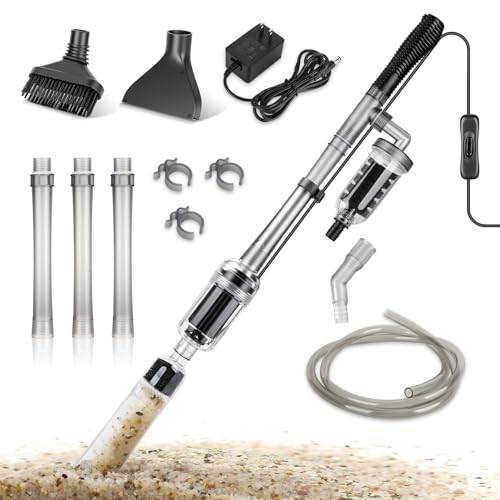
The hygger Electric Aquarium Gravel Cleaner combines a 528 GPH DC pump with five cleaning functions. It can wash sand or gravel, remove waste, scrub glass, drain water, and refill the tank. Four detachable rigid tubes fit aquariums from 19.3 to 40.6 inches tall. The handle has a non-slip grip, while the separate power switch keeps operation simple. At around $46, it costs more than a basic hand siphon but offers more attachments.
Its three outlet setups cover light cleaning, water changes, and deeper substrate work. The filter cup uses a baffle and sponge to help keep small fish, shrimp, and gravel away from the motor. A duckbill nozzle targets larger debris, while the brush and scraper tackle algae and stuck-on residue. The hose clip holds the drain line on a bucket, and the pump can remove water down to about 4 inches. An air-release valve helps reduce startup suction problems, though a small spray from the vent is normal. The coverless impeller also helps limit sand jams.
Pros
- 528 GPH flow removes waste faster than a manual siphon.
- Four rigid tubes adjust to tanks between 19.3 and 40.6 inches.
- Three outlet modes handle cleaning, draining, and refilling.
Cons
- The pump needs a nearby power source, limiting placement options.
- Its many tubes, heads, sponge, and hose require more storage and cleanup than a simple siphon.
3. Natural Rapport Aquarium Gravel Cleaner

Best for: Low-maintenance planted and community tanks
Natural Rapport Aquarium Gravel Cleaner is a 16-ounce liquid treatment for freshwater and saltwater aquariums. It adds beneficial bacteria that break down fish waste, uneaten food, and organic buildup in gravel, sand, or other substrate. No siphon, vacuum, or pump is required. The stated dose is one capful per 10 gallons, and one bottle treats up to 960 gallons.
Its main appeal is easier routine maintenance, especially in tanks where debris collects between cleanings. The bacteria may help reduce ammonia, nitrite, nitrate, phosphate, and odors tied to decomposing waste. The naturally derived formula contains no alcohol, dyes, phosphates, or harsh chemicals. It is made in the USA and listed as safe for fish, shrimp, snails, turtles, axolotls, plants, corals, and marine invertebrates. Still, it should support regular water changes, not replace them. Results may vary with stocking levels, feeding habits, and waste buildup.
Pros
- Treats up to 960 gallons with one 16-ounce bottle.
- Works across gravel, sand, and other substrate types.
- Suitable for freshwater and saltwater tanks with plants and invertebrates.
Cons
- It breaks down waste but does not physically remove debris like a gravel vacuum.
- Biological results can vary, so heavily stocked tanks may still need frequent cleaning and water changes.
2. AQQA Electric Aquarium Gravel Vacuum

Best for: Small tanks with mixed cleaning needs
The AQQA Electric Aquarium Vacuum combines water changes, gravel cleaning, debris removal, filtration, and water circulation in one kit. Its handle extends from 16.9 to 33.6 inches, so it can reach across several tank sizes. The motor can start with only 2 inches of water and pump down to about 0.3 inches. A ceramic shaft supports quieter operation, though the actual noise level may vary by setup. The price is around $36, depending on the seller and current promotions.
The accessory set gives this cleaner more flexibility than a basic siphon. A 360-degree brush head scrubs tank walls, while the 45-degree inlet reaches fine sand. A duckbill nozzle with a spatula helps lift waste from the substrate. The kit also includes a water intake strainer with suction cups, a gravel washer with a filter sponge, and a shower attachment with a filter bag. Parts install without tools and come apart for storage. The external switch is convenient, but it must stay away from water because it is not waterproof.
Pros
- Adjustable 16.9-to-33.6-inch handle suits different aquarium sizes.
- Multiple nozzles handle glass, sand, gravel, and bottom debris.
- Low starting water level helps with partial water changes.
Cons
- The external power switch is not waterproof and needs careful placement.
- Several attachments require swapping, which adds setup time during cleaning.
1. UPETTOOLS Electric Aquarium Gravel Cleaner

Best for: routine cleaning of deep aquariums
The UPETTOOLS Aquarium Gravel Cleaner combines six tasks in one electric unit: water changes, gravel washing, debris removal, filtration, water showering, and suction control. Its 110V, 28W pump reaches a stated maximum flow of 1,700 liters per hour. Under ideal conditions, the maker says it can drain a 180-gallon, or 681-liter, aquarium in about 30 minutes. That speed may suit large tanks better than a hand-siphon.
A telescoping tube extends from 23.6 to 37.7 inches, or 60 to 96 centimeters. The listed working range covers water depths from 13.7 to 47.2 inches. A flow valve lets you reduce suction around delicate plants, fish, or loose substrate. The cleaner is rated for freshwater and saltwater tanks, and its removable parts should make basic cleaning less difficult. At around $36, it offers more functions than a simple manual gravel vacuum. Keep expectations realistic, since the 1,700 L/H figure is a maximum rating rather than a guaranteed everyday rate. The included three-year warranty and stated 24-hour support add useful coverage.
Pros
- Six functions reduce the need for separate water-change and gravel-cleaning tools.
- Adjustable tube length suits shallow tanks and aquariums up to the listed depth range.
- Variable suction helps limit substrate disturbance during routine maintenance.
Cons
- The 110V power requirement limits use in regions with different household voltage.
- Actual flow can drop with hose setup, tank depth, debris, or filter resistance.
Buying Guide
Flow control is the most important factor when choosing a sand-cleaning tool for a saltwater tank. Strong suction can remove beneficial sand, small invertebrates, and too much water before you finish the job.
-
Adjustable suction: Choose a siphon with a flow valve or squeeze bulb. Fine sand often needs gentle flow, around 1–2 gallons per minute, to lift waste without pulling the substrate away.
-
Tube size: A 1–2 inch intake tube works for most home aquariums. Select a 12–18 inch tube for tanks up to 24 inches deep, or choose a longer model for deeper displays.
-
Sand compatibility: Look for a narrow nozzle, intake guard, or removable screen. These features help prevent aragonite grains, snails, and hermit crabs from entering the hose.
-
Saltwater-safe materials: Pick aquarium-grade plastic, silicone tubing, and corrosion-resistant fittings. Avoid exposed metal parts, which can rust after repeated contact with saltwater.
-
Maintenance and cost: A manual cleaner usually costs $10–$30, while powered units often run $30–$80. Choose parts that disconnect easily and rinse clean after every water change.
If you cannot have everything, prioritize adjustable suction because safe flow protects both the sand bed and its small inhabitants.
Frequently Asked Questions
How do sand cleaners work in saltwater aquariums?
Sand cleaners remove waste, uneaten food, and algae from aquarium substrate without removing all the sand. Most use a siphon tube or gravel vacuum that lifts debris while heavier sand falls back. Choose a model with adjustable flow for fine aragonite, especially in shallow beds measuring about 1 to 2 inches deep.
What type of substrate vacuum is best for marine tanks?
A siphon vacuum with adjustable water flow is usually the best choice for marine tanks with sand beds. Fine sand can clog wide openings or leave the aquarium too quickly, so look for a narrow nozzle or flow-control valve. A 12-inch tube often suits smaller aquariums, while larger tanks may need 18 inches.
Can sand sifters clean fine aragonite without removing it?
Yes, sand sifters can clean fine aragonite when you keep the intake above the surface and use gentle suction. Strong airflow may pull lightweight grains into the hose, especially with very fine substrate. Start with a small section, such as 25 percent of the tank floor, then adjust the technique.
Are electric aquarium cleaners safe for saltwater sand?
Electric aquarium cleaners are safe for saltwater sand when the model is rated for marine use and kept away from exposed corals or livestock. Battery-powered units can simplify spot cleaning, but they may have weaker suction than manual siphons. Check the filter or collection chamber after each use for trapped sand.
Conclusion
The UPETTOOLS Electric Aquarium Gravel Cleaner is the top pick for saltwater aquarium owners who want powered cleaning and less manual siphoning. If your priority is low cost, quiet operation, or precise water removal, choose a manual siphon instead, since it needs no motor or batteries and gives you direct control. Before buying, double-check the cleaner’s tube size, compatibility with your tank and sand bed, included attachments, package quantity, and current price. Fine marine sand can move easily, so a model with adjustable flow may suit shallow beds better than a stronger unit. Match the cleaner to your aquarium’s footprint and maintenance routine, then choose the option you can use safely around rock, coral, and livestock.