
Flipper DeepSee 4 Magnetic Aquarium Viewer is the top pick for most buyers because its magnetic design keeps close-up viewing steady from outside the tank. For shoppers seeking the best aquarium magnifying glass, this viewer offers a cleaner way to inspect fish, plants, rocks, and small tank details without placing your hands underwater. Its outside-mounted design also makes quick checks less disruptive for your aquarium.
This guide is for fishkeepers who need a closer look at small, active, or hard-to-see tank life. The key factors are lens magnification, viewing area, magnet strength, and compatibility with your aquarium glass thickness. A lightweight viewer may suit routine checks, while a larger lens can show more of the scene at once. The 7 picks below are ranked with clear reasons and honest drawbacks for each, so you can choose a practical match for your setup.
Quick Comparison
| # | Product | Best For | Price | |
|---|---|---|---|---|
| 1 | Flipper DeepSee 4 Magnetic Aquarium Viewer | Best For Large Saltwater Tanks | ~$40 | View → |
| 2 | Flipper DeepSee 5 Magnetic Aquarium Viewer | Best For Detailed Reef Viewing | ~$65 | View → |
| 3 | Flipper DeepSee 5 Magnetic Aquarium Viewer | Best For Everyday Aquarium Inspection | ~$65 | View → |
| 4 | FLIPPER DeepSee Nano 3″ Magnetic Aquarium Viewer | Best For Nano Tank Owners | ~$30 | View → |
| 5 | Flipper DeepSee MAX Magnifying Lens Attachment | Best For Extra Magnification | ~$17 | View → |
| 6 | Flipper DeepSee Viewer MAX Magnetic Aquarium Magnifier | Best For Maximum Viewing Distance | ~$17 | View → |
| 7 | SUPVOX Aquarium Magnifier Fish Tank Viewer | Best For Budget-Conscious Fishkeepers | ~$10 | View → |
7 Aquarium Magnifiers Worth Considering
These picks are ranked by clarity, reach, lighting, and ease of use, counting down to the top choice.
7. SUPVOX Aquarium Magnifier Fish Tank Viewer

Best for: Detailed viewing in home aquariums
The SUPVOX aquarium magnifier is an acrylic viewing tool that sits outside the fish tank. Strong magnets hold the lens through the aquarium wall, so you can reposition it around the tank instead of moving fish or decorations. A suction cup at the base adds support on clean, smooth surfaces. The design needs no complicated setup. Fix it in place, then move the lens to inspect another area.
What stands out is its usefulness for close observation. The optical-grade lens can make small details on fish, coral, plants, and tank surfaces easier to see. That may help you spot visible changes that deserve closer attention, though it cannot diagnose fish disease. The magnifier may also help with aquarium photos by enlarging a subject from outside the glass. At around $10, it offers a low-cost viewing aid, but the listing does not provide lens dimensions or a stated magnification level.
Pros
- Magnetic mounting lets you move the lens around the tank.
- Acrylic lens provides closer views of fish, coral, and plants.
- Suction cup adds stability on smooth aquarium surfaces.
Cons
- No stated lens size or magnification makes the viewing area hard to predict.
- The suction cup and magnets may work poorly on rough surfaces or thicker tank walls.
6. Flipper DeepSee Viewer MAX Magnetic Aquarium Magnifier

Best for: Reef owners photographing coral through glass
The Flipper DeepSee orange filter is a clip-on accessory for the DeepSee Viewer MAX 5-inch magnetic aquarium magnifier. It filters some blue light from aquarium lighting, which can make coral colors look clearer and more balanced in photos and video. The attachment works with glass or acrylic tank walls up to 5/8 inch thick. At around $17, it offers a low-cost way to improve the viewer’s camera setup.
Its main strength is simple color correction without changing the tank itself. The orange lens suits both freshwater and saltwater aquariums, from smaller tanks to larger displays. It is designed for use with the DeepSee Viewer MAX, so buyers should see it as an add-on rather than a complete viewing tool. The filter may help coral hues look more natural under strong blue reef lights, though results will vary with the camera, lighting, and water clarity.
Pros
- Filters blue light for more balanced coral color.
- Fits glass and acrylic walls up to 5/8 inch.
- Works with freshwater and saltwater aquarium setups.
Cons
- Requires the separate DeepSee Viewer MAX 5-inch magnifier.
- Color results can vary between cameras and aquarium lights.
5. Flipper DeepSee MAX Magnifying Lens Attachment
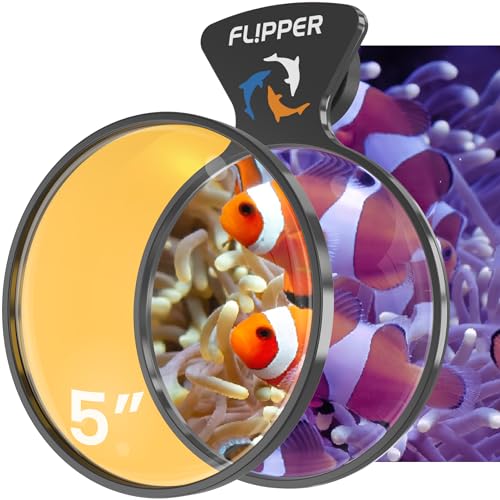
Best for: Reef keepers photographing coral through glass
The Flipper DeepSee Viewer Orange Lens is a clip-on filter for the 5-inch Flipper DeepSee magnetic aquarium magnifier. Its orange tint filters some blue light from reef lighting, which can help coral and fish colors appear stronger in photos and video. The filter is made for viewing through glass or acrylic aquarium walls up to 3/4 inch thick.
This attachment changes the DeepSee magnifier without requiring another viewing tool. It clips onto the existing lens, so setup should take little time. The orange filter also works with the magnifier’s built-in enlargement, giving users a closer view while taking full-color reef images. At around $17, it costs less than buying a second magnifying viewer. However, the DeepSee magnetic magnifier is not included, and the filter has a narrow fit. Buyers need the 5-inch DeepSee model for proper compatibility.
Pros
- Orange filtering can reduce blue color cast in reef photos.
- Clips onto the existing 5-inch DeepSee magnifier.
- Fits glass or acrylic walls up to 3/4 inch thick.
Cons
- Requires a compatible Flipper DeepSee magnifier, sold separately.
- The orange tint is specialized for reef photography and may not suit normal aquarium viewing.
4. FLIPPER DeepSee Nano 3″ Magnetic Aquarium Viewer

Best for: Close-up nano tank inspection
The FLIPPER DeepSee Nano is a compact, 3-inch magnetic viewer for freshwater and reef aquariums. Its optical magnifier offers a 2- to 6-inch focal range, so you can inspect fish, coral, rockwork, and aquascape details from close range. Rare-earth magnets hold the viewer against glass or acrylic panels up to 3/8 inch thick. That design allows hands-free viewing and quick repositioning without placing your hands in the water.
Its main advantage is the small viewing area and steady placement. You can use it to check coral growth, spot small fish details, or frame closer aquarium photos with a camera. The viewer is made for clear underwater observation, though results still depend on water clarity and the condition of the tank panel. At around $30, it costs more than a basic handheld magnifying glass, but it adds magnetic positioning and underwater use for smaller tanks.
Pros
- The 3-inch lens gives close views of fish, coral, and aquascapes.
- Rare-earth magnets support hands-free use on panels up to 3/8 inch thick.
- The 2- to 6-inch focal range suits detailed inspection and aquarium photography.
Cons
- It will not fit tanks with glass or acrylic thicker than 3/8 inch.
- The small lens covers a limited area, so broad tank viewing requires repositioning.
3. Flipper DeepSee 5 Magnetic Aquarium Viewer
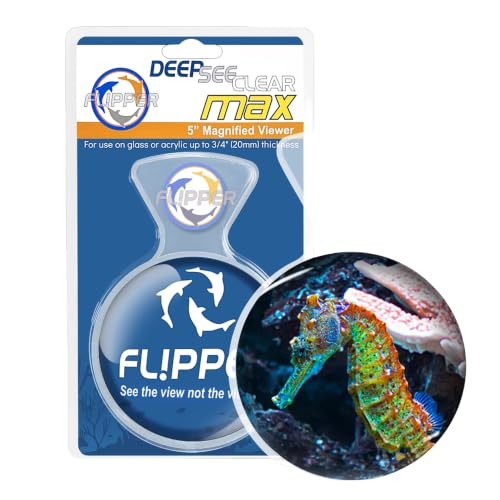
Best for: Close-up reef and fish viewing
The Flipper DeepSee is a magnetic aquarium viewer with a 5-inch optical-grade acrylic lens. It magnifies underwater subjects without the distortion common with basic viewing panels. Its focal range runs from 8 to 12 inches, so it suits close inspection of corals, fish, and small tank details. The lens works with glass or acrylic aquariums up to 5/8 inch thick.
Rare-earth magnets hold the viewer against the tank wall while allowing hands-free repositioning. That makes it useful for checking coral condition, spotting small fish features, or framing aquarium photography without holding a separate magnifying glass. The acrylic lens should also resist the cracking risk of glass, but it still needs careful cleaning to avoid scratches. Around $65, it costs more than a simple handheld viewer, though the magnetic setup adds practical value for regular observation. The focal range is fairly specific, so it may not suit viewing from farther away or inside unusually deep displays.
Pros
- 5-inch lens provides a broad, magnified view of fish and corals.
- Rare-earth magnets hold on glass or acrylic tanks up to 5/8 inch thick.
- Hands-free positioning helps with coral checks and close-up photography.
Cons
- The 8-to-12-inch focal range limits viewing distance.
- Around $65, it costs more than basic aquarium magnifiers.
2. Flipper DeepSee 5 Magnetic Aquarium Viewer

Best for: Reef tank detail checks
The Flipper DeepSee is a magnetic underwater viewer for glass and acrylic aquariums. Its 5-inch optical-grade acrylic lens magnifies fish, corals, and small tank features without the need to put your face close to the water. The stated focal range is 8 to 12 inches, which suits close inspection from outside the aquarium. At around $65, it costs more than a basic handheld magnifying glass, but it is designed specifically for aquarium viewing.
Rare-earth magnets hold the viewer against panels up to 5/8 inch thick. That lets you reposition it while keeping both hands free for a camera, light, or maintenance tool. The lens is intended to provide clear, low-distortion views through glass or acrylic, which can help when checking coral condition or preparing close-up photos. Its main value comes from combining magnification with a fixed position. You can move the viewer across the panel instead of repeatedly reaching into the tank.
Pros
- 5-inch lens provides a broad viewing area for fish, corals, and small details.
- Magnetic design supports hands-free viewing and smoother repositioning.
- Works with glass or acrylic panels up to 5/8 inch thick.
Cons
- The viewer will not fit aquarium walls thicker than 5/8 inch.
- An 8-to-12-inch focal range may not suit every tank layout or viewing distance.
1. Flipper DeepSee 4 Magnetic Aquarium Viewer

Best for: Close-up reef tank observation
The Flipper DeepSee is a magnetic viewing lens for aquariums with glass or acrylic walls up to 5/8 inch thick. Its 4-inch optical acrylic lens magnifies underwater details without the blur common with basic viewing windows. The stated focal range runs from 3 to 8 inches, making it useful for inspecting coral, fish, and small areas of a reef setup.
Rare-earth magnets hold the viewer against the tank wall while allowing hands-free repositioning. That makes it easier to follow moving fish or adjust the view before taking close-up aquarium photos. The clear lens can also help reveal early coral changes, small debris, or details that are difficult to see through the tank alone. At around $40, it costs more than a simple handheld magnifier, but the magnetic mounting adds convenience for regular observation. Compatibility depends on both the tank wall thickness and the surface making proper contact with the lens.
Pros
- 4-inch optical acrylic lens provides a clear, magnified view underwater.
- Strong rare-earth magnets work on glass or acrylic up to 5/8 inch thick.
- Hands-free positioning helps with coral checks and close-up photography.
Cons
- The viewing area is limited, so it cannot replace a full-tank inspection.
- Tanks with walls thicker than 5/8 inch are not compatible, which limits its use with some aquariums.
Buying Guide
Optical clarity is the most important factor when choosing an aquarium magnifier because distortion can hide fin damage, algae, or small pests. A clear lens gives you a sharper view without requiring you to move close to the tank.
- Magnification: Choose 2x to 3x for broad viewing, or 5x for tiny eggs, wounds, and plant pests. Higher power narrows the viewing area and makes hand movement more noticeable.
- Lens size: A 3- to 5-inch lens covers more of a fish or leaf. Lenses under 2 inches suit detail work but require more repositioning.
- Working distance: For rimmed tanks, seek a handle or neck that reaches 8 to 12 inches from the glass. A short 4-inch model may not clear deep hoods.
- Water resistance: Pick a sealed or splash-resistant design if it may touch tank water. Avoid submerging ordinary reading magnifiers, and rinse saltwater residue with fresh water.
- Price and storage: Basic plastic models often cost $8 to $20. A protective case or hanging loop helps prevent scratches between uses.
If you can prioritize only one factor, choose optical clarity, then select magnification suited to the details you inspect.
Frequently Asked Questions
How does an aquarium magnifying glass help with fish care?
An aquarium magnifier helps you inspect fish, plants, and small equipment without removing them from the tank. It can reveal white spots, torn fins, algae threads, or loose shrimp food more clearly. Models with 2x to 5x magnification usually suit routine viewing, while stronger lenses narrow the visible area.
What should you look for in a magnifying glass for aquariums?
Look for clear optical glass or acrylic, a handle long enough to reach the tank bottom, and a frame that resists corrosion. A 10- to 12-inch handle works for many home aquariums, while a floating design can prevent the tool from disappearing beneath plants, rocks, or substrate.
Can an aquarium magnifying glass be used underwater?
Yes, some aquarium magnifiers can be used underwater, but only when the lens, frame, and handle are designed for wet conditions. Rinse the tool with fresh water after use, especially around saltwater tanks. A lens rated for submerged viewing is safer than an ordinary reading glass placed near the surface.
Are aquarium magnifying glasses safe for fish and shrimp?
Yes, aquarium magnifying glasses are generally safe for fish and shrimp when you keep the lens and handle away from direct contact. Move slowly, avoid chasing animals, and never leave loose metal parts in the water. A 2- to 3-inch viewing lens gives useful detail without requiring close approach.
Conclusion
Flipper DeepSee 4 Magnetic Aquarium Viewer is the strongest pick for fishkeepers who want a clear, hands-free view of small details during routine tank care. If your priority is inspecting a larger area at once, choose a wide-lens, lighted aquarium viewer instead, since it can cover more glass with fewer repositioning movements. Before buying, double-check the viewer’s size, compatibility with your aquarium glass or acrylic, package quantity, and current price. Magnetic strength matters too, especially on thicker panels or tanks with curved fronts. A compact viewer may fit nano tanks better, while a larger model can feel bulky around plants, rocks, and tight corners. Choose the option that matches your tank’s layout and the details you need to see most often.