
Cardinal Tetra Live Freshwater Aquarium Fish is the top pick for most buyers because its bright blue-and-red schooling color gives a planted tetra aquarium an immediate focal point. For shoppers comparing the best live aquarium plants for tetras, this listing offers a simple way to build around the fish themselves, then choose greenery that supports natural behavior and adds cover.
This guide is for aquarium owners planning a peaceful freshwater setup, replacing tired stems, or adding cover to a tetra community. The key factors are plant size, light requirements, growth rate, and how much shelter each option creates without crowding the tank. Check available space and lighting before buying, since fast-growing greenery can demand frequent trimming. The five picks below are ranked with clear reasons and honest drawbacks for each, so you can match the plants to your tank, equipment, and maintenance routine.
Quick Comparison
| # | Product | Best For | Price | |
|---|---|---|---|---|
| 1 | Cardinal Tetra Live Freshwater Aquarium Fish | Community Tank Schooling Fish Keepers | ~$30 | View → |
| 2 | Amazon Sword Echinodorus Bleheri Live Aquarium Plants | Rooted Background Plant Growers | ~$13 | View → |
| 3 | Java Fern and Anubias Aquarium Plant Bundle | Low-Light Aquarium Beginners | ~$15 | View → |
| 4 | Marcus Fish Tanks Jungle Val Live Aquarium Plants | Tall Background Plant Landscapers | ~$14 | View → |
| 5 | Aquarium Plant Center Salvinia Minima Live Aquatic Plant | Floating Plant Surface Cover Seekers | ~$6 | View → |
5 Top Live Plants for Tetra Tanks
These live aquarium plants are ranked from fifth place to our top pick, based on tetra-friendly growth, care needs, and tank fit.
5. Aquarium Plant Center Salvinia Minima Live Aquatic Plant

Best for: Small freshwater tank surface cover
Water Spangle, or Salvinia minima, is a live floating freshwater plant for aquariums, ponds, planted tanks, aquascapes, and paludariums. The package includes 12 plants with more than 60 leaves. That amount covers a circular area about 4 inches wide, so it works best as a small starter portion rather than full surface coverage. Since it floats, it needs no gravel, driftwood, or planting container.
This plant has modest care needs and can grow under low to medium light. Indoor setups still require a grow light. It stays on the water surface, where it can add greenery without changing the tank floor. At around $6, the portion costs little, but shipping conditions matter. Aquarium Plant Center may cancel an order if the forecast reaches above 85°F or below 38°F during the next seven days. The live-arrival guarantee offers a free replacement when buyers send a picture of damaged plants.
Pros
- Includes 12 live plants and 60-plus leaves.
- Floats freely, so no substrate or pot is needed.
- Suitable for low to medium light conditions.
Cons
- The package covers only about a 4-inch diameter area.
- Indoor tanks need a grow light, and extreme temperatures may delay or cancel shipment.
4. Marcus Fish Tanks Jungle Val Live Aquarium Plants

Best for: Beginner freshwater tank owners
Marcus Fish Tanks’ Jungle Val package includes six live Vallisneria plants for freshwater aquariums. These grass-like plants can add height and a planted backdrop without demanding advanced care. At around $14, the bundle offers an affordable way to start filling a tank with live greenery. Jungle Val is known for adapting well and spreading runners over time, though growth depends on lighting, nutrients, and water conditions.
The main catch is transplant stress. The plants may melt back noticeably after shipping or planting, so trim the tops and place the roots in the substrate. New growth can follow once the plants adjust. The seller provides a live-arrival replacement when a plant arrives dead, but buyers must send a clear photo while it remains in the unopened bag. Shipping also needs careful timing. Avoid ordering when daytime low temperatures may fall below 30°F, since freezing conditions can damage live plants before they arrive.
Pros
- Six plants provide quick coverage for a tank background or side wall.
- Jungle Val is generally easy to grow for new aquarium keepers.
- Live-arrival replacement support offers protection when package conditions cause plant loss.
Cons
- Leaves may melt back heavily after shipping, so the plants can look rough at first.
- Cold-weather orders below 30°F risk damage and may not qualify for replacement if shipped during unsafe conditions.
3. Java Fern and Anubias Aquarium Plant Bundle
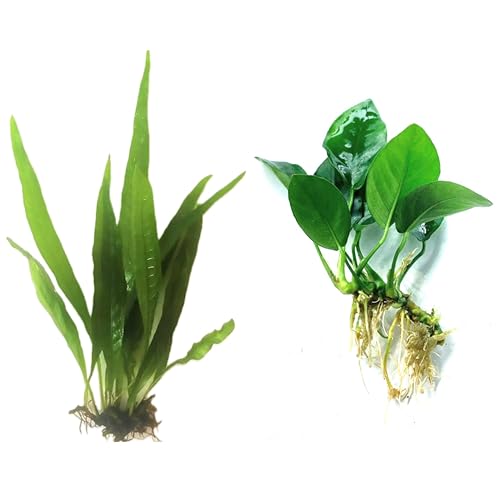
Best for: low-light freshwater tank owners
This bundle includes two live aquarium plants: one Anubias barteri and one Java fern. The Anubias measures about 2 to 6 inches, while the Java fern typically measures 4 to 8 inches. Since these are live plants, the final size and shape can vary. Both are popular choices for beginner aquascapes because they need less care than many stem plants and can add natural cover without crowding a smaller tank.
At around $15, the set offers an affordable way to add two different plant shapes to a freshwater aquarium. The plants work well with rocks, driftwood, and other hardscape pieces, though buyers should follow care directions for planting and placement. A live-arrival guarantee adds useful protection. If a plant arrives dead, the seller asks for a clear photo of it inside the unopened bag before approving a replacement. Shipping still depends heavily on weather. The seller advises against ordering when daytime lows may fall below 30°F, and extreme heat can also damage live plants in transit.
Pros
- Includes two established plant types in one bundle.
- Size range suits small and medium freshwater tanks.
- Live-arrival replacement policy covers verified dead plants.
Cons
- Plant size, shape, and condition can vary because each plant is live.
- Cold or hot shipping weather may require delaying your order.
2. Amazon Sword Echinodorus Bleheri Live Aquarium Plants

Best for: Large, low-light community aquariums
Amazon Sword, sold as Echinodorus bleheri, is a set of three live aquarium plants from South America. Each plant can reach roughly 20 to 50 cm tall, so the group fits best in a larger tank with open vertical space. Its broad leaves create a strong background or centerpiece, though the final size depends on aquarium conditions. This plant has also been sold under the name “Paniculatus,” which may help when comparing listings or care guides.
The main strength is its forgiving care. It can grow in poorly illuminated aquariums by sending leaves toward available light, making it practical when stronger lighting is not an option. A nutrient-rich substrate supports fuller growth, but this is not a set-and-forget plant. Older or oversized leaves need regular pruning because dense foliage can shade shorter plants below. At around $13, the three-plant pack offers a low-cost way to fill a spacious aquarium, though plant condition on arrival can vary by seller.
Pros
- Three plants provide quick coverage for a larger aquarium.
- Tolerates poorly illuminated tanks better than many demanding species.
- Reaches 20 to 50 cm, creating useful background height.
Cons
- Its large mature size can overcrowd small tanks.
- It needs nutrient-rich substrate and regular pruning to protect plants underneath.
1. Cardinal Tetra Live Freshwater Aquarium Fish

Best for: Planted-tank owners building a small school
Cardinal Tetras are small tropical freshwater fish known for their bright blue and red stripe. This package includes five fish plus two extra, for seven total. They suit peaceful community aquariums with rasboras, small tetras, corydoras, and other non-aggressive tank mates. A group of five or more supports natural schooling behavior and creates more movement in the aquarium.
These fish look especially striking against green plants, driftwood, and dark substrate. They need a stable, cycled freshwater tank, and slow acclimation after delivery is recommended. The listing has a size conflict. The title says each fish measures 1–2 cm, while the feature details state 12 cm, so buyers should confirm the expected size before ordering. At around $30, the seven-fish count may suit aquarists who want to start a small school without buying each fish separately.
Pros
- Seven fish provide a ready-made school for a peaceful community aquarium.
- Blue and red coloring contrasts well with plants, driftwood, and dark substrate.
- Compatible with many small, calm species in properly maintained freshwater tanks.
Cons
- The listed fish size is inconsistent, showing both 1–2 cm and 12 cm.
- Live fish require careful acclimation and a stable, cycled aquarium on arrival.
Buying Guide
Choose plants that match your aquarium’s light and water conditions first, because stressed greenery can rot and pollute a small tetra tank. Most tetras thrive around 72–78°F and pH 6.0–7.5, though species vary.
- Light demand: For a low-tech aquarium, choose low- or medium-light species such as anubias, java fern, or cryptocoryne. Run the LED for 6–8 hours daily to limit algae.
- Mature size: Use foreground plants that stay 2–6 inches tall, plus background stems reaching 10–20 inches. Leave at least half the tank open for swimming.
- Shelter and leaf texture: Fine-leaved plants, moss, and compact grasses give tetras cover without blocking their view. Avoid rigid plastic-like leaves that can tear delicate fins.
- Planting method: Put rooted species in 2–3 inches of substrate. Attach rhizome plants, including anubias and java fern, to rock or wood instead of burying the rhizome.
- Health and quantity: Select plants with firm leaves and pale roots, not mushy stems or heavy algae. For a 10-gallon tank, start with 5–10 stems or three to five small plants, usually costing $15–$35.
If you cannot meet every preference, prioritize plants suited to your aquarium’s light and water parameters.
Frequently Asked Questions
How many live plants should I put in a tetra tank?
A small tetra school in a 10-gallon tank can thrive with 5 to 8 live plants. Choose a mix of low, mid, and tall growth, such as anubias, cryptocoryne, and vallisneria, so fish have cover at different heights. Use driftwood or rocks to anchor loose stems, and leave open water near the front for swimming.
What live aquarium plants are safest for tetras?
Anubias, java fern, cryptocoryne, vallisneria, and hornwort are safe live choices for most tetra aquariums. Anubias and java fern tolerate low to moderate light, while vallisneria adds tall cover behind the tank. Attach rhizome plants to wood or stone rather than burying them, and check each plant’s mature size before buying.
Can live plants help tetras feel less stressed?
Yes, live plants can reduce stress for tetras by providing cover and breaking up open sightlines. Floating plants such as frogbit also soften overhead light, but keep roughly half the surface clear for gas exchange and feeding. Remove yellow leaves promptly, since decaying material can add waste.
Are low-light plants a good choice for tetra tanks?
Yes, low-light plants are good for tetras because they provide cover without demanding strong aquarium lighting. Anubias, java fern, and cryptocoryne suit many setups, while a 6-hour daily light period can limit algae as plants adjust. Check growth and leaf color weekly, then increase light gradually if plants look weak.
Conclusion
Cardinal Tetra Live Freshwater Aquarium Fish remains the top recommendation for aquarists who want a peaceful, colorful schooling display and can provide a mature, stable freshwater tank with soft, warm water. If your priority is dense cover, easier maintenance, or stronger tolerance for beginner mistakes, choose hardy live plants such as java fern or anubias instead, since they attach to décor and need less demanding care than many rooted species. Before buying, double-check the plant or fish size, compatibility with your tetra species, the quantity needed for your tank, and the current price, since listings can change. Also match each plant to your lighting, substrate, temperature, and available swimming space. A balanced setup gives tetras shelter without crowding the aquarium.