
Hikari Tropical Fancy Guppy Fish Food is the top pick for most buyers because its tiny floating pellets suit guppies’ small mouths and surface-feeding habits. For most home aquariums, it is the best fish food for guppies because the pellets are easy to portion and spot before they create waste. This makes the formula practical for community tanks, though owners should still feed small amounts.
This guide is for new guppy keepers, community-tank owners, and anyone comparing daily diets for adult or young fish. The main factors are pellet size, ingredient quality, floating time, and package size. Food that is too large may go uneaten, while excess portions can cloud the water. The 6 picks below are ranked with clear reasons and honest drawbacks for each, helping you match a formula to your fish, tank size, and feeding routine.
Quick Comparison
| # | Product | Best For | Price | |
|---|---|---|---|---|
| 1 | Hikari Tropical Fancy Guppy Fish Food | Colorful Guppies Needing Daily Nutrition | ~$7 | View → |
| 2 | Ultra Fresh Royal Guppy Mignon Pellet Guppy Food | Small Guppies Preferring Mignon Pellets | ~$9 | View → |
| 3 | TetraMin Tropical Flakes Fish Food | Community Tanks Using Flake Food | ~$3 | View → |
| 4 | Ultra Fresh Royal Guppy Mignon Pellet Guppy Food | Guppy Keepers Seeking Compact Pellets | ~$15 | View → |
| 5 | Ultra Fresh Apex Guppy Fish Food | Growing Guppies Needing Protein-Rich Food | ~$12 | View → |
| 6 | Hikari Tropical Fancy Guppy Fish Food | Fancy Guppies Needing Color Support | ~$14 | View → |
6 Top Guppy Food Picks
This curated list is ranked from sixth place down to the top pick, based on nutrition, ingredients, and feeding value.
6. Hikari Tropical Fancy Guppy Fish Food
Best for: Guppy keepers managing breeding tanks
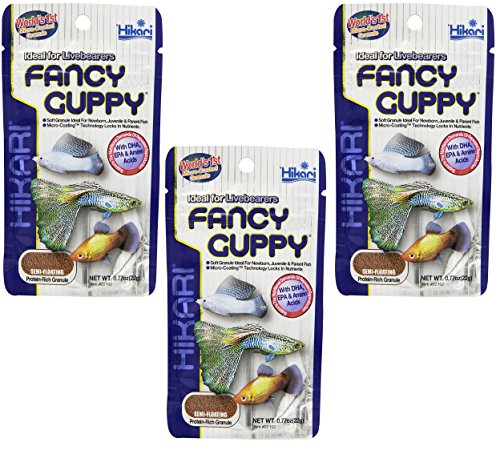
Hikari Usa Tropical Fancy Guppy food comes in a three-pack, with each container holding 0.77 ounces. The formula is made for pet guppies and is intended to support breeding activity, steady growth, general health, and resistance to disease. That makes it a practical choice for owners raising several guppies or maintaining a breeding setup.
The three-container format is the main standout. You get multiple portions instead of one larger package, which may help keep unopened food stored separately. At around $14, the pack also offers a moderate starting cost for guppy owners who want food focused on this fish type. Still, the small 0.77-ounce size per container means the supply may not last long in a busy tank. Feeding needs will vary with fish count and portion size, so this pack fits smaller collections better than large-scale setups.
Pros
- Three containers provide separate 0.77-ounce portions.
- Formulated to support guppy breeding and growth.
- Targets overall health and disease resistance.
Cons
- Each container holds less than 1 ounce, so frequent feeding can use the pack quickly.
- The formula is specialized for guppies and may not suit owners feeding several different fish species.
5. Ultra Fresh Apex Guppy Fish Food
Best for: Guppy breeders seeking protein-rich food
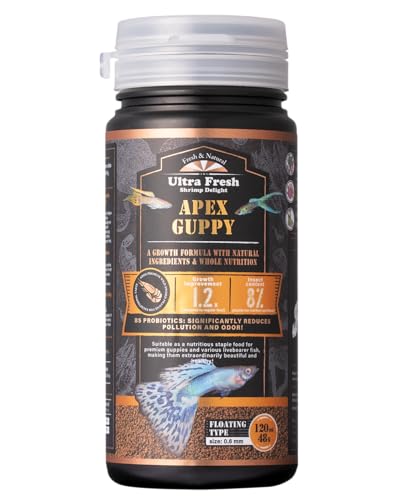
Ultra Fresh Apex Guppy Fish Food is a 1.69-ounce growth formula made for guppies and other small tropical fish. Its main protein sources include wild sword prawns, sardines, anchovies, and insects, with vegetables, spirulina, seaweed, garlic, and tubifex worms. The recipe contains 63% total meat content and uses no artificial colors, flavors, or byproducts. It costs around $12, though prices can change.
The standout feature is its broad nutrition profile. Vitamins A, C, D3, E, B1, B2, B6, B12, and other B vitamins support normal metabolism, immunity, and color development. The manufacturer also claims its lower-fat formula can improve feed efficiency, raise growth rate by 1.2 times, and reduce food use by 30%. BS probiotics are designed to support gut bacteria and reduce odor and water pollution by up to 50%. Those figures are product claims, not guaranteed results. The rich animal-protein blend may suit breeding tanks, but careful portions still matter.
Pros
- Contains varied animal proteins, including prawns, sardines, anchovies, and tubifex worms.
- Includes vitamins, spirulina, seaweed, vegetables, and garlic for broader daily nutrition.
- Probiotic formula may support digestion and help limit waste-related odor.
Cons
- The 1.69-ounce container is small for large colonies or frequent breeding setups.
- Rich protein content can cloud water if fish receive more food than they eat.
4. Ultra Fresh Royal Guppy Mignon Pellet Guppy Food

Best for: Guppy owners wanting color-focused nutrition
Ultra Fresh Royal Guppy Mignon Pellet is a fine-grain food made for small guppies. Its 0.6mm pellets soften quickly, which can make them easier for young or smaller fish to eat. The formula contains up to 35% wild sword prawns, plus spirulina and seaweed. These ingredients provide protein and natural pigment sources without relying on artificial color claims. The 4.6-ounce container costs around $15, though prices can change.
The vitamin blend includes A, C, D3, E, B1, B2, B6, and B12. The food also contains 3 million CFUs per gram of probiotics. The manufacturer says these cultures support digestion, nutrient absorption, and cleaner water by helping break down waste and leftover food. Those benefits depend on feeding habits and aquarium care, so this food cannot replace regular water changes. Feed one to three times daily, offering only what fish finish within three minutes. That limit matters because tiny pellets are easy to overfeed.
Pros
- 0.6mm pellets suit small guppies and soften quickly.
- Sword prawns, spirulina, and seaweed may support natural color.
- Eight listed vitamins and probiotics support a broader diet.
Cons
- The fine pellets require careful portion control to prevent waste.
- Color and water-quality benefits are manufacturer claims, not guaranteed results.
3. TetraMin Tropical Flakes Fish Food

Best for: Small tropical community aquariums
TetraMin Tropical Flakes are a staple food for top- and mid-feeding tropical fish. The 0.42-ounce container suits smaller aquariums and occasional restocking, though larger tanks may need a bigger package. Its ingredients are designed for easy digestion and provide a balanced mix of nutrients for daily feeding. The food is also suitable for many common community fish, such as tetras, guppies, and rasboras.
The formula includes antioxidants to support healthy cells, selected proteins for growth, and prebiotics for digestive support. Those additions give it more purpose than a basic flake blend. Feed fish two or three times per day, but offer only what they can eat within three minutes. That portion control matters because uneaten flakes can still foul aquarium water. Used properly, the flakes should not cloud the tank. At around $3, this small container offers a low-cost way to provide routine food, but it may not last long in a busy or heavily stocked aquarium.
Pros
- Made for top- and mid-feeding tropical fish.
- Includes proteins, antioxidants, and prebiotics for daily nutrition.
- Resists cloudy water when fish receive suitable portions.
Cons
- The 0.42-ounce package may run out quickly in larger tanks.
- Flakes can miss bottom-feeding fish, and overfeeding still creates waste.
2. Ultra Fresh Royal Guppy Mignon Pellet Guppy Food

Best for: Small guppy tanks needing color support
Ultra Fresh Royal Guppy Mignon Pellet is a sinking or slow-softening food made for small livebearers. Its 0.6 mm granules should fit guppy mouths and soften quickly for easier digestion. The 1.87-ounce container costs around $9, making it a modest purchase for a small aquarium. The formula includes up to 35% wild sword prawns, seaweed, Australian spirulina, and added vitamins A, C, D3, E, B1, B2, B6, and B12.
The main appeal is the combination of animal protein and plant ingredients. Prawns may improve acceptance, while spirulina and seaweed support the fish’s natural color. The food also contains 3 million CFUs per gram of probiotics. The manufacturer says these cultures support nutrient absorption and help break down waste and uneaten food. Feed one to three times daily, giving only what fish can finish within three minutes. That feeding limit matters, since extra food can still foul water. Color and growth results will vary with genetics, tank conditions, and the rest of the diet.
Pros
- 0.6 mm pellets suit small guppy mouths.
- Sword prawns and spirulina provide varied nutrition.
- Added probiotics may support digestion and cleaner water.
Cons
- The 1.87-ounce package may run out quickly in larger tanks.
- Tiny pellets can be difficult to portion without overfeeding.
1. Hikari Tropical Fancy Guppy Fish Food

Best for: Guppy keepers with breeding tanks
Hikari Tropical Fancy Guppy is a dry granule food made for guppies, including juveniles and breeding adults. The package contains 0.77 ounces, or 22 grams, and costs around $7. Its protein-focused formula is designed to support growth, general condition, and resistance to disease. The food also includes nutrients intended to support reproduction and bring out stronger natural color.
The floating granules are the main practical feature. Guppies usually feed near the surface, so buoyant pieces give them time to find and eat the food before it sinks. That can help keep feeding visible in a community aquarium. The formula targets several goals at once, including faster juvenile development, healthier breeding, and brighter coloration. Still, these are product claims rather than guaranteed results. Water quality, genetics, tank size, and the rest of the diet also affect guppy health. The 22-gram container suits small setups, but active colonies may use it quickly. Around $7, it is a reasonable specialty food, though not the lowest-cost option for daily feeding.
Pros
- Floating granules match the surface-feeding habits of guppies.
- Protein-rich nutrition supports growth and daily condition.
- Added nutrients target breeding and natural color development.
Cons
- The 0.77-ounce package may run out quickly in larger tanks or breeding colonies.
- Floating food can remain uneaten at the surface if portions are too large, which may add waste to the aquarium.
Buying Guide
The most important factor is particle size, because guppies have small mouths and may struggle with oversized flakes or pellets. Choose food that breaks into pieces around 0.5 to 1 millimeter, so every fish can eat without spitting it out.
- Particle size: Choose micro pellets, crushed flakes, or granules under 1 millimeter for adult guppies. Fry need food closer to 0.3 to 0.5 millimeter.
- Protein content: Look for roughly 35% to 45% protein in the guaranteed analysis. Shrimp, fish meal, or insect meal should appear near the top of the ingredient list.
- Ingredient balance: Select a formula with algae, spirulina, or vegetable matter, not only animal proteins. Two or more plant ingredients can support a varied diet.
- Feeding format: Floating flakes and slow-sinking micro pellets make intake easier to watch. Feed only what the group finishes within 60 to 90 seconds, once or twice daily.
- Container size and freshness: A 1.5- to 3-ounce container suits one small aquarium and limits waste. Choose sealed packaging with an expiration date, then replace opened food after about three months.
If you can prioritize only one factor, choose particle size, since guppies cannot benefit from food they cannot comfortably eat.
Frequently Asked Questions
How often should guppies be fed?
Guppies should be fed one to two small meals each day, with only what they finish in about two minutes. Choose small flakes or micro-pellets made for tropical fish, and remove leftovers after feeding. Young fry need three or four tiny meals daily because their growth requires more frequent access to food.
What ingredients should guppy food contain?
Good guppy food should list fish or shrimp meal, algae, and added vitamins, with protein suited to the fish’s life stage. Look for about 35% to 45% protein in adult formulas, while fry foods often contain finer particles and more protein. Avoid products that list wheat or soy first.
Can guppies eat flakes and pellets?
Yes, guppies can eat both flakes and small pellets, as long as each piece fits their mouths and sinks slowly enough to reach them. Crush standard flakes for tiny fish, or choose pellets under 1 millimeter for fry. Rotate in frozen or freeze-dried foods once or twice weekly.
Are color-enhancing foods safe for guppies?
Yes, color-enhancing guppy foods are safe when they use normal ingredients and are fed as part of a varied diet. Carotenoids from spirulina or krill may support natural coloration, but they do not replace complete nutrition. Offer these formulas once daily, then vary meals with standard flakes or pellets.
Conclusion
Hikari Tropical Fancy Guppy Fish Food remains the top recommendation for guppy keepers who want a dedicated everyday staple for adult fish. If your priority is feeding fry, choose a finely sized fry formula instead, since smaller particles are easier for young fish to take. Before buying, double-check the particle size, species compatibility, package quantity, and current price, since listings and pack options can change. Use the label’s feeding guidance, and remove uneaten food promptly to help keep the water clean. Small portions fed once or twice daily usually make more sense than a large serving, though fish size and tank conditions matter. A steady routine matters as much as the food itself.