
Pawfly Aquarium Fish Breeding Box is the top pick for most buyers seeking the best container for betta fish. Its main advantage is a clear, compact design that gives one betta a separate space inside an existing aquarium. That makes it useful for temporary separation, breeding, or protecting young fish from larger tank mates without setting up another full tank.
This guide is for shoppers choosing a small enclosure for a betta, fry, or short-term isolation. The most important factors are interior size and safe materials, since cramped spaces and rough edges can stress or injure fish. Water flow also matters if the container sits inside a larger aquarium. The five picks below are ranked with clear reasons and honest drawbacks for each, so you can match the enclosure to your tank, fish, and intended use.
Quick Comparison
| # | Product | Best For | Price | |
|---|---|---|---|---|
| 1 | Pawfly Aquarium Fish Breeding Box | Breeders Separating Pregnant Livebearers | ~$8 | View → |
| 2 | MoonOrange Mini Betta Fish Tank | Betta Owners With Limited Space | ~$10 | View → |
| 3 | Mini Stackable Betta Fish Tank | Multi-Tank Fishkeepers Saving Room | ~$10 | View → |
| 4 | AQUANEAT 1-Gallon Betta Fish Tank Aquarium Kit | First-Time Betta Tank Owners | ~$24 | View → |
| 5 | API Betta Water Conditioner | Tap Water Treatment Shoppers | ~$4 | View → |
5 Top Betta Fish Containers
This ranked list counts down from practical starter homes to the top pick for your betta’s comfort and daily care.
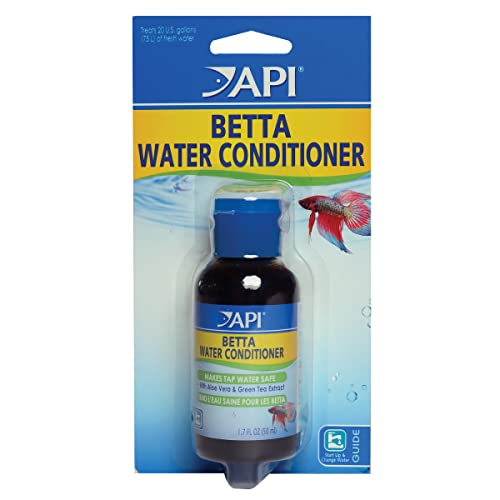
5. API Betta Water Conditioner
Best for: Small betta bowls and tanks
API Betta Water Conditioner is a liquid treatment for tap water used in betta bowls and freshwater aquariums. This package contains one 1.7-ounce bottle, enough for routine water changes in small setups, though the exact number of treatments depends on the label dosage and tank size. It works by neutralizing chlorine, chloramines, ammonia, and other tap-water chemicals that can damage gills, irritate tissue, or harm fish.
Its most useful feature is broad tap-water protection in one treatment. The formula also includes aloe vera and green tea extract, which are intended to reduce inflammation and support healing after fish experience irritation. Use it when filling a new bowl or aquarium, then add it again during water changes. At around $4, it costs little to keep on hand. Still, it is a water conditioner, not a substitute for regular testing, filtration, or proper aquarium maintenance.
Pros
- Treats chlorine, chloramines, ammonia, and other harmful tap-water chemicals.
- Aloe vera and green tea extract may help soothe irritated fish.
- Works for both new betta setups and routine water changes.
Cons
- The 1.7-ounce bottle may run out quickly in larger aquariums.
- It does not replace water testing, biological filtration, or regular cleaning.
4. AQUANEAT 1-Gallon Betta Fish Tank Aquarium Kit

Best for: Desktop betta keepers with limited space
The AQUANEAT is a compact 1-gallon aquarium measuring 7.9 by 5.9 by 5.9 inches. It fits on a small desk or shelf and includes a filter sponge, adjustable water pump, and LED hood. Around $24, it costs less than many larger starter kits. After accounting for the filter, usable water capacity is about 0.8 gallon, and substrate reduces it further.
Its hood provides three light colors with 10 brightness levels, giving you control over the tank’s appearance. A feeding opening lets you feed fish without removing the lid. Four silicone feet help keep the aquarium stable and reduce noise from the pump. The hidden filter can improve water clarity, but it does not remove routine care. You still need regular water changes and sponge cleaning. The pump may create too much suction for a betta, so decorations near the inlet can help reduce the flow. The LED requires a separate 5V transformer, which is not included.
Pros
- Compact 7.9-inch size works well on desks and small shelves.
- Ten brightness levels and three colors provide flexible lighting.
- Included filter, sponge, pump, and hood cover the basic setup.
Cons
- The required 5V power transformer must be purchased separately.
- Its small usable volume requires frequent maintenance and is not suitable as a long-term home for goldfish.
3. Mini Stackable Betta Fish Tank

Best for: Short-term fish isolation and transport
This 4-by-4.6-inch desktop tank holds 0.2 gallons and is designed for temporary use. It can hold a new fish during transport, isolate a sick fish, or provide a separate space for fry, shrimp, sea monkeys, insects, or small crabs. The tank itself is the only included item, so gravel, plants, and other accessories cost extra. At around $10, it offers a low-cost option for brief observation or small DIY displays.
The clear AS plastic should resist drops, corrosion, and everyday knocks better than glass. Its lid has ventilation holes in all four corners, while grooves on the top and bottom let multiple tanks stack for storage. Rinsing with water should handle routine cleaning, and the material is recyclable. Still, 0.2 gallons leaves very little room for stable water conditions. Most fish should not live in this container long term. Even bettas vary in their needs, so use the tank only when its size and purpose fit the individual animal.
Pros
- Compact 4-by-4.6-inch footprint fits desks, shelves, and temporary setups.
- Stackable grooves and four-corner ventilation support organized storage.
- AS plastic is lighter and less fragile than glass.
Cons
- The 0.2-gallon capacity is unsuitable for long-term housing of most fish.
- No filter, light, décor, or maintenance supplies are included.
2. MoonOrange Mini Betta Fish Tank

Best for: Temporary betta transport and isolation
The MoonOrange Mini Betta Fish Tank is a 0.2-gallon square cube made from clear, shatter-resistant plastic. Its 360-degree viewing area makes the contents easy to see from different sides. Smooth inner and outer walls should make wiping the container simpler than cleaning textured materials. The removable cap creates access to the interior, while a feeding hole lets you add food without removing the entire top.
This small aquarium includes a betta leaf and gravel, so it can create a basic temporary setup for a betta, shrimp, insect, crab, spider, or other small creature. The stackable shape works well for short-term separation, travel, tank cleaning, or isolation. It can also hold small household items, such as dolls or coins. At around $10, it costs little, but the tiny capacity limits what you can keep inside. The manufacturer specifically describes it as a temporary space, not a permanent fish home. A filter and heater are not listed among the included items, so buyers should not treat this as a complete long-term aquarium.
Pros
- Clear plastic provides a broad view from every side.
- Stackable cube design saves desktop or shelf space.
- Included gravel and betta leaf create a simple temporary display.
Cons
- The 0.2-gallon volume is too small for long-term fish housing.
- No filter or heater is listed, limiting water quality and temperature control.
1. Pawfly Aquarium Fish Breeding Box

Best for: isolating newborn fry in community tanks
The Pawfly breeding box is a small acrylic nursery for newborn fish, shrimp, and bettas. Its interior measures 4.2 by 2.7 by 2.8 inches, so it fits inside a crowded aquarium without taking much room. The clear walls provide an unobstructed view of fry, while side vents allow tank water to circulate through the box. That setup does not require a heater or air pump, assuming the main aquarium already has suitable water conditions.
The slotted bottom lets waste, leftover food, and debris pass through instead of collecting around the babies. Narrow openings also help keep tiny fry inside. Two handles and a balancing panel let the unit float, while two suction cups can secure it against the tank wall. You can remove the box for cleaning without tools. At around $8, it offers a low-cost way to separate vulnerable newborns, but the compact interior is meant for very small occupants only. It is better suited to short-term isolation than raising fish through multiple growth stages.
Pros
- Clear acrylic makes it easy to monitor fry and feeding.
- Slotted bottom reduces waste buildup and limits escapes.
- Floating parts and two suction cups support flexible placement.
Cons
- The 4.2-inch interior cannot hold many fry or larger fish.
- Small openings and vents may clog quickly in a dirty tank.
Buying Guide
Tank volume is the most important factor when choosing a betta aquarium because cramped water conditions become polluted quickly. Choose 5 gallons or more, which gives one fish room to swim and keeps temperature and water quality steadier.
-
Capacity and footprint: Select at least 5 gallons, with a 10-gallon tank offering more swimming space. A wider tank measuring roughly 16 by 8 inches is usually more useful than a tall, narrow design.
-
Lid and access: Pick a container with a secure lid and leave 1 to 2 inches of air space above the water. Bettas can jump, so open bowls and loose covers create escape risks.
-
Heating support: Confirm that the tank can fit an adjustable heater. A 25-watt heater commonly suits a 5-gallon aquarium, while water should stay near 78 to 80°F.
-
Filtration and water flow: Choose a model that supports a sponge filter or adjustable low-flow filter. Strong currents can exhaust bettas, so avoid powerful filters made for much larger tanks.
-
Material and maintenance: Glass resists scratches and stays clear, while acrylic weighs less but scratches more easily. Look for a wide opening, sturdy base, and enough room to remove plants and décor.
If you must compromise, prioritize the 5-gallon capacity and stable, heated water over extra decorations.
Frequently Asked Questions
How large should a betta fish aquarium be?
A betta fish aquarium should hold at least 5 gallons, with a lid, gentle filtration, and a heater. That size gives one fish room to swim and keeps water conditions steadier than tiny bowls. A rectangular tank measuring about 16 by 8 by 10 inches can provide a practical footprint.
What material is safest for a betta fish container?
Glass or aquarium-rated acrylic is safest for a betta’s permanent home, provided it has no sharp edges or toxic coatings. Glass resists scratches, while acrylic weighs less and handles impacts better. Either option should support a heater, filter, thermometer, and secure lid.
Can betta fish live in a small bowl?
Betta fish can survive in a small bowl for a short period, but they should live in a heated, filtered aquarium instead. A temporary container should hold at least 2 gallons, use conditioned water, and stay away from direct sunlight. Move the fish to a 5-gallon setup as soon as possible.
Are plastic containers safe for betta fish?
Plastic containers are safe for bettas only when they are food-safe or aquarium-rated, clean, smooth, and free from chemical residue. Avoid narrow jars and containers that cannot fit a heater or lid. A 5-gallon plastic aquarium can work, but scratches may collect algae and bacteria.
Conclusion
Pawfly Aquarium Fish Breeding Box is the top pick for betta owners who need a compact, purpose-built container for temporary separation, breeding, or fry care. If your priority is a permanent home rather than short-term fish management, choose a properly sized aquarium instead, since a breeding box cannot replace a heated, filtered habitat. Before buying, double-check the box’s dimensions, compatibility with your tank and fish, package quantity, and current price, since listings can change. A suitable container should leave your fish enough room to turn and reach the surface without crowding. Plan for a lid, stable water temperature, and regular water changes, even when the box is used for only a few days. Read the care instructions, too.