
API BETTA Water Conditioner is the best betta water conditioner for most buyers because its dosing is easy to follow. It treats tap water by removing chlorine, chloramines, and heavy metals that can stress bettas. That makes it a practical choice for routine water changes, especially when you keep one fish in a compact tank.
This guide is for betta owners choosing a conditioner for a new aquarium or regular maintenance. The main factors are bottle size and treatment coverage, since a small container can run out quickly while larger tanks need more product per change. Check the label for clear dosage directions, too. The five picks below are ranked with reasons and honest drawbacks for each.
Quick Comparison
| # | Product | Best For | Price | |
|---|---|---|---|---|
| 1 | API BETTA Water Conditioner | Routine Betta Tank Water Changes | ~$4 | View → |
| 2 | Aqueon Betta Bowl Plus Water Conditioner | Small Betta Bowl Maintenance | ~$7 | View → |
| 3 | Tetra BettaSafe Water Conditioner | First-Time Betta Keepers | ~$4 | View → |
| 4 | Crystalpro Betta Water Conditioner | Budget-Conscious Betta Owners | ~$8 | View → |
| 5 | Seachem Prime Water Conditioner | Multi-Tank Aquarium Maintenance | ~$17 | View → |
5 Top Betta Water Conditioners
The picks are ranked from fifth place to first, with the strongest betta-friendly conditioner saved for the top spot.
5. Seachem Prime Water Conditioner

Best for: Routine freshwater and saltwater changes
Seachem Prime is a concentrated water conditioner for freshwater and saltwater aquariums. It treats chlorine and chloramine in tap water, while also detoxifying ammonia, nitrite, and typical levels of heavy metals. The 500 mL bottle contains 17 fluid ounces and costs around $17, depending on the seller.
The standard dose is 5 mL, or one capful, for every 200 liters, or 50 US gallons, of new water. That makes the bottle suitable for about 20,000 liters of treated water. For smaller aquariums, two drops per gallon help reduce overpouring. Prime works immediately, and its ammonia and nitrite protection lasts up to 48 hours while the biological filter processes waste. A double dose can handle unusually high chloramine levels, and a five-times dose is available for ammonia or nitrite emergencies. Still, careful measuring matters, especially with small tanks.
Pros
- Treats both chlorine and chloramine in one step.
- Detoxifies ammonia, nitrite, and common tap-water heavy metals.
- One 500 mL bottle treats roughly 20,000 liters at the normal dose.
Cons
- The liquid dose is difficult to measure accurately in tanks under 10 gallons.
- It does not replace regular water changes, filter care, or testing.
4. Crystalpro Betta Water Conditioner

Best for: Betta owners doing small water changes
Crystalpro Betta Water Conditioner treats tap water before it enters a betta aquarium. The 4.2 fl oz (125 ml) bottle is designed to remove chlorine, chloramines, and heavy metals. It also binds ammonia during water changes, which can help reduce exposure to gill irritation and breathing stress. The formula includes electrolytes and minerals for fish kept in a closed aquarium.
The main appeal is its concentrated dosing. The cap delivers about 15 drops per 1 ml, while the instructions call for four drops per gallon. That makes the bottle easy to store and potentially useful for frequent partial changes. The stated coverage reaches up to 660 gallons, although the bottle’s drop count and four-drop dosage do not fully match that figure mathematically. At around $8, it costs little upfront, but aquarium keepers should still measure carefully and confirm dosage on the label.
Pros
- Treats chlorine, chloramines, heavy metals, and ammonia in tap water.
- Small 125 ml bottle takes up little storage space.
- Drop cap supports measured dosing instead of pouring by eye.
Cons
- The stated 660-gallon coverage conflicts with the listed drop count and four-drops-per-gallon dosage.
- Ammonia binding does not replace regular water testing, tank cycling, or proper filtration.
3. Tetra BettaSafe Water Conditioner

Best for: Small betta tanks needing tap-water treatment
Tetra BettaSafe is a water conditioner for betta aquariums and other ornamental fish. The 1.69-ounce bottle treats tap water by neutralizing chlorine, chloramines, ammonia, and heavy metals that can harm fish. It works within seconds, so you can prepare water shortly before adding it to a tank. At around $4, it offers a low-cost option for routine aquarium care.
The formula fits several common maintenance tasks. Use it when setting up a new tank, during monthly partial water changes, and when replacing water lost through evaporation. That broader use makes it more practical than a product intended only for initial setup. Still, buyers must follow the bottle’s dosing directions, since the listed product details do not provide a treatment amount. The small container suits one betta bowl or a compact aquarium, but larger setups may require frequent replacement. This conditioner also supports water preparation, not a substitute for testing water or performing regular changes.
Pros
- Neutralizes chlorine and chloramines in tap water.
- Addresses ammonia and heavy metals that may stress fish.
- Works within seconds for quick water preparation.
Cons
- The 1.69-ounce bottle can run out quickly in larger tanks or during frequent water changes.
- It does not replace water testing, filtration, or routine aquarium maintenance.
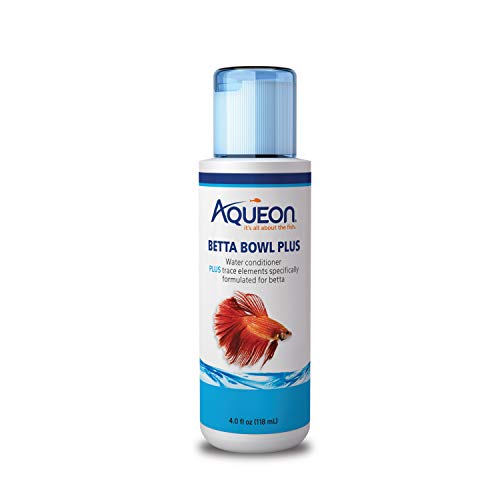
2. Aqueon Betta Bowl Plus Water Conditioner
Best for: Small betta tanks using tap water
Aqueon Betta Bowl Plus is a liquid conditioner for betta bowls and small aquariums. The 4-ounce bottle treats tap water during initial fills or routine water changes. Its stated dose is 5 mL, or 1 teaspoon, per 1 gallon of temperature-adjusted tap or purified water. The included dosage cap helps with small batches, where a kitchen spoon can be less precise. At that rate, one bottle covers roughly 23 gallons.
The formula is designed to make tap water safe by detoxifying heavy metals, ammonia, and other compounds released through fish waste. It also adds trace elements formulated for bettas, giving it a more targeted role than a general water treatment. The label also recommends it after transport, netting, or other stressful handling. Around $7, it costs little to keep on hand, but the dose still matters. A 4-ounce bottle is not a long-term supply for multiple aquariums or frequent large water changes.
Pros
- Treats tap water during tank fills and routine water changes.
- Addresses heavy metals, ammonia, and compounds linked to fish waste.
- Includes a dosage cap for measuring the 5 mL-per-gallon dose.
Cons
- The 4-ounce bottle treats only roughly 23 gallons, so larger setups may use it quickly.
- It does not replace regular water changes or aquarium filtration.
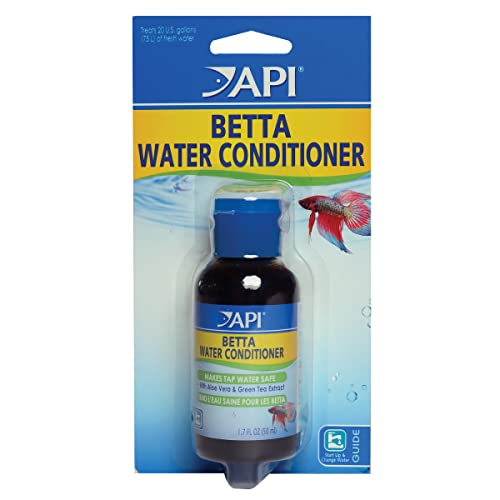
1. API BETTA Water Conditioner
Best for: small betta bowls and water changes
API Betta Water Conditioner comes in one 1.7-ounce bottle for freshwater betta care. Add it to tap water when setting up a new bowl or aquarium, and use it again during routine water changes. The formula neutralizes chlorine, chloramines, ammonia, and other tap-water chemicals that can damage gills, irritate tissue, or kill fish. At around $4, it offers a low-cost way to treat water before it reaches your betta.
The formula also contains aloe vera and green tea extract. These ingredients are intended to reduce inflammation and support healing after chemical irritation. That combination gives this conditioner a broader purpose than a product that only removes chlorine. Still, it cannot correct poor tank maintenance or replace treatment for infection and disease. The 1.7-ounce size suits small betta setups, but owners with larger aquariums or frequent water changes may need refills sooner. The bottle should be used according to its label directions, since the listed features do not provide a dosing amount.
Pros
- Neutralizes chlorine, chloramines, ammonia, and other harmful tap-water chemicals.
- Works for both new aquarium setups and regular water changes.
- Aloe vera and green tea extract may help calm irritation and support healing.
Cons
- The 1.7-ounce bottle may not last long for larger tanks or frequent changes.
- It cannot replace proper filtration, water testing, or medication for illness.
Buying Guide
The most important factor is whether the water treatment neutralizes both chlorine and chloramine. These chemicals can damage a betta’s gills, and chloramine does not disappear as quickly as chlorine.
- Chlorine and chloramine coverage: Choose a label that names both chemicals, not one that only says “removes chlorine.” This matters with most treated municipal tap water.
- Dose accuracy: Look for clear instructions measured per gallon or 10 gallons. A cap marked in milliliters is easier to measure than vague “small amount” directions. Treat the full replacement-water volume.
- Ammonia claims: Some formulas temporarily detoxify ammonia, nitrite, or nitrate. Treat this as extra protection, not a substitute for cycling the aquarium and changing 20% to 30% of the water.
- Tank-size value: Compare the treated gallons, not bottle size. A 4-ounce bottle treating 480 gallons may cost less per water change than a 16-ounce bottle treating 160 gallons.
- Fish-safe ingredients: Avoid products containing dyes, fragrances, or medications unless the label specifically supports aquarium use. A simple, concentrated formula usually suits routine changes.
If you cannot have everything, prioritize verified chlorine and chloramine removal with dosing instructions matched to your tank size.
Frequently Asked Questions
How do I choose a water conditioner for my betta?
Choose a betta water conditioner that removes chlorine and chloramine, fits your tank size, and lists a clear dose on the bottle. Look for aquarium-specific formulas, not household dechlorinators. For example, a product dosing 5 milliliters per 10 gallons is easier to measure than vague capful directions.
What does betta water conditioner do?
A betta water conditioner neutralizes chlorine and chloramine in tap water, making it safer for aquarium fish. A typical dose may treat 10 gallons with 5 milliliters, but instructions vary by brand. It does not replace cycling, filtration, or regular water changes, so use it whenever untreated tap water enters the tank.
Can I use regular aquarium dechlorinator for a betta?
Yes, you can use a regular aquarium dechlorinator for a betta if it treats both chlorine and chloramine and provides a suitable dosage. For a 5-gallon tank, you might need only 2.5 milliliters from a formula rated at 5 milliliters per 10 gallons. Always follow the product label.
Are bottled water conditioners safe for bettas?
Bottled water conditioners are safe for bettas when used according to a label that treats the chemicals in your tap water. Many products work at a dose of 1 milliliter per gallon. Avoid adding extra conditioner without guidance, and remember that distilled or reverse-osmosis water may need added minerals.
Conclusion
API BETTA Water Conditioner is the top pick for betta keepers who want a simple, affordable treatment for routine water changes. If your priority is treating larger aquariums or several tanks, choose a conditioner with more doses or broader freshwater coverage. Before buying, double-check the bottle size, compatibility with bettas and other tank inhabitants, treatment quantity, and current price, since value can vary between package sizes and sellers. Follow the label’s dosing instructions, and pair the product with regular partial water changes. For a single betta setup, a small bottle may be enough, while fish room owners should compare the cost per treated gallon.