
Mechpia Reptile Terrarium Carpet Liner is the best reptile carpet for most buyers because its removable liner design keeps routine enclosure cleanup simple. It gives the terrarium floor a covered surface without loose particles that some reptiles may swallow. The plain, flexible format also suits owners who want a low-fuss alternative to loose substrate.
This guide is for reptile owners choosing flooring for snakes, geckos, bearded dragons, and similar pets. The main factors are the liner’s dimensions, material texture, fit, and cleaning needs. A close fit helps prevent bunching, while a comfortable surface can support safer movement around the enclosure. The six picks below are ranked by their practical strengths, with clear reasons and honest drawbacks for each. That makes it easier to match a floor covering with your animal, enclosure size, and cleaning routine.
Quick Comparison
| # | Product | Best For | Price | |
|---|---|---|---|---|
| 1 | Mechpia Reptile Terrarium Carpet Liner | Best for low-maintenance tank cleaning | ~$11 | View → |
| 2 | Zilla Reptile Carpet Terrarium Floor Liner | Best for standard terrarium setups | ~$12 | View → |
| 3 | MCLANZOO Reptile Carpet, 40-Gallon Tank Liner, 2-Pack | Best for two-tank owners | ~$26 | View → |
| 4 | Zilla Reptile Bedding Substrate Floor Liner | Best for replacing loose substrate | — | View → |
| 5 | Vodolo Reptile Terrarium Carpet Substrate | Best for custom-cut enclosure flooring | ~$10 | View → |
| 6 | Haull Reptile Carpet Terrarium Floor Mat Liner | Best for budget-conscious reptile keepers | ~$26 | View → |
6 Reptile Carpet Picks Worth Considering
This ranked list counts down from six to one, with the strongest reptile carpet option saved for the final spot.
6. Haull Reptile Carpet Terrarium Floor Mat Liner

Best for: Large terrariums needing washable liners
The Haull reptile carpet set includes four green liners, each measuring about 47 x 24 inches. Made from high-density tech fiber, the 0.2-inch-thick material feels soft and non-abrasive against reptile feet. Its absorbent surface helps keep animals away from damp, rough flooring. Each sheet can be trimmed for enclosures from 10 to 75 gallons, or shaped for unusual cage layouts. The large dimensions may also suit chicken nesting boxes.
These mats work for bearded dragons, tortoises, turtles, lizards, snakes, geckos, and similar pets. Cleanup is straightforward: roll up the liner, shake off loose debris, rinse it with cold tap water, and hang it to dry. Four pieces allow you to keep spare liners ready while another dries. At around $26, the set offers useful coverage for larger habitats, though buyers should measure their enclosure before ordering. Do not place the carpet directly against a heat source.
Pros
- Four large 47 x 24-inch mats provide broad terrarium coverage.
- Washable, reusable fiber reduces the need for disposable bedding.
- Soft, non-abrasive material suits many reptiles and can be trimmed.
Cons
- The liner cannot sit directly against heat sources.
- Cutting is likely necessary for smaller tanks or fitted corners.
5. Vodolo Reptile Terrarium Carpet Substrate
Best for: Custom liners for large reptile tanks
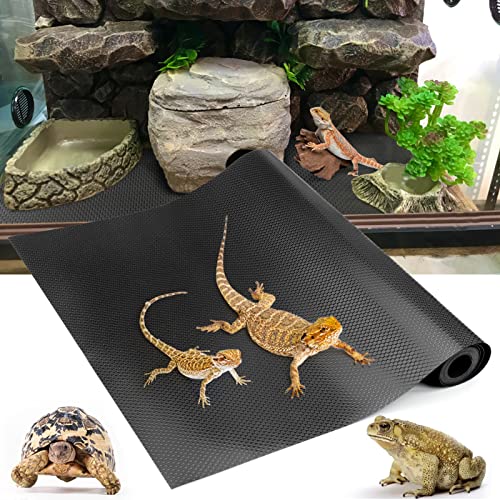
The Vodolo reptile habitat mat is a non-adhesive PVC liner measuring 17.7 by 79 inches. That length can cover two 40-gallon tank liners, depending on each enclosure’s layout. You can cut it to fit smaller habitats or shape it around openings. The material is soft, thick, and easy to trim without tearing or producing a strong odor. At around $10, it offers a low-cost alternative to loose bedding and disposable liners.
Its smooth, non-absorbent surface helps keep waste from soaking into the substrate. Small messes can be wiped away, while the whole mat can be rinsed with water when needed. The textured side adds traction, and the material is designed to feel gentle against reptile bellies and feet. Black gives the enclosure a cleaner appearance and may absorb more heat than lighter colors. This liner suits bearded dragons, leopard geckos, snakes, tortoises, iguanas, chameleons, and several other reptiles. Still, it works best when cut carefully and fitted flat.
Pros
- The 17.7-by-79-inch roll can cover two 40-gallon liners.
- Non-absorbent PVC allows quick spot cleaning and rinsing.
- Cut-to-fit material works with different tank shapes and sizes.
Cons
- Black may absorb extra heat, so temperature monitoring remains necessary.
- It provides no loose-bedding layer for reptiles that prefer digging.
4. Zilla Reptile Bedding Substrate Floor Liner

Best for: juvenile reptiles and tidy terrariums
This 17.25-by-35.25-inch brown liner covers a terrarium floor without loose bedding. Its absorbent, non-abrasive surface offers a gentler option than rough particles and reduces the chance of accidental ingestion during feeding. That makes it useful for juvenile reptiles and owners who want a simple enclosure setup.
An odor-reducing enzyme may help limit smells between cleanings. For maintenance, remove the liner, rinse it with cold water, and reuse it after drying. You can cut it to fit smaller enclosures, though trimming cannot be undone. Brown is the listed color, with green also available in the product line. This liner does not provide the digging texture needed for burrowing reptiles. It works best as a washable floor covering for quick cleanup.
Pros
- Reusable construction can reduce the need for disposable bedding.
- The 17.25-by-35.25-inch size fits many smaller terrariums and can be trimmed.
- Non-abrasive, absorbent material provides a cleaner alternative to loose particles.
Cons
- It does not support natural digging or burrowing behavior.
- The liner needs thorough drying before you place it back in the enclosure.
3. MCLANZOO Reptile Carpet, 40-Gallon Tank Liner, 2-Pack

Best for: Reptile owners wanting reusable tank liners
The MCLANZOO Reptile Carpet comes as a two-pack of fabric liners, each measuring 36 by 18 inches. That size fits many 40-gallon enclosures and can be trimmed for smaller tanks. The non-abrasive fabric provides a softer surface than loose bedding, with less risk of loose substrate around a reptile’s mouth. The package also includes feeding tweezers, which adds a useful accessory for mealworms, greens, or other food.
Cleaning is straightforward. Roll up the mat, shake off debris, rinse it with cold tap water, and hang it to dry. The quick-drying fabric allows one liner to dry while the other covers the enclosure. Packaging may leave wrinkles at first, so the manufacturer recommends laying each mat flat for up to 24 hours. At around $26, this two-pack costs more upfront than disposable paper, but reusable liners can reduce recurring bedding purchases. The main trade-off is that the carpet does not remove waste on its own. Spot cleaning remains necessary, especially in a busy bearded dragon habitat.
Pros
- Two 36-by-18-inch liners cover many 40-gallon tanks.
- Reusable fabric rinses with cold water and hangs dry.
- Cuttable material fits smaller or unusually shaped enclosures.
Cons
- Wrinkles may remain until the mat lies flat for 24 hours.
- Waste stays on the surface, so frequent spot cleaning is still required.
2. Zilla Reptile Carpet Terrarium Floor Liner

Best for: Juvenile reptiles needing safer flooring
The Zilla Reptile Carpet is a reusable floor liner for a 10-gallon terrarium. This green piece measures 17.25 by 35.25 inches, giving you enough material to trim around décor or adjust the fit. Its continuous surface replaces loose bedding, which can reduce the chance of a reptile swallowing substrate during feeding. That makes it a practical option for juvenile reptiles and owners who want a simple enclosure setup.
The carpet has an absorbent, non-abrasive surface that should feel more comfortable than rough bedding. An enzyme treatment helps minimize reptile odors, but regular cleaning remains necessary. Remove the liner, rinse it with cold water, and reuse it after drying. Around $12, it is an inexpensive flooring option, though prices vary by seller. The liner also comes in brown and other sizes, which may work better for larger terrariums.
Pros
- The solid surface avoids loose bedding that a reptile could accidentally ingest.
- It can be rinsed with cold water and reused, reducing replacement costs.
- The liner is absorbent and non-abrasive for daily enclosure use.
Cons
- It does not provide loose material for reptiles that burrow or dig.
- Cleaning requires removing the liner, rinsing it, and waiting for it to dry before returning it to the habitat.
1. Mechpia Reptile Terrarium Carpet Liner
Best for: Reptile owners using bare-bottom tanks
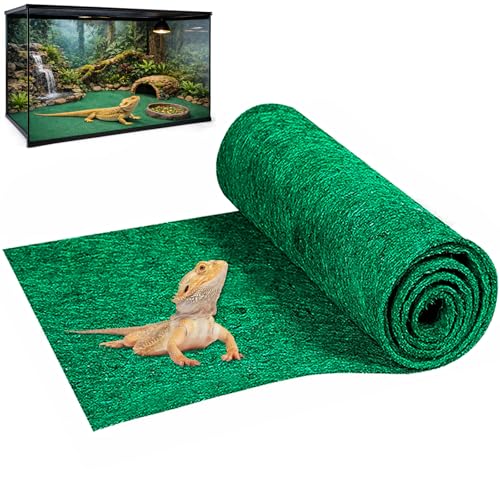
This Mechpia reptile carpet measures 47 by 23.6 inches, or 120 by 60 centimeters. It fits terrariums from about 10 to 75 gallons, depending on the tank’s floor dimensions. The high-density tech fiber creates a soft surface for bearded dragons, snakes, lizards, tortoises, chameleons, and leopard geckos. It also helps keep reptiles away from a wet or rough tank floor. At around $11, it costs less than many specialized bedding options.
The mat can be cut to fit containers smaller than its full size. Use scissors to make a rectangle, square, or circle around fixtures and uneven areas. Cleaning is simple in concept: roll up the liner, shake off loose debris, then hang it to dry. Strong absorption can help contain small spills, but the carpet still needs regular cleaning to control odors and waste. Since it is one large sheet, measuring the tank first matters. Cutting it too small cannot be reversed.
Pros
- The 47-by-23.6-inch size covers many medium and large terrariums.
- High-density fiber provides a soft surface that helps reduce scraping.
- It can be trimmed into custom shapes and washed between uses.
Cons
- One liner may not fit tanks larger than 47 by 23.6 inches.
- Fabric bedding can hold stains or odors if waste is not removed promptly.
Buying Guide
The most important factor is safe, snug coverage. A liner should fit the enclosure floor without loose edges, frayed threads, or gaps where claws can catch or a reptile can pull up fibers.
- Material: Choose nonwoven polyester or felt made for reptiles. Avoid loose-weave fabric, exposed rubber backing, and mats that shed fibers after trimming.
- Size: Measure the floor in inches, then choose a mat at least 1 inch larger on each side for a precise cut. A 36-by-18-inch enclosure needs coverage close to that size.
- Cleaning: Look for machine-washable or hand-washable material. Buying two liners lets one stay in the enclosure while the other dries.
- Thickness: Select a low-profile mat around 1/8 to 1/4 inch thick. It should lie flat beneath hides, bowls, and climbing accessories without creating unstable edges.
- Pack count and price: Single liners often cost about $8 to $20, while two- or three-packs can reduce replacement costs. Confirm the package contains enough pieces for your enclosure.
- Species match: Use a smooth, nonabrasive surface for snakes and many lizards. Reptiles that dig or have sharp claws may need a more durable liner or another substrate.
If you must compromise, prioritize a secure fit and a surface that cannot fray or snag.
Frequently Asked Questions
How do you choose a safe reptile carpet?
Choose a reptile liner made from tightly woven, non-fraying material that fits the enclosure floor without loose edges. Measure the habitat before buying, then check that the mat covers the base without folding. Replace it when threads loosen or stains remain after cleaning.
What is a washable reptile carpet used for?
A washable reptile carpet is a removable enclosure liner that catches waste and gives the animal a stable surface. It can reduce contact with loose substrate, but it still needs regular cleaning. Keep two liners in rotation, so one can dry while the other covers the habitat.
Can you use a carpet liner for every reptile?
Yes, you can use a carpet liner for many terrestrial reptiles, provided it matches the animal’s size, claws, and care needs. Check it daily for fraying, chewing, or trapped waste. For example, replace a damaged mat immediately instead of trimming loose threads and leaving exposed fibers.
Are washable reptile mats better than disposable liners?
Washable liners are often better for convenience, while disposable paper can be better during quarantine or illness. Neither option is automatically safest; the right choice depends on the species and enclosure setup. A washable mat may last months with care, but replace it sooner if odors or damage remain.
Conclusion
Mechpia Reptile Terrarium Carpet Liner is the top pick for reptile keepers who want a reusable, simple floor covering for standard terrariums. If your priority is the fastest cleanup, choose disposable paper substrate instead, since you can remove soiled sections without washing a carpet liner. Before buying, double-check the liner’s length and width, your enclosure’s interior measurements, compatibility with your reptile’s species and habitat, the number of pieces in the pack, and the current price. A carpet liner can reduce loose-substrate concerns, but it still needs frequent removal and washing. Check the edges after installation, too. Loose fibers, fraying, or a poor fit can create problems for claws, toes, and feeding routines. Choose the option that fits securely.